ALWAYS UNDERSTATED, NEVER OUTGUNNED
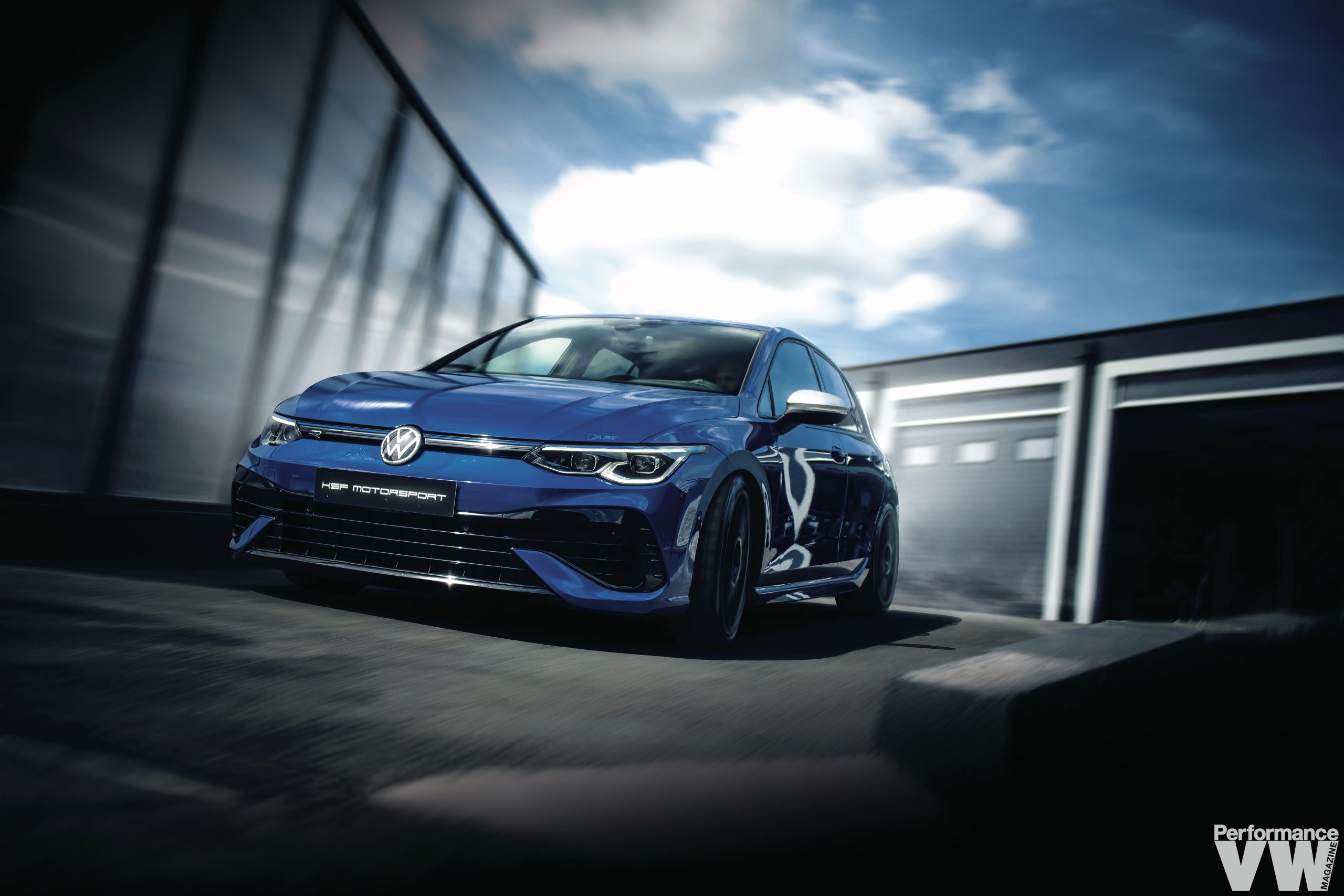
As fast daily drivers go, the Mk8 Golf R takes some beating as an all-rounder. But KSF Motorsport’s latest project shows there’s a five-cylinder, 900hp hole in that spec.
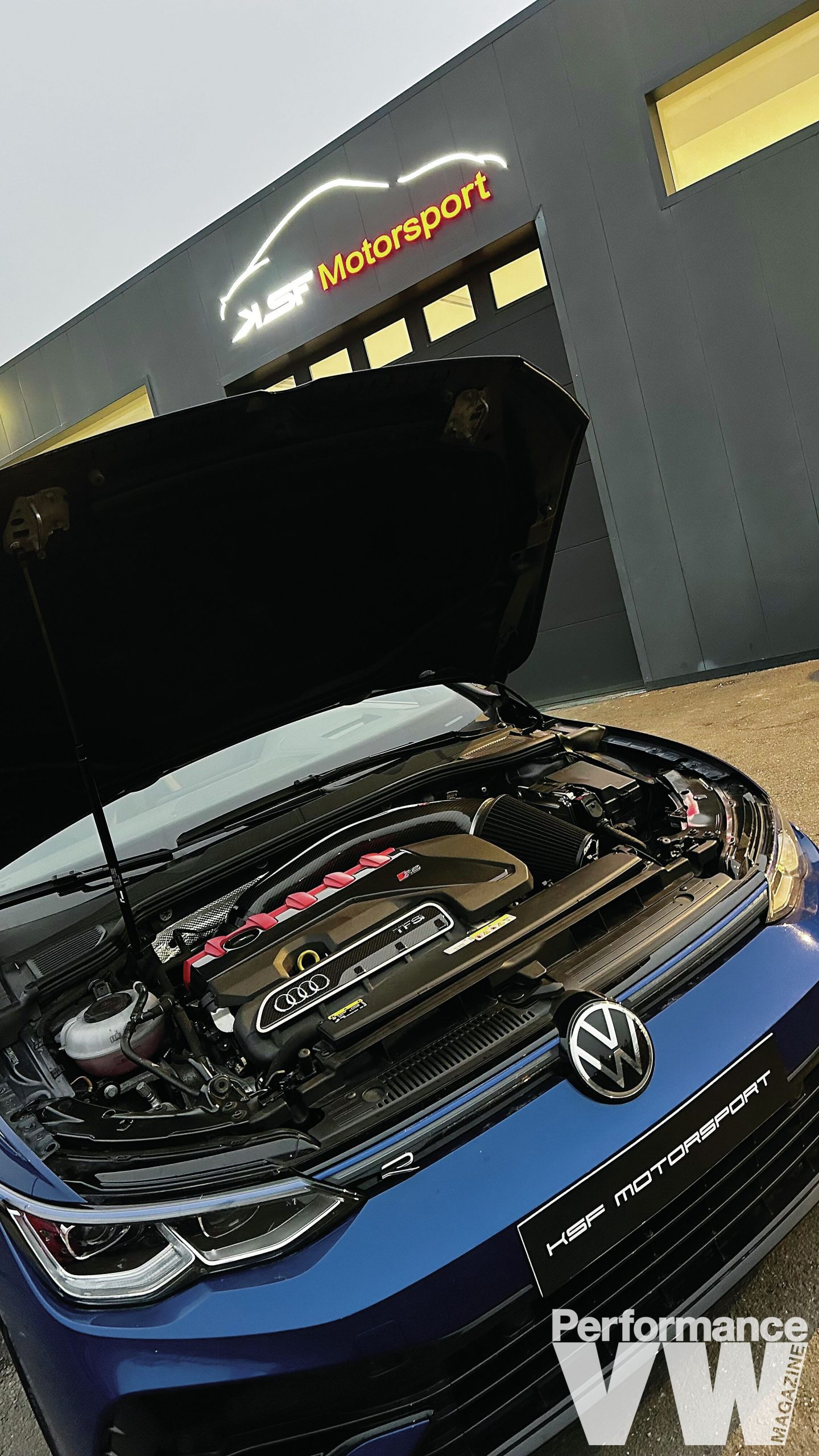
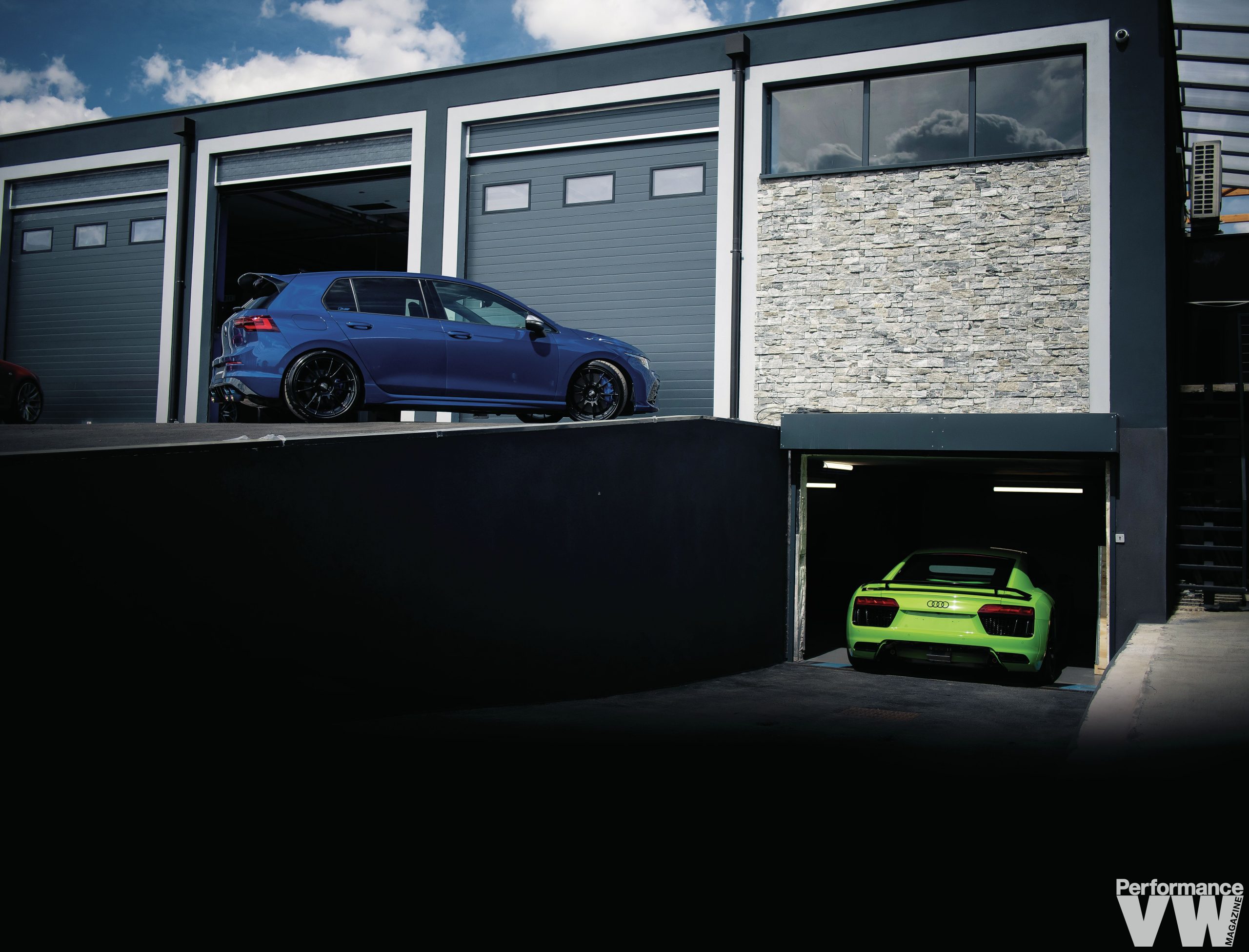
It takes something special to stun a car-obsessed word-juggler into silence, but the workshop at KSF Motorsport is a visual feast that’s hard to do justice in text. Located just outside the larger of Paris’s busy ring roads, it’s a go-to for enthusiasts hoping to wring a little extra from their performance cars and the clientele is diverse. Everything from Lamborghinis to SEATs rub shoulders behind these shutters, united only in their part-disassembled pursuit of white-knuckle inducing horsepower. However, it’s often the most discrete visitors that deserve a closer look.
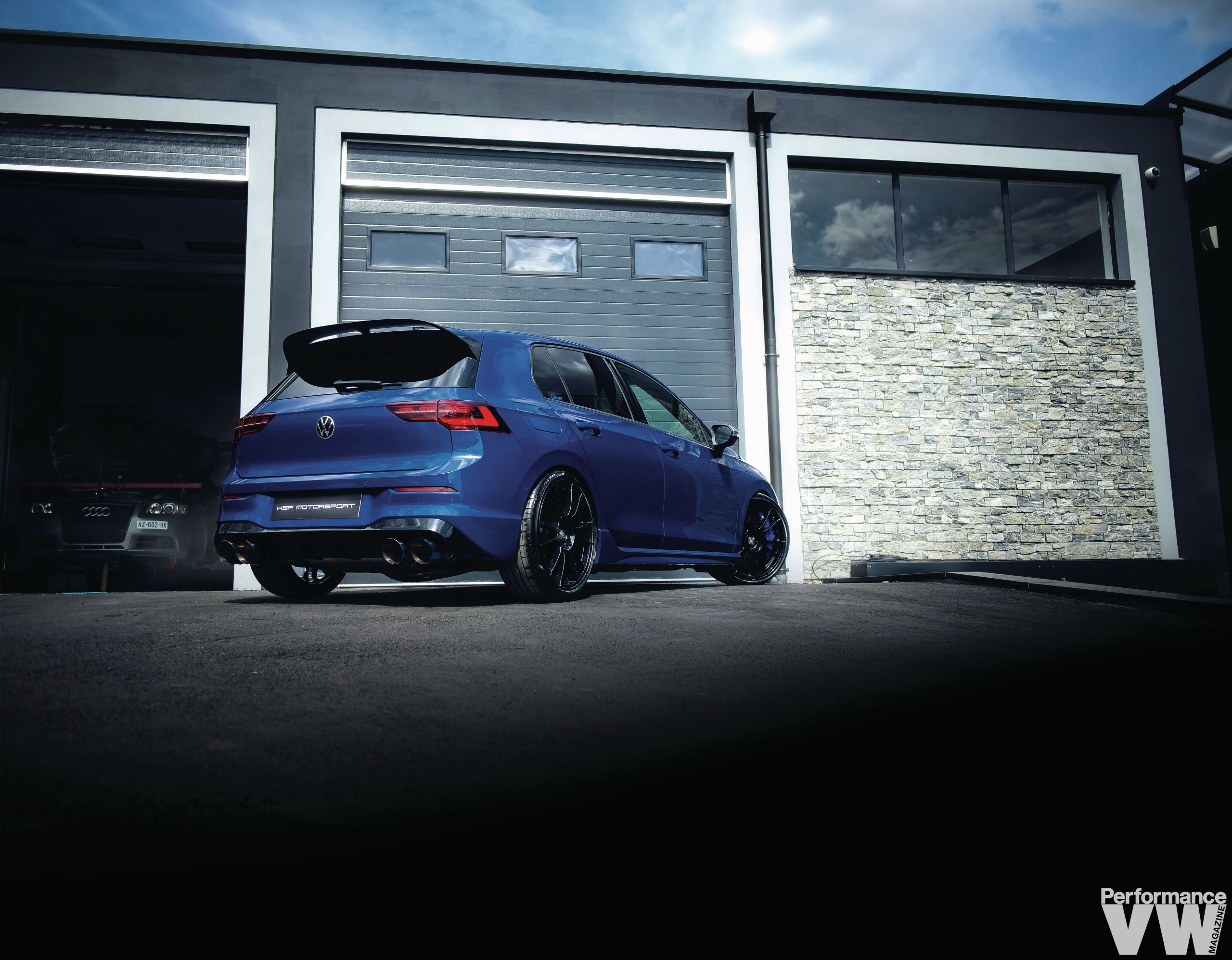
The word ‘sleeper’ isn’t often applied to a Golf R. Volkswagen’s hottest hatchback is a by-word for daily-driveable performance that would have been unimaginable when the first copies of this magazine left the printers back in 1996. Sub 5.0-second sprints to 62mph? Check. Four-wheel drive traction? Yep. Nürburgring-tuned drive modes at the flick of a switch? Mmhmm, that too. And all in a warrantied, five-seat production hatchback that you could take the kids to school in, as opposed to some low-volume homologation sports car. The Golf R is the best bits of the MQB platform rolled into a single vehicle, except for one important omission.
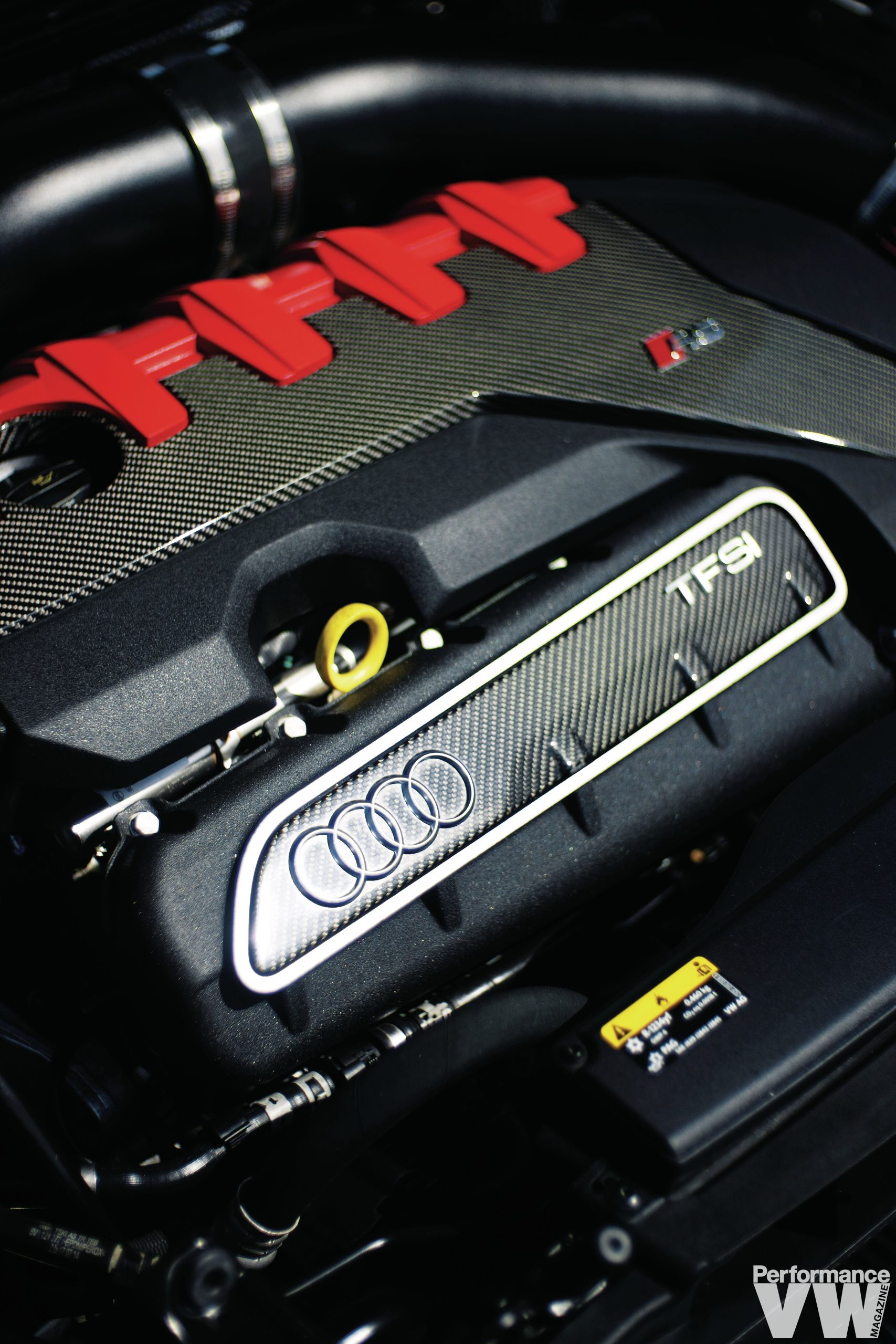
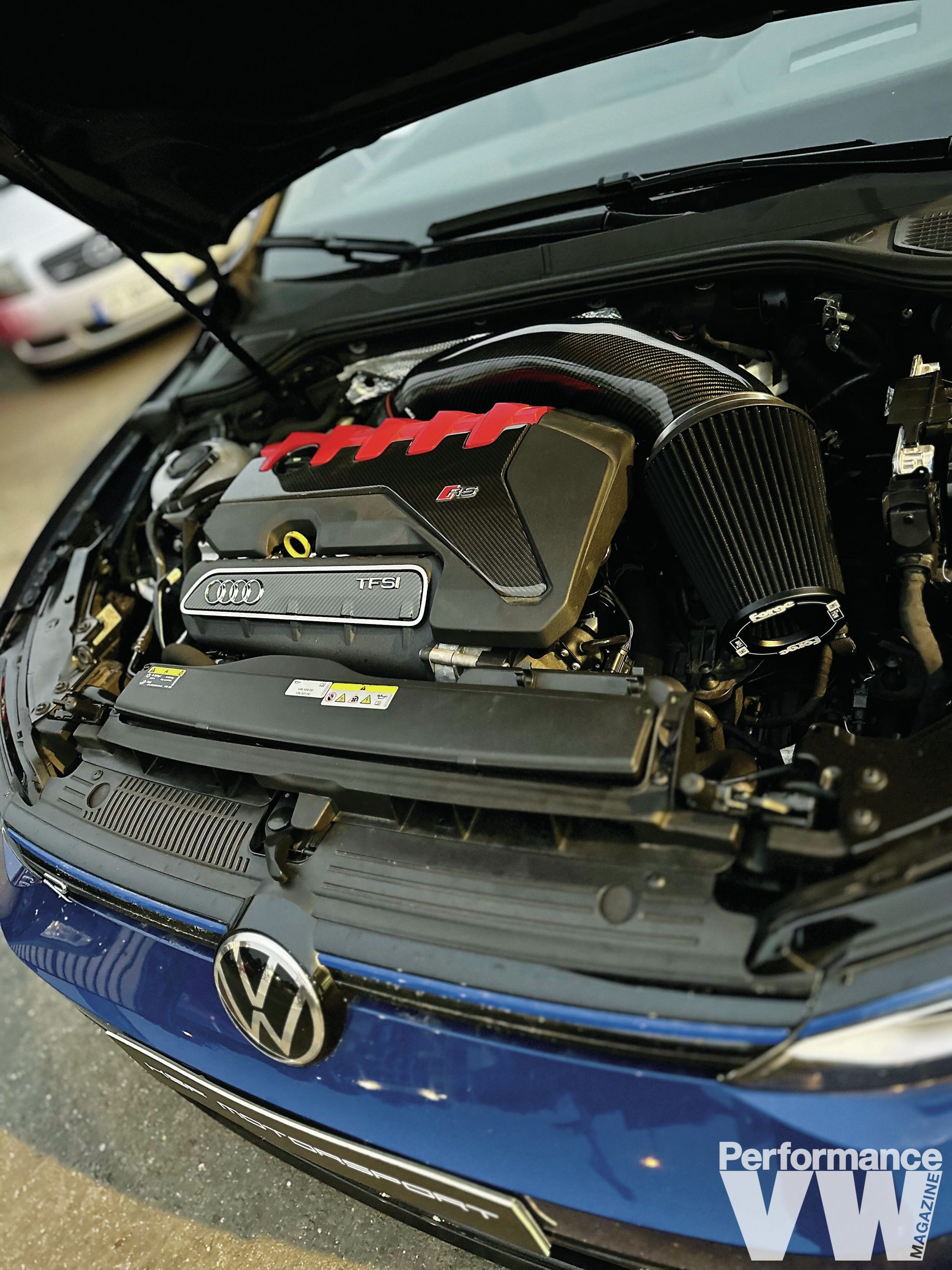
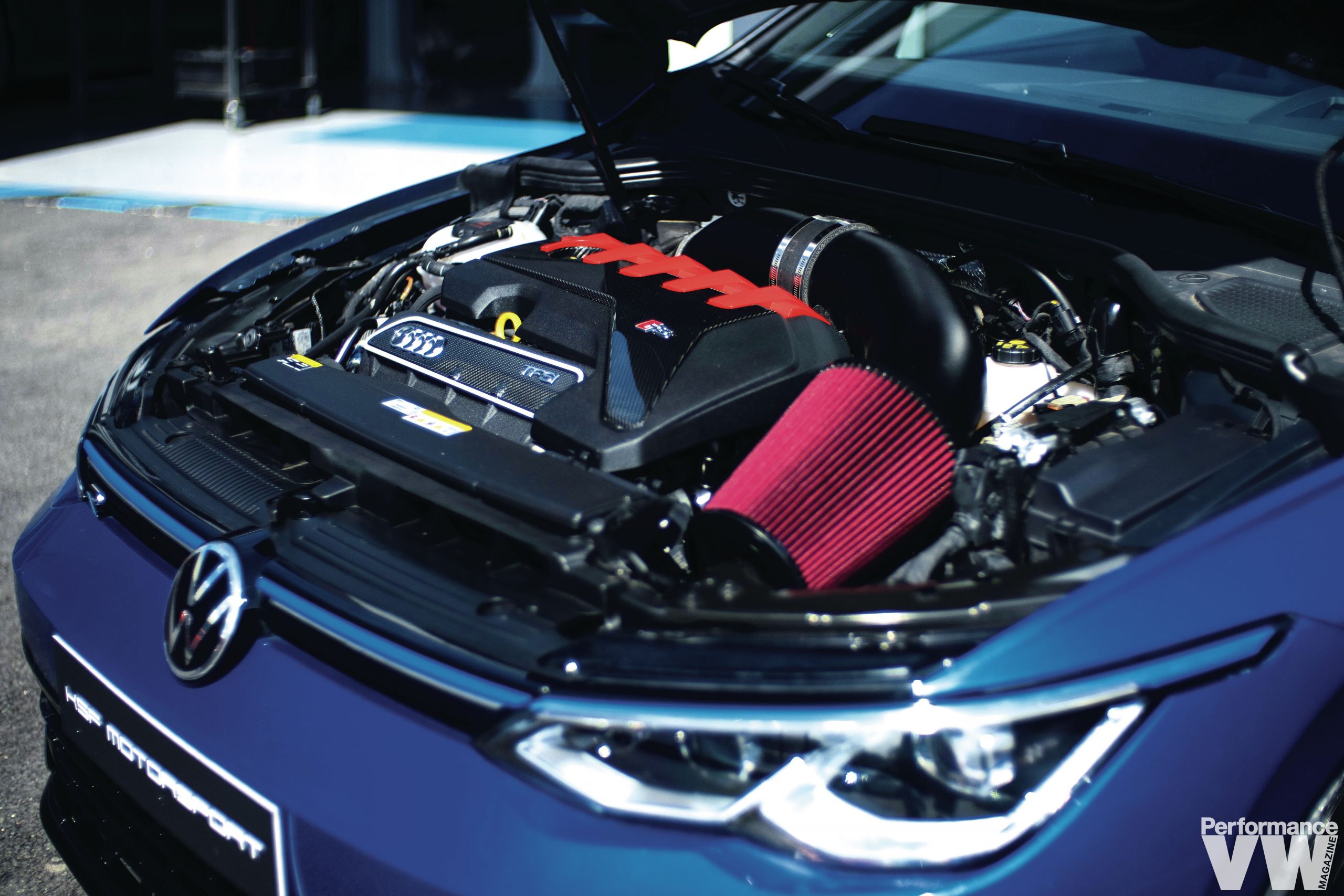
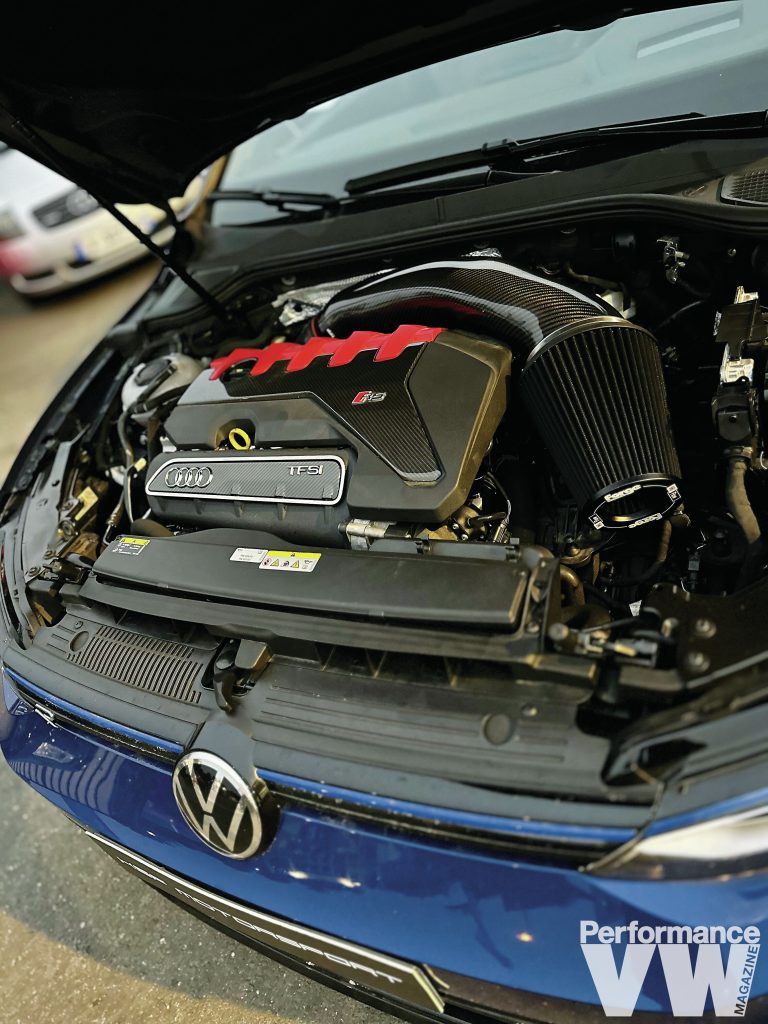
“We’re always testing new solutions for our clients,” explains KSF’s founder, Franck Kocic, reaching into the footwell of a near stock-looking Mk8 Golf R at the side of the workshop and releasing the bonnet catch. “This is the world’s first five-cylinder turbo in a Mk8 – it’s a 900bhp monster that you could use every day. From Golfs to RS6s, that’s just how we build them here.”
That approach is hard-wired into his DNA. Franck’s father, Zoran, was a prolific car audio specialist in the 1990s – an IASCA competition-winner who turned a natural talent for audiophile-quality installs into an equally successful business. It’s clearly rubbed off on his son, though the next generation developed an ear for engines instead of audio. KSF Motorsport, which launched in 2009, was built on expertise Franck had picked up in the Parisian street racing scene and a desire to bring the best minds along on that journey.
Plenty of factory-backed motorsport teams would envy what it’s grown into since. Customer cars are overhauled in a spotless, air-conditioned workshop, with separate dust-free engine and electronics assembly rooms and a dyno. From routine servicing and suspension swaps to (not uncommon) heavily boosted, four-figure horsepower builds, nothing leaves this space until it’s finished to factory quality. First impressions count when you’re trusting someone with the keys to your supercar – and that eye for quality has forged partnerships with Europe’s best-known tuners if the team need any other parts or support.
However, this car is a little closer to home, as Franck explains. “My love of Golfs began with my old Nogaro Blue VR6 Turbo Syncro in the 1990s,” he tells us. “Since then, I’ve had every generation in the same spec – the most powerful version, in blue, and without a sunroof so that it’s as light as possible. There’s always something new to figure out, but it’s a good opportunity to validate our work and I enjoy the challenges.”
Most of the question marks had been answered before the Mk8 landed at the workshop. KSF has a few Mk7 five-cylinders swaps under its belt (including this car’s 1,040bhp predecessor) but there’s always room for a world-first build to get snagged on unknowns. The perfect base car – a pre-2022 model, to avoid the later DSG setup with its un-crackable control unit – surfaced in a German classified advert, timed right to coincide with delivering a customer’s BMW to Poland. It didn’t stay in one piece for long.
Of course, it pays to get the basics right first. Stage one was a factory-spec RS3 engine swap, identifying any wiring and running headaches before complicating matters by ramping up the horsepower. The tear-down process, which stripped the shell of almost everything in front of the windscreen, was familiar from the Mk7 and with no unsolvable packaging issues from the larger engine. However, getting RS3 and Golf R electronics to talk to each other isn’t quite so simple.
Franck isn’t giving up many details here, but the frown on his face when asked suggests this was far from a plug and play job. “The RS3 has a Bosch ECU, the Golf’s is from Continental, so the electronics were a real challenge,” he explains. “We didn’t take long to get it started, but all of the dashboard warning lights were on. I spent ten days working with MRC Tuning in the UK, who have done a few RS3-swapped Mk7s, building the wiring loom and getting the CAN bus working well. It was a lot of work.”
Not all of the electrical headaches can be solved. There’s still no way to remap the 8Y-generation RS3’s DSG, so the Golf has kept its factory DQ381 ‘box, and it’s bolted to the Audi bellhousing so that it’s compatible with the 2.5T’s engine block. Remarkably, for a car that’s knocking on the door of 1000bhp, the ‘box is stock internally aside from dragstrip-proven uprated clutches from Kiwi tuners Dodson. Numerous tyre-blistering test runs have shown it’s more than capable of channelling every rampaging horse to the tarmac, while the shorter-than-RS3 ratios suit Franck’s driving style.
With the foundations laid, the team then got to work ensuring the five-cylinder could cope with more than twice its original power. Originally from a 2021 RS3, the block now features lighter, stronger IRP internals while the head was given a session of porting to improve airflow. Swapping the outlet camshaft for one from an earlier DAZA engine allows the uprated Ferrea Racing valves to stay open longer, offering more time for exhaust gases to escape, which in turn liberates power at the top end. It’s a proven package which ensures the Golf should be as reliable as it is easy to drive.
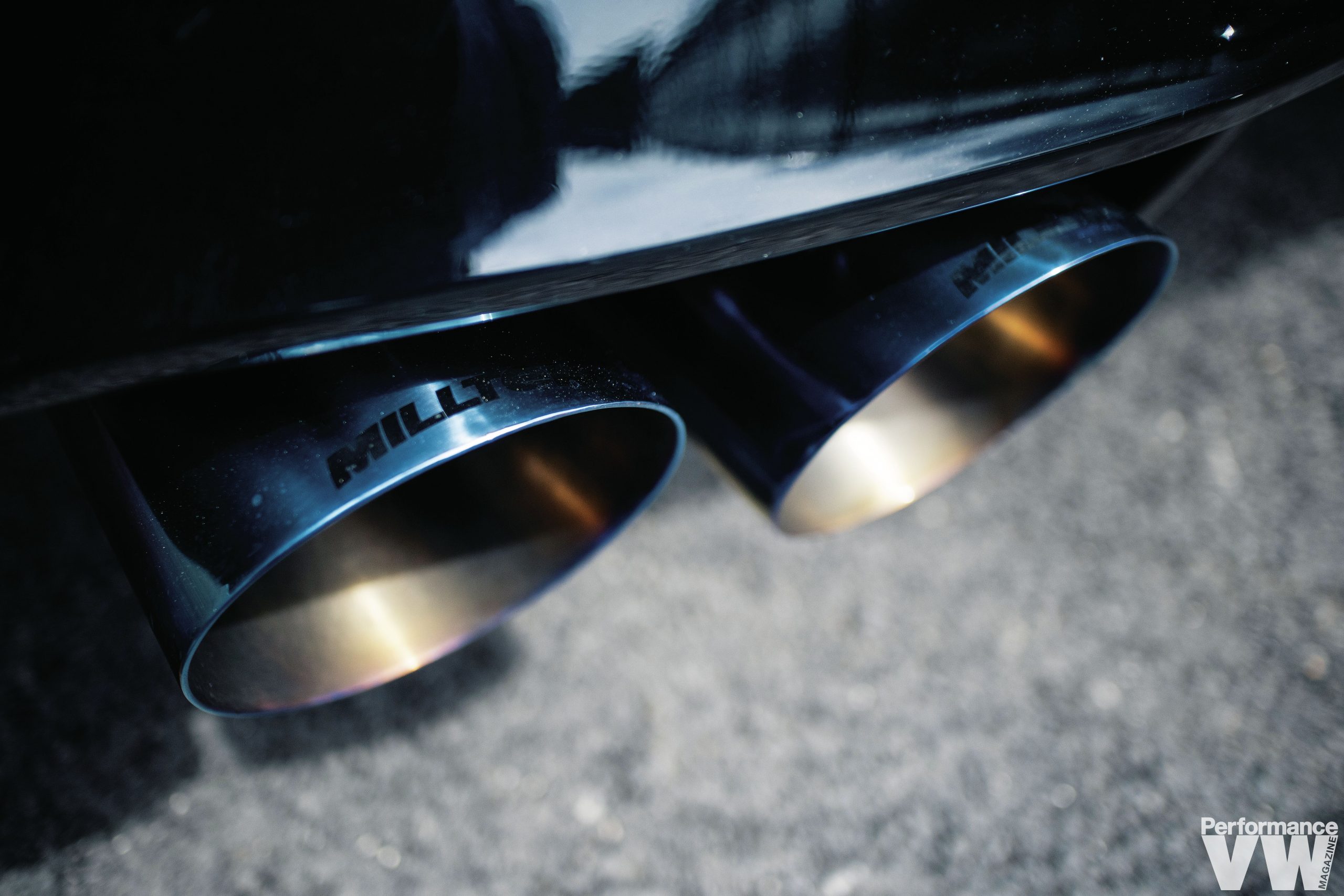
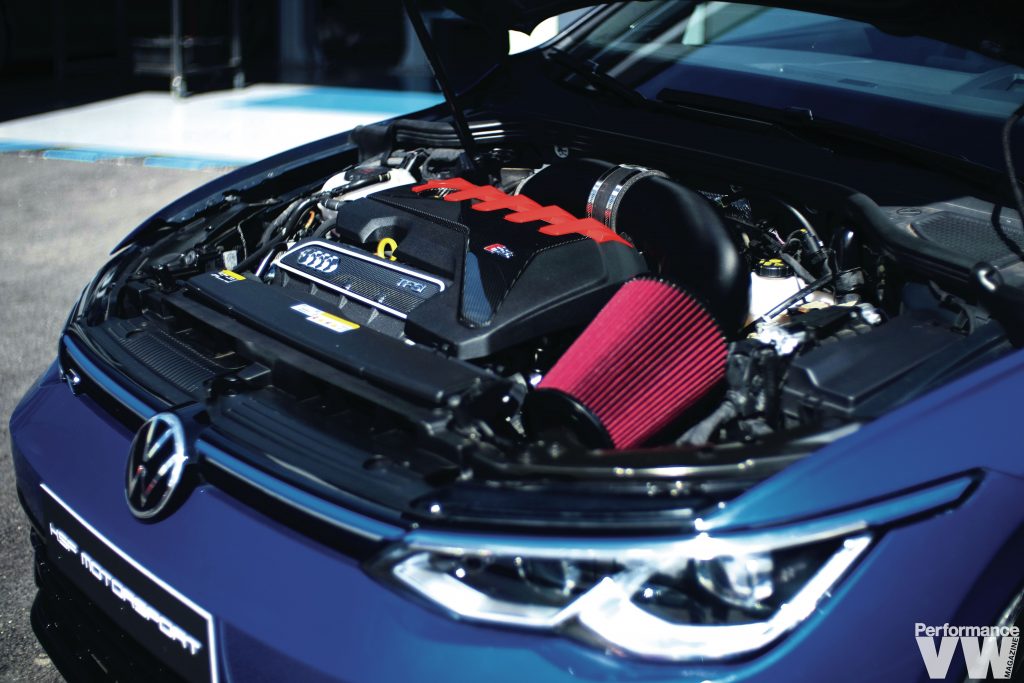
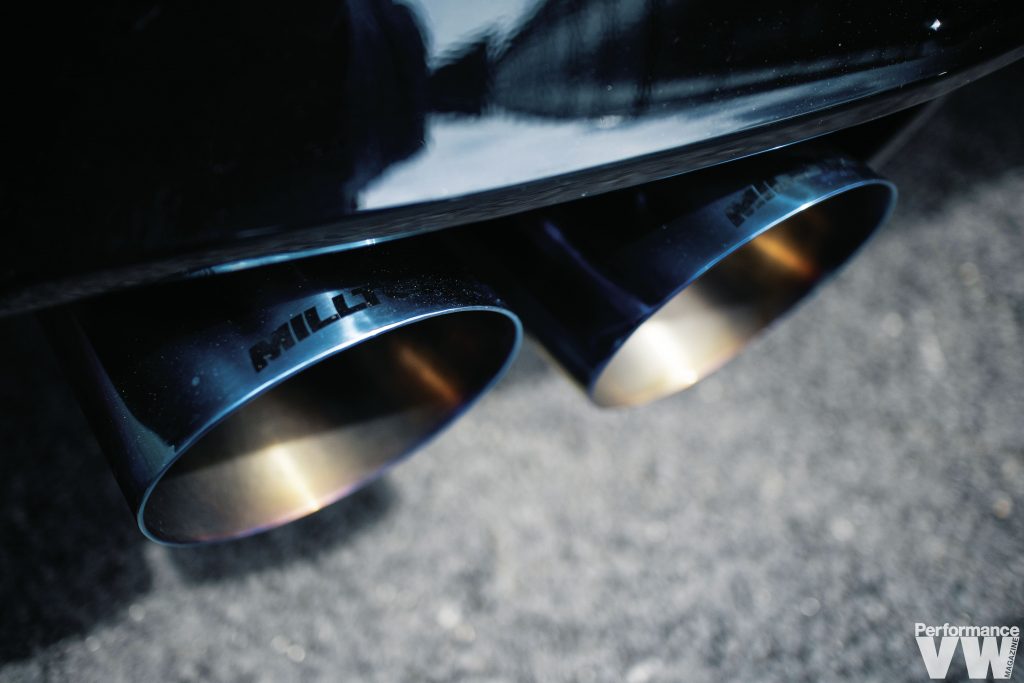
You’d need to crane your neck to see the MVP – a biblical amount of boost, supplied by the RPC Motorsport turbo kit that’s barely visible at the back of the bay. That huge filter feeds air into a 63mm Precision Turbo compressor on top of a cast alloy manifold, paired with a bespoke front-mount intercooler from Forge that required the radiators to be relocated – just like an RS3. A set of 1,300cc Injector Dynamics injectors helps meet the resulting demand for fuel at full boost, while a custom Milltek exhaust system (a hybrid of Golf R and RS3 parts) carries the combusted gases from the 3.5-inch downpipe to the back of the car.
“The five-cylinder engine requires massive intake and exhaust flow to make big power,” explains Franck. “Luckily, if nothing on the market meets those needs, then we’ve got lots of trusted partners that we can call on to produce small batches of parts to our specs. For example, that pipe between the filter and turbo is our own creation.”
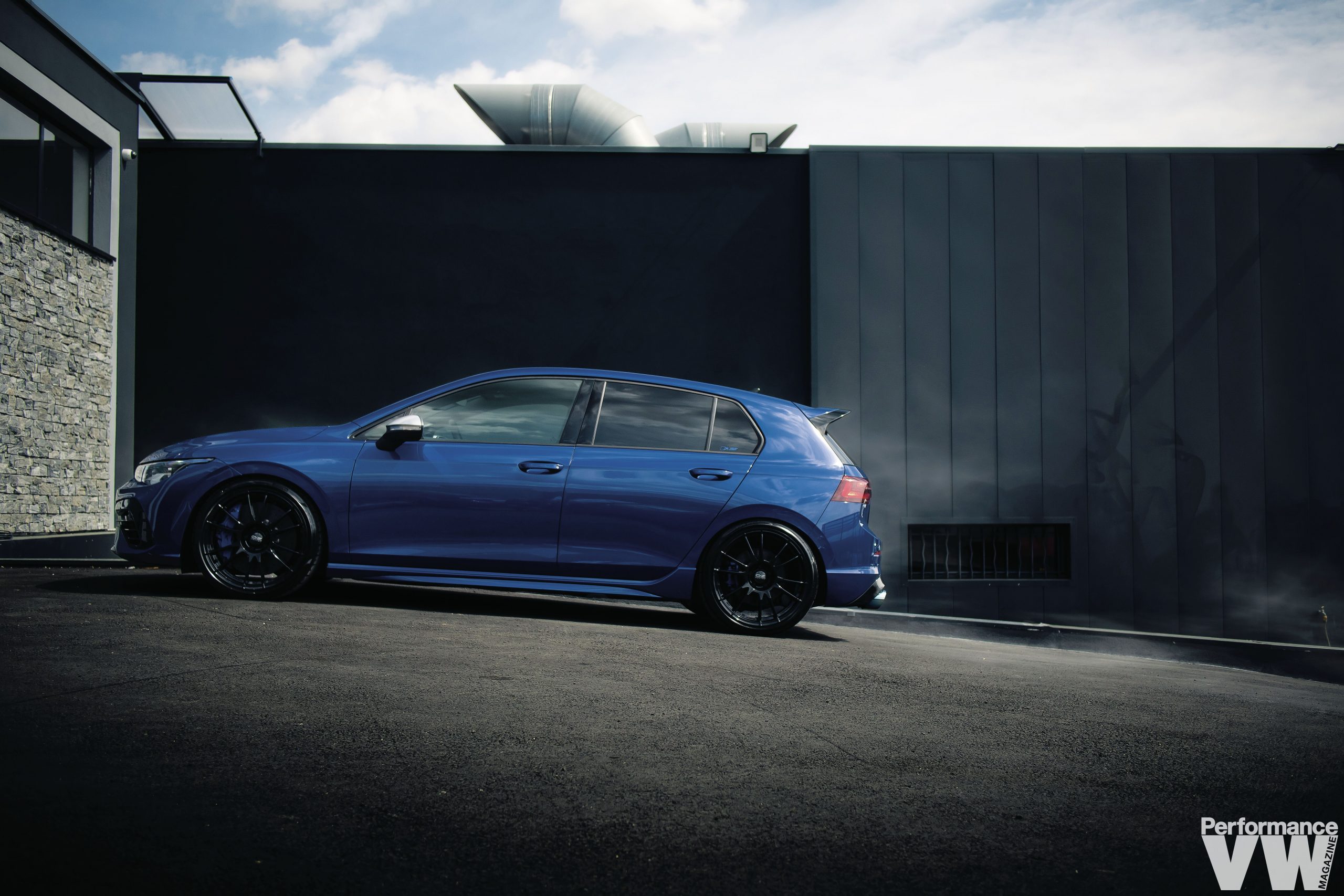
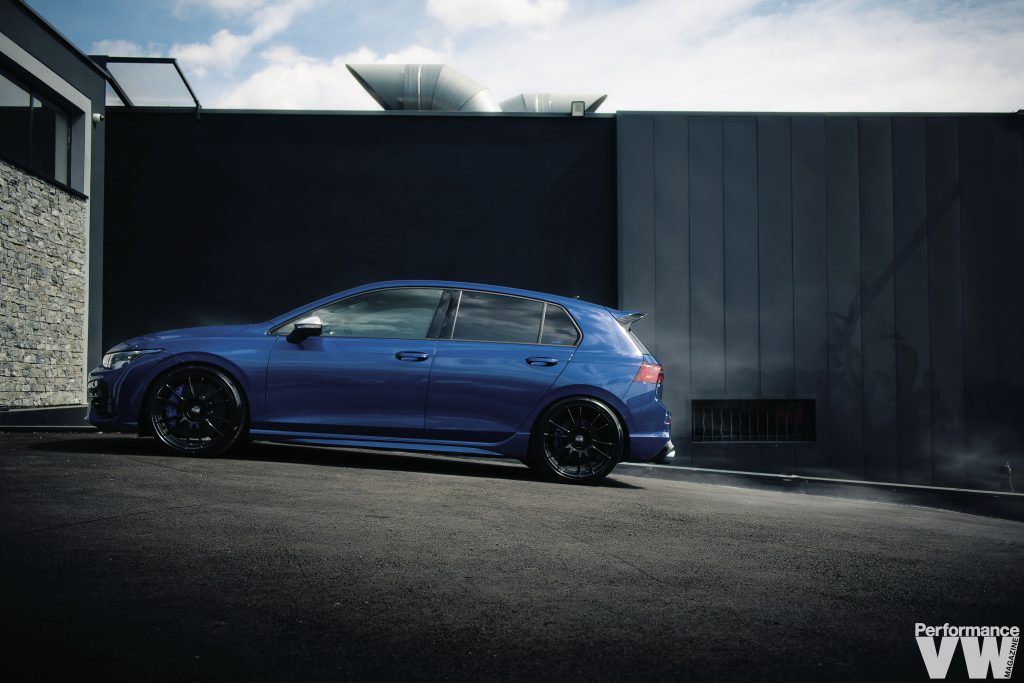
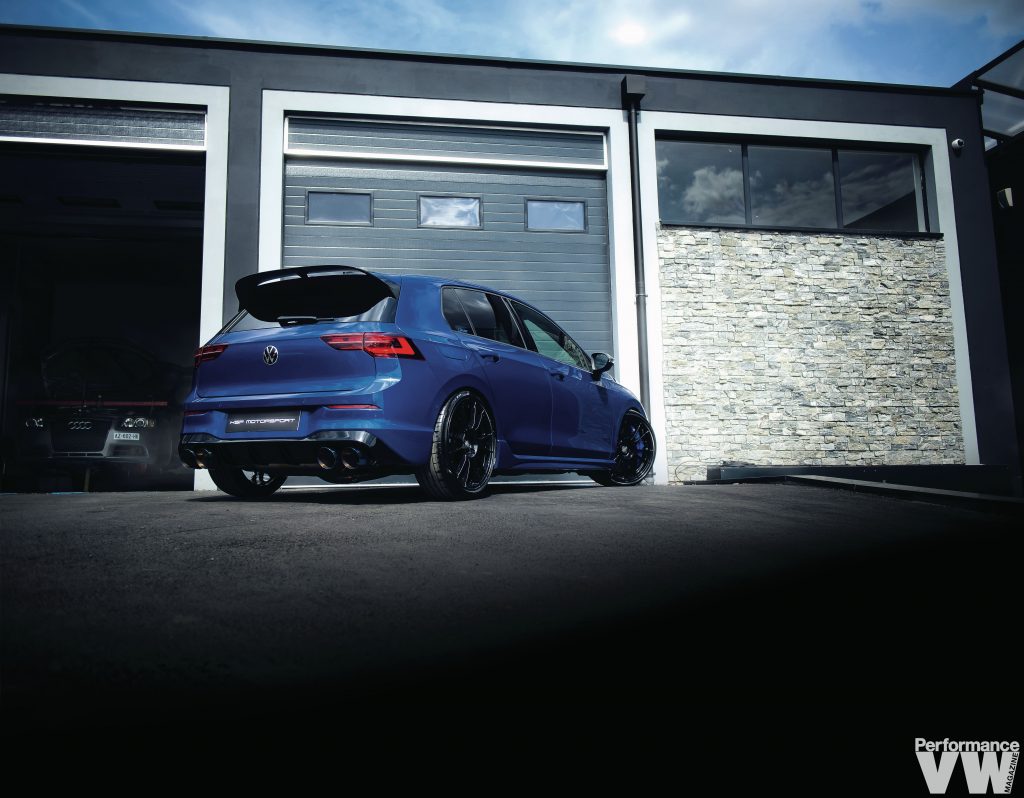
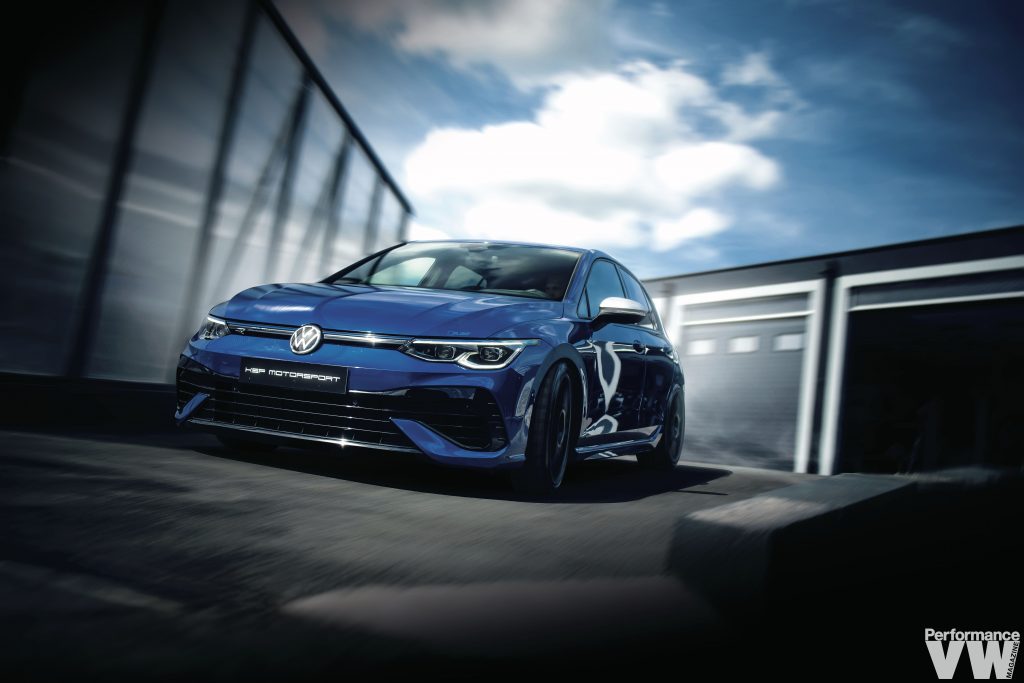
Despite the size of that pipe, you’d be forgiven (even with the bonnet open) if you didn’t spot this one instantly in the workshop. Aside from the vivid Lime Yellow Metallic used on the limited edition R333, Golf Rs have always subtly hinted at their performance potential instead of screaming about it like some rivals. In this one, Franck’s pushed the performance envelope as far as it can go without giving the game away. If it’s a visible deviation from the stock aesthetic, then it’s a necessary upgrade.
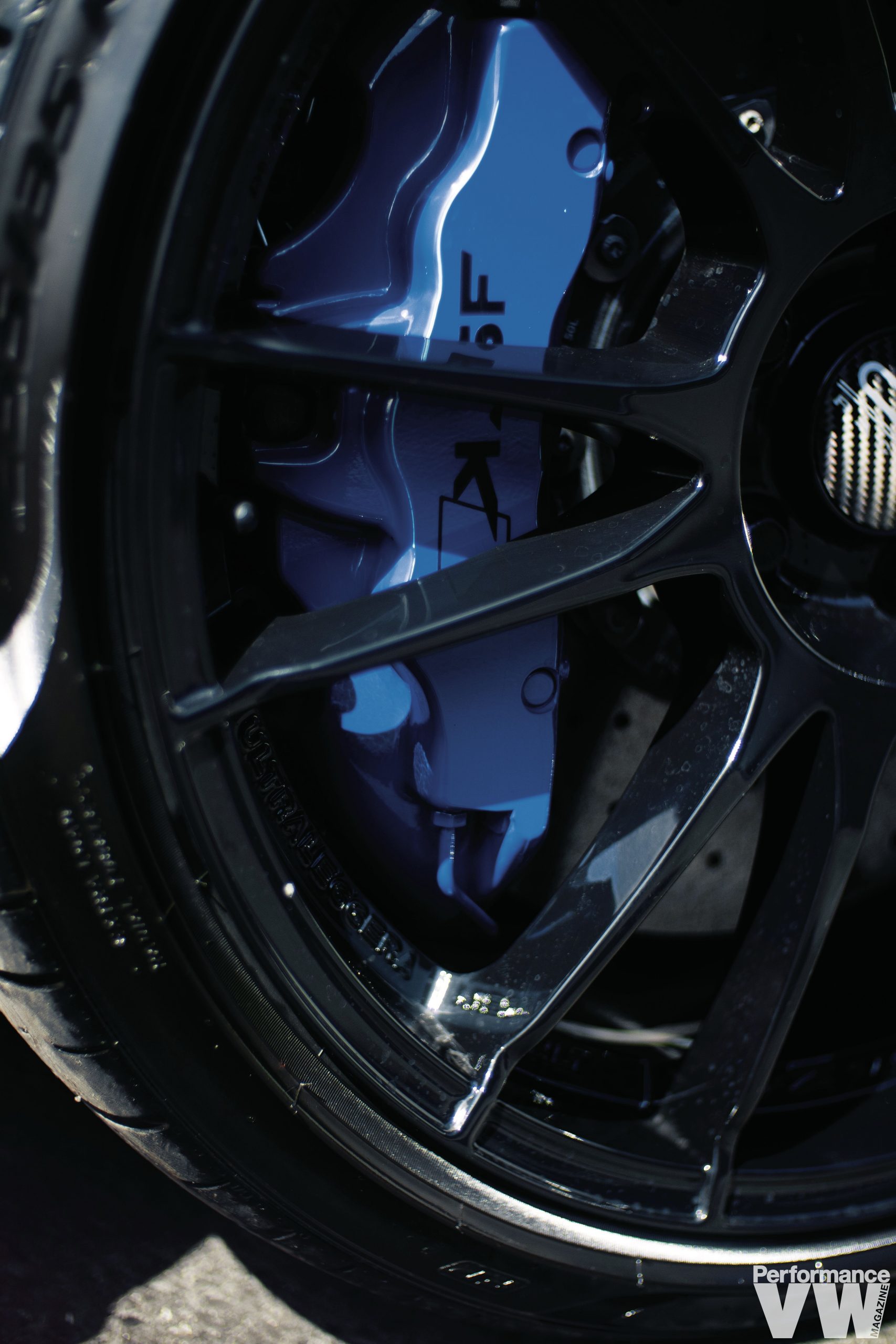
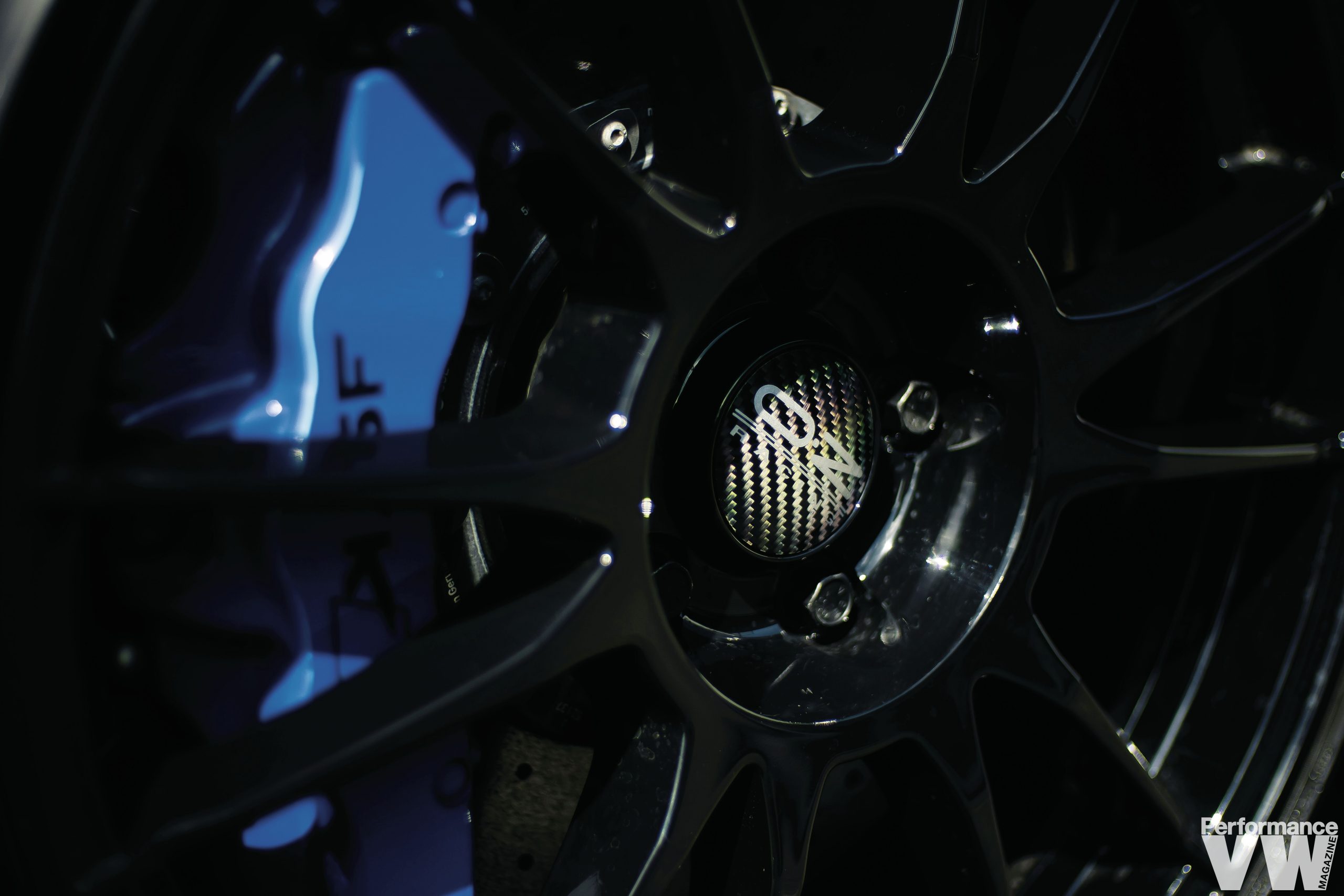
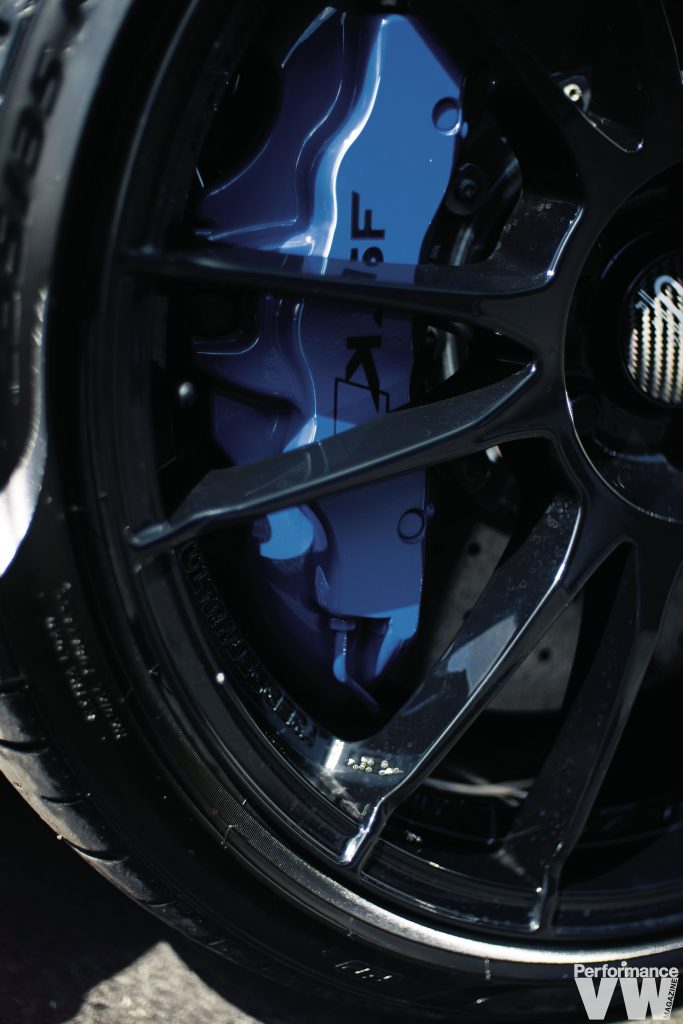
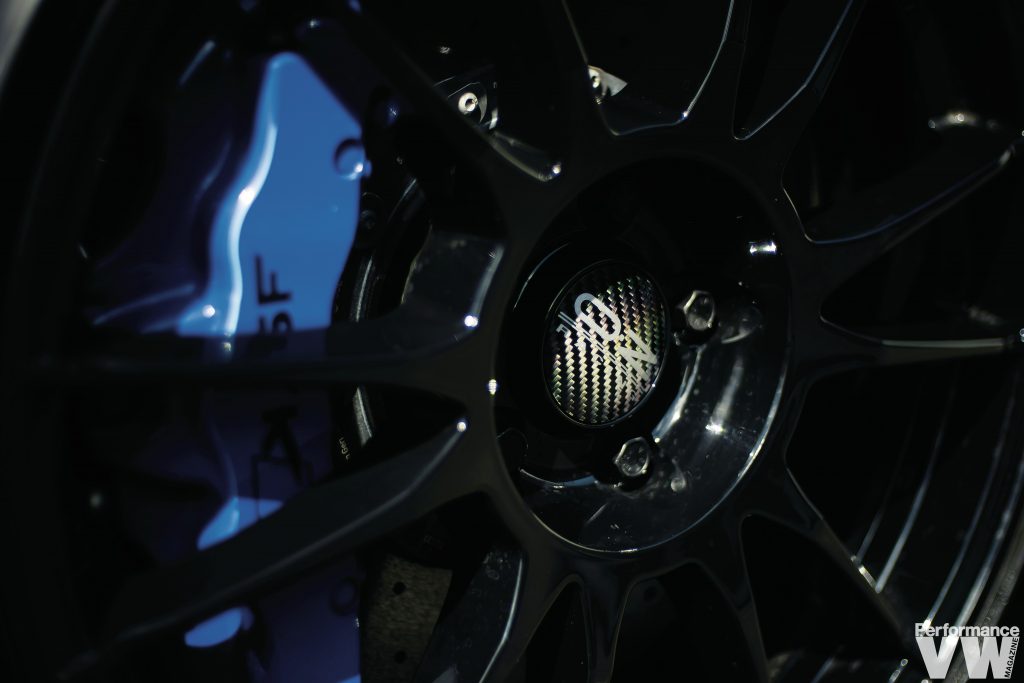
There are a few of those to look out for. The black OZ Ultraleggera wheels measure 8.5×19 inches, and they’re made using an F1-derived technology that keeps the weight down to around 9kg per corner. Custom Bilstein suspension and un-stretched Pirelli P-Zero high-performance rubber get the hard task of keeping the Golf pointing where it’s meant to, while the wheels offered plenty of space for an Audi RS3 ceramic brake setup behind the spokes. Franck reckons Golf R brakes run out of stopping power at an alarming rate if you’re heavy on the middle pedal. And at this power level, that’s kind of a given.
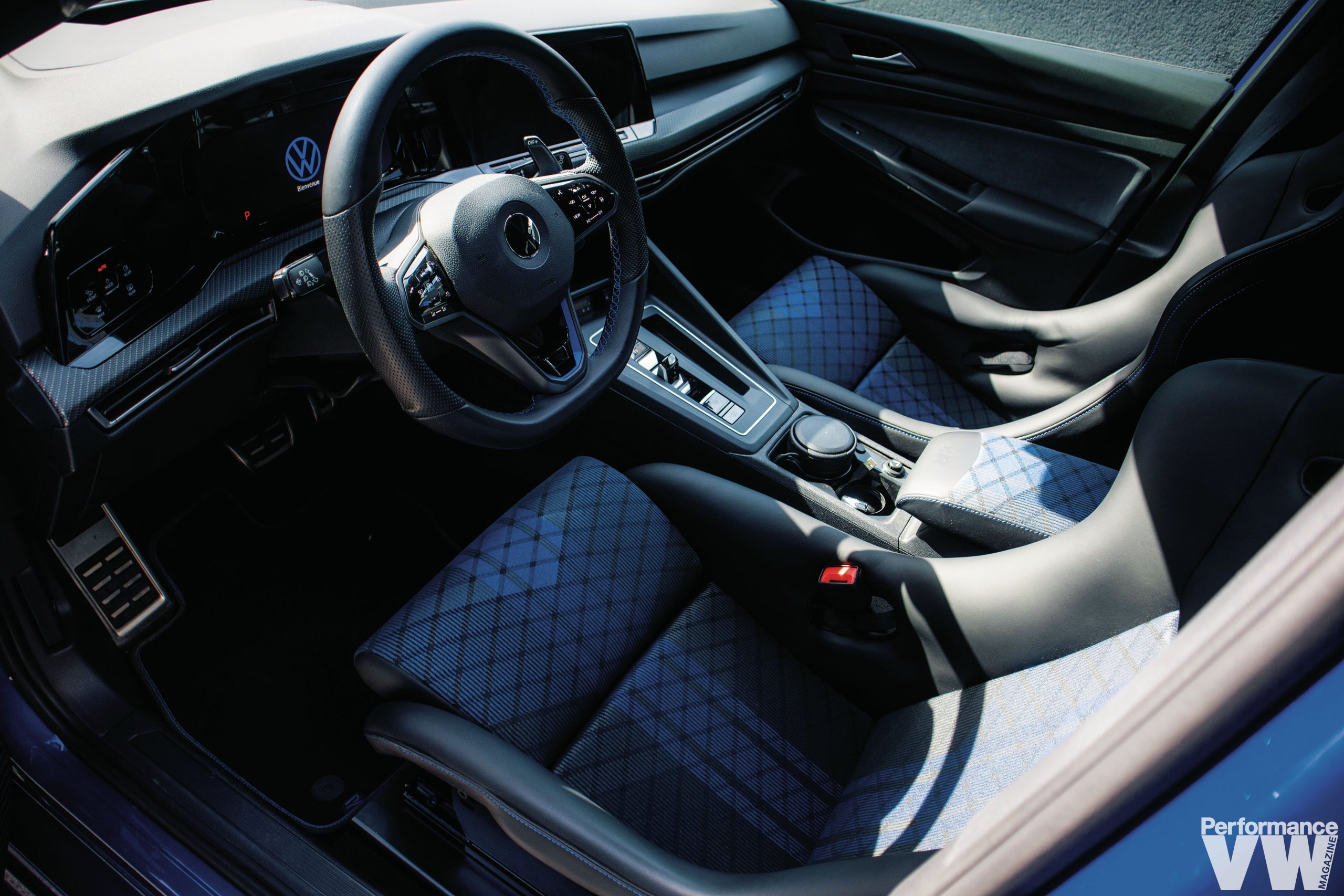
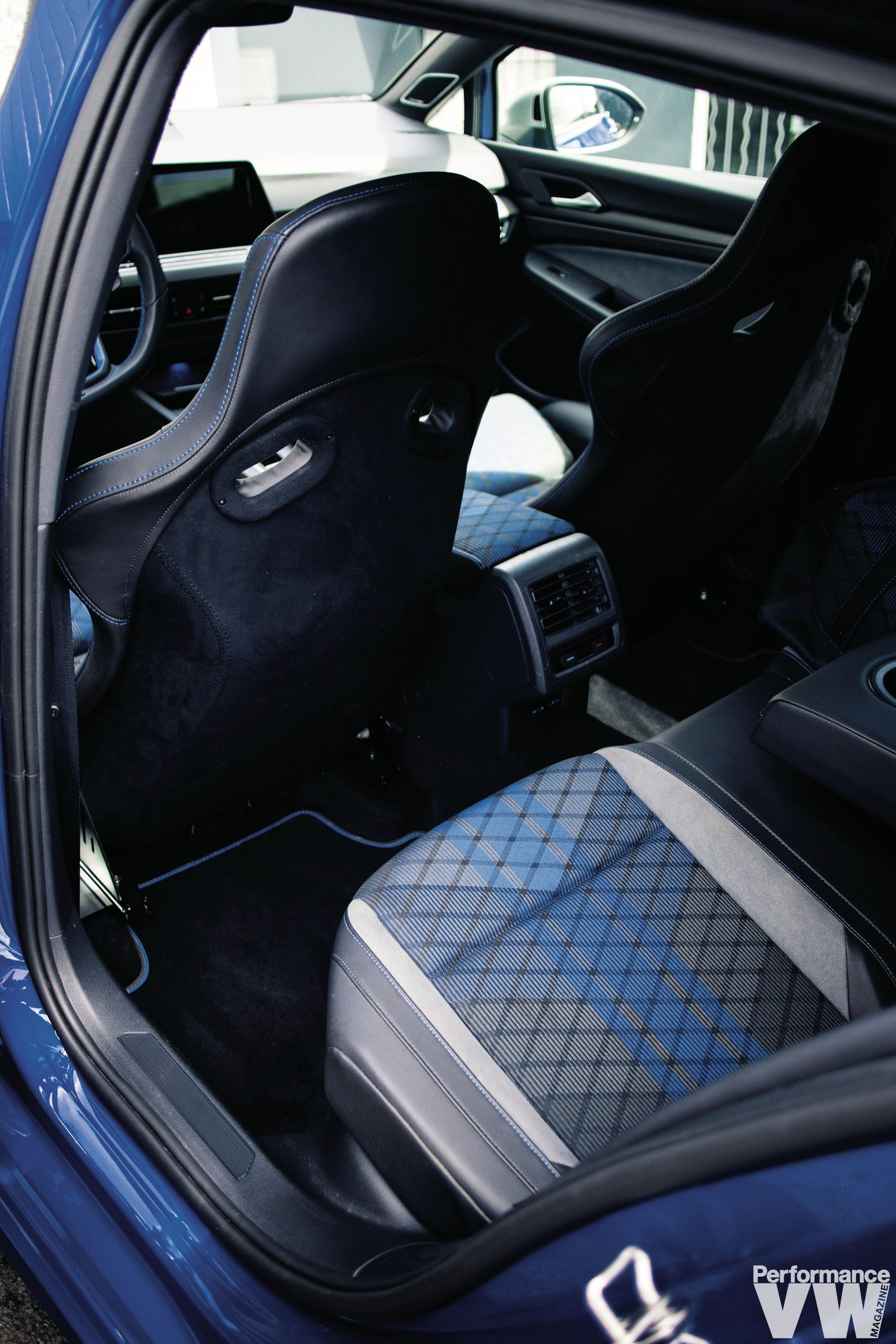
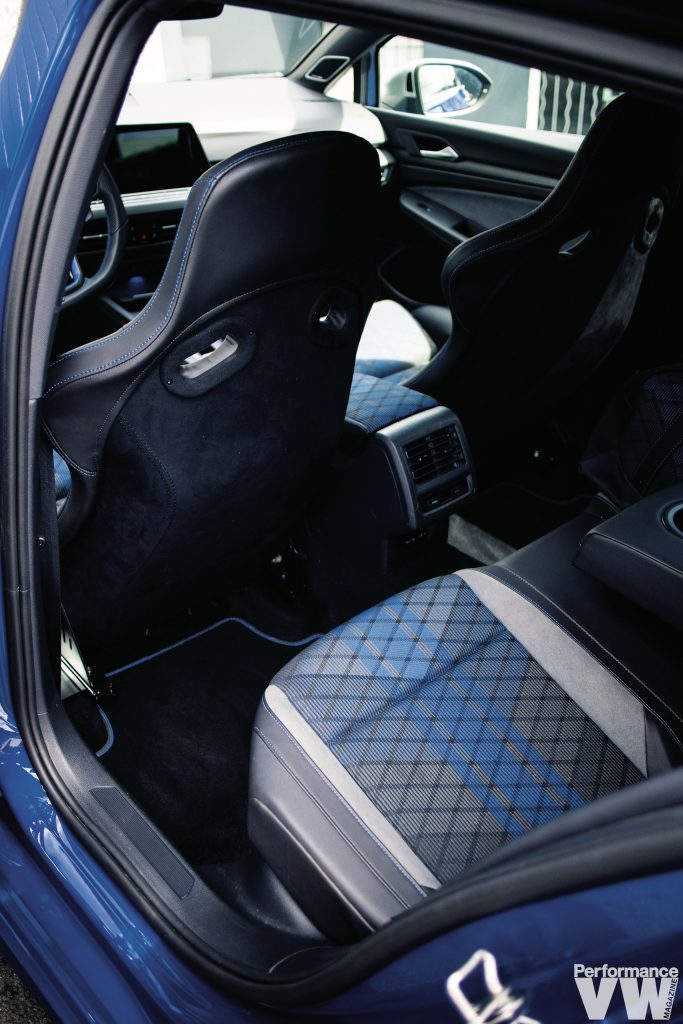
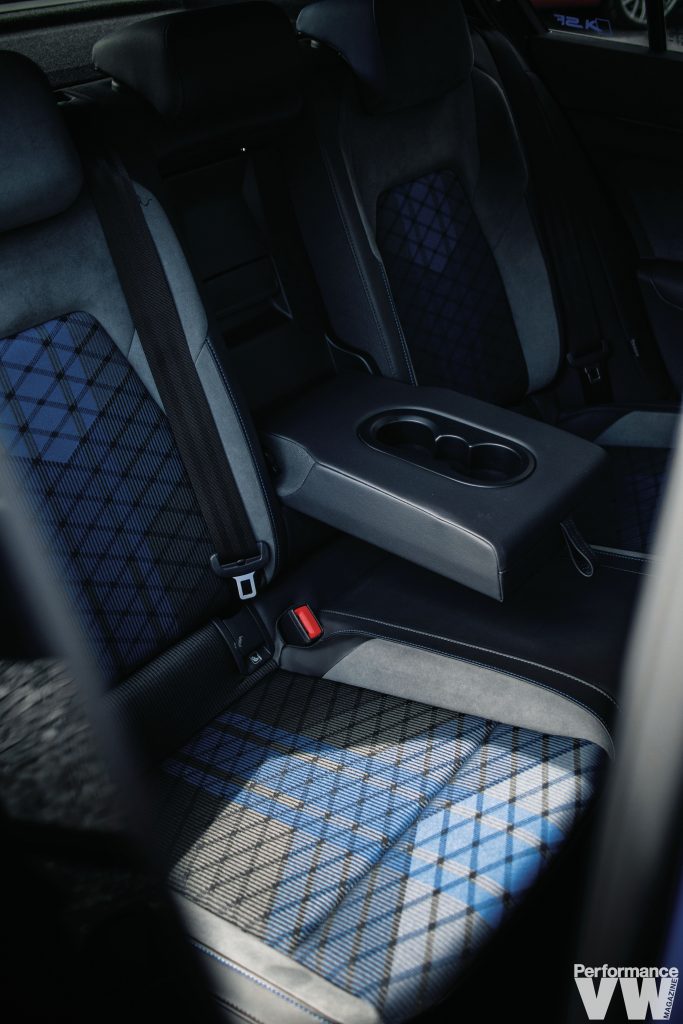
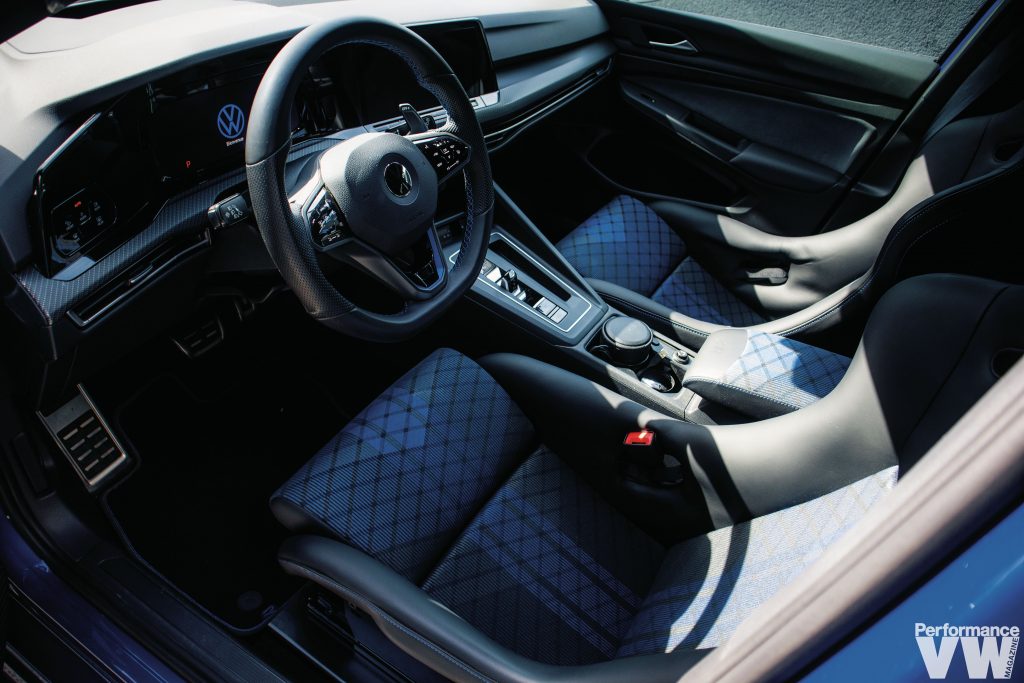
The interior changes are just as functional. Having tracked down the lightest possible Mk8 R body he could find, the tombstone-shaped factory seats struck the wrong balance of weight and bolstered side support, so they’ve been retired. KSF keeps a large selection of different seats in stock, but the choice here was easy – a pair of Recaro Pole Positions, and some of the company’s trademark attention to detail.
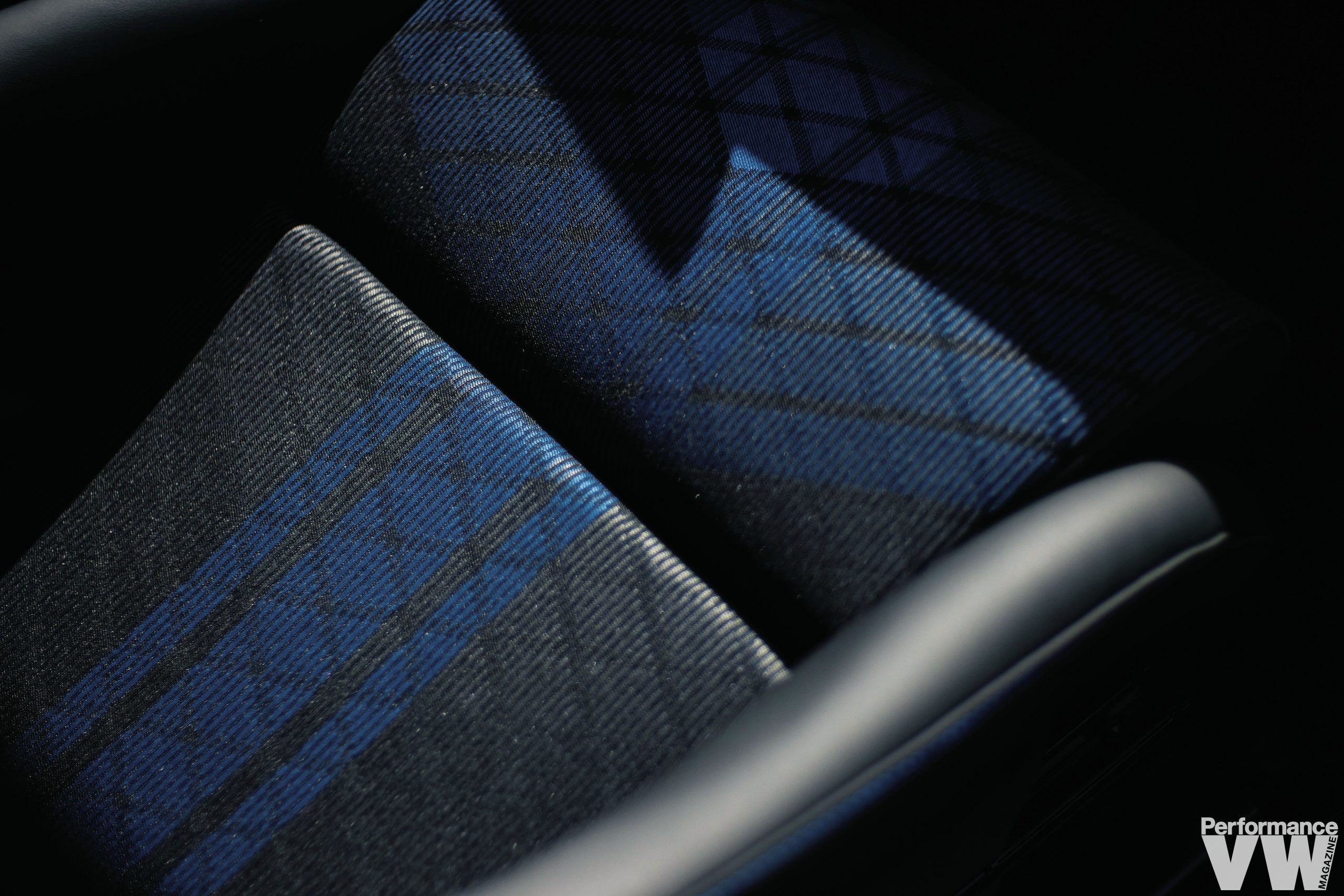
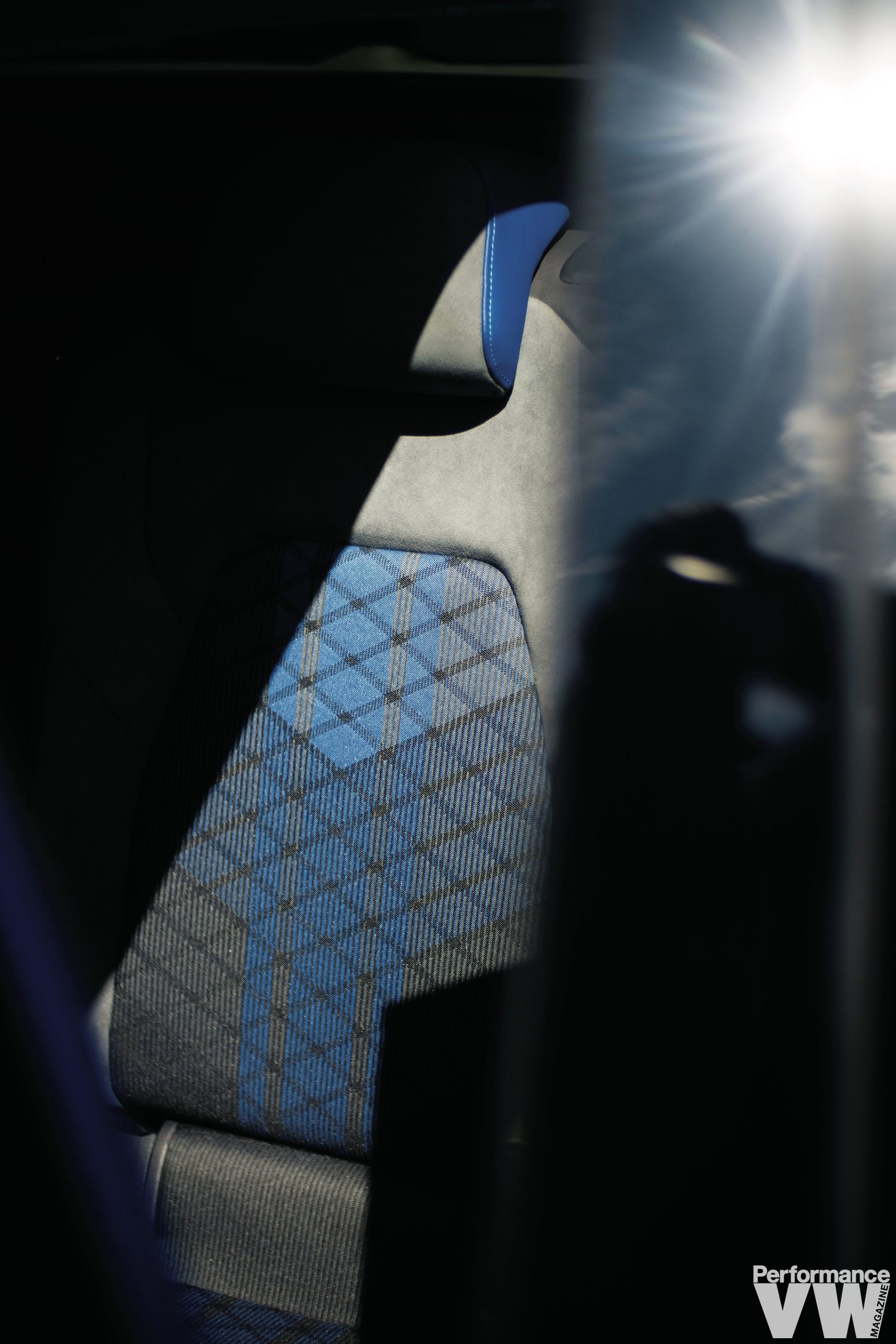
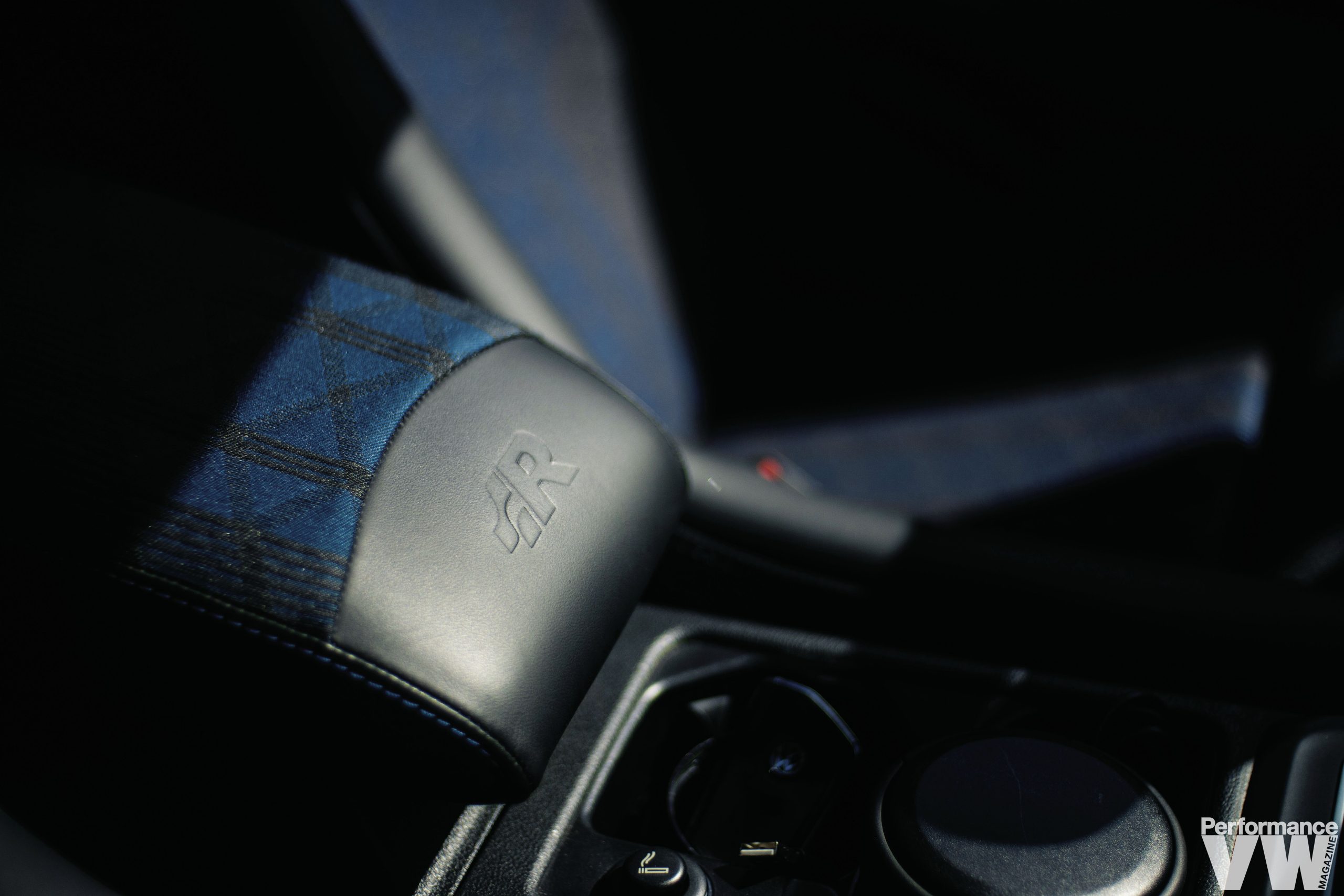
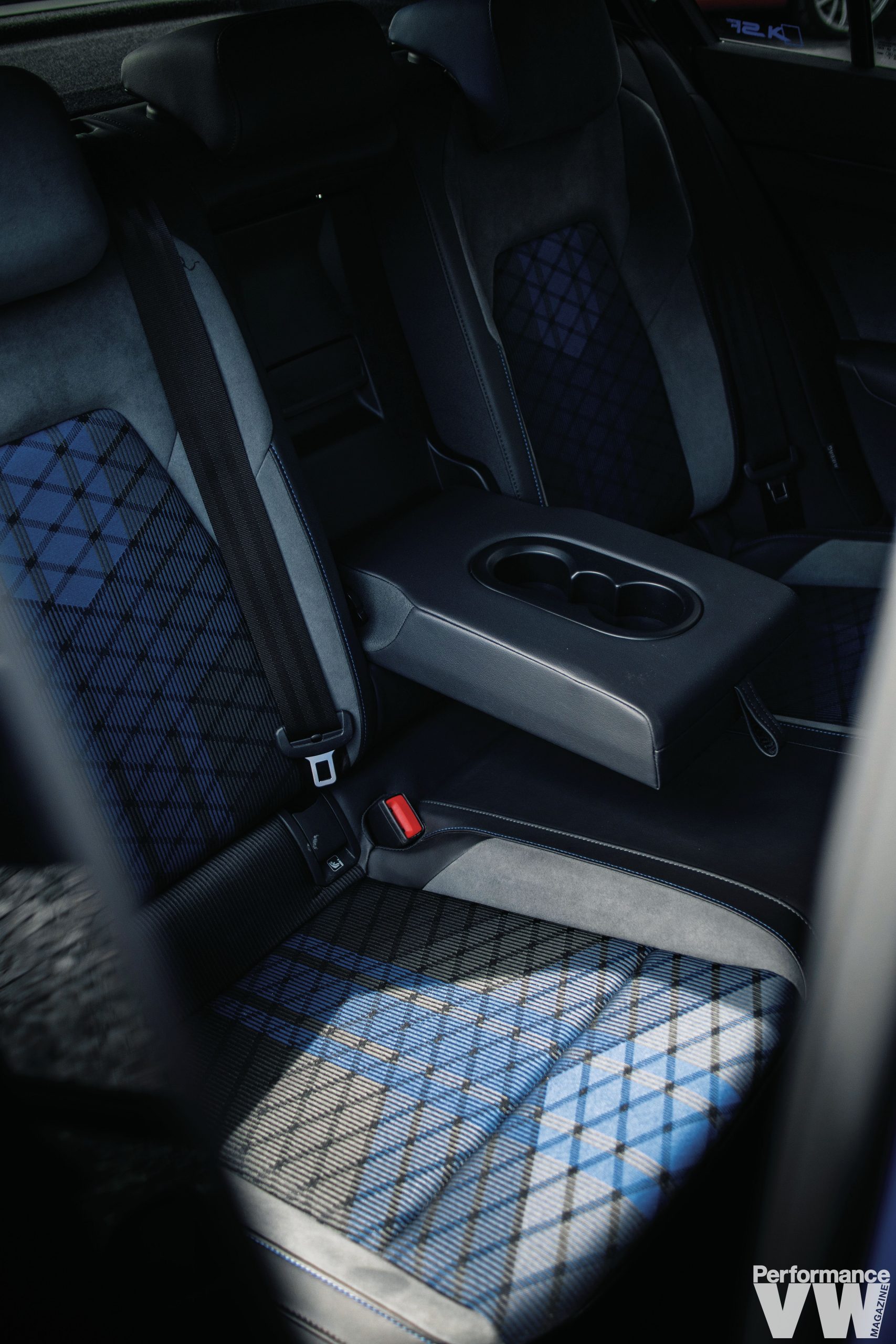
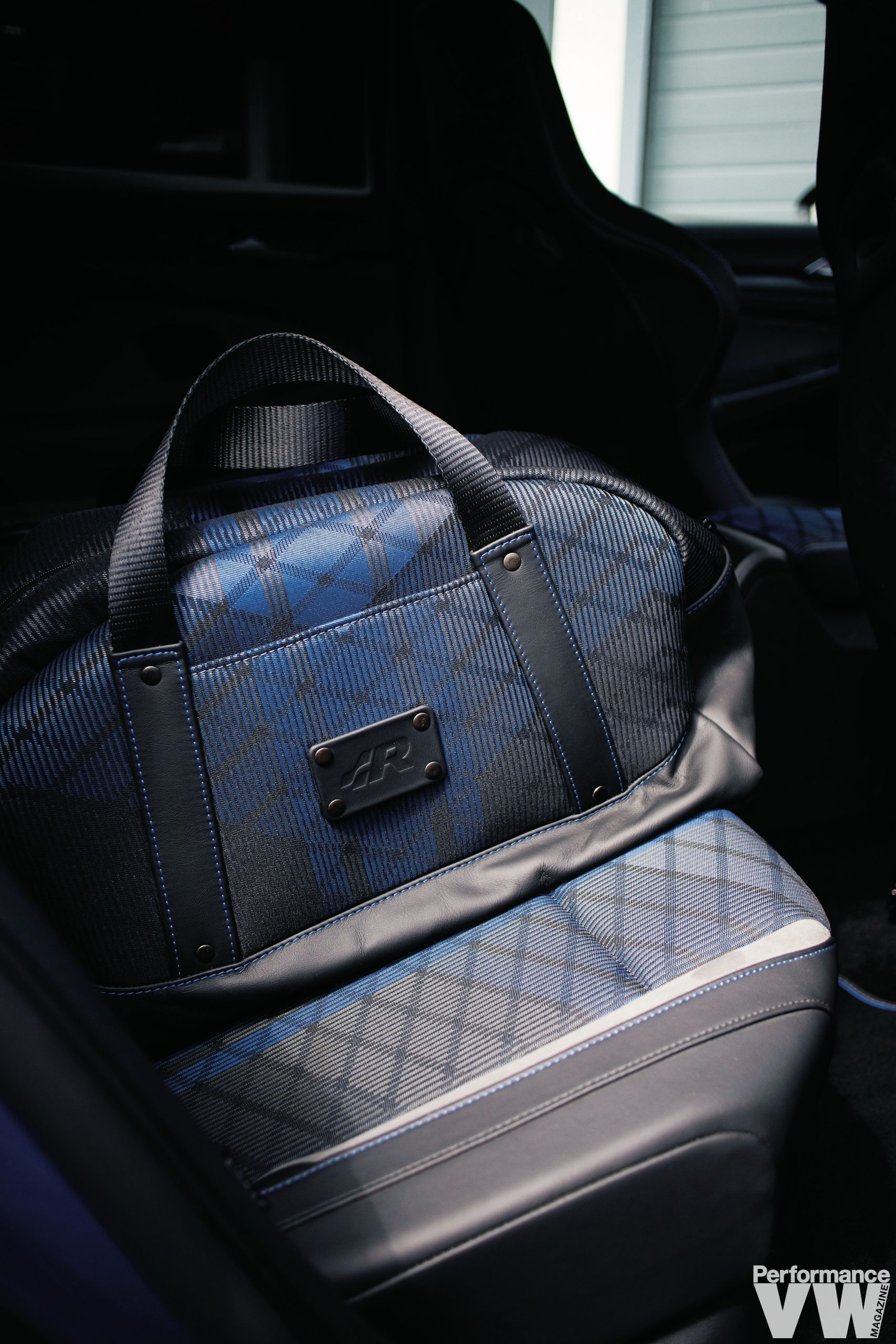
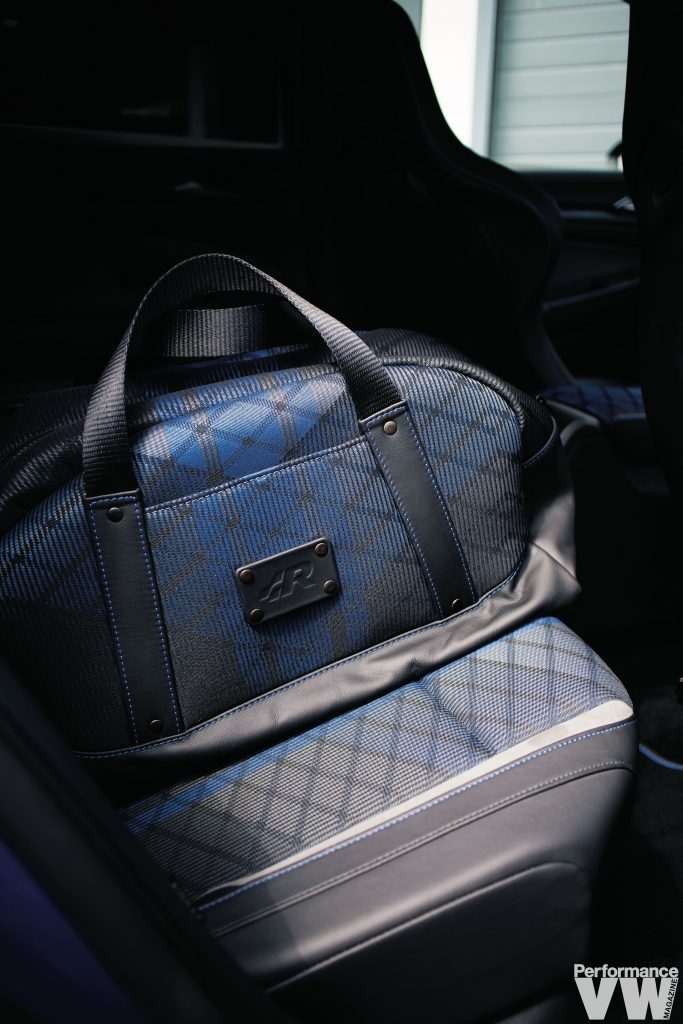
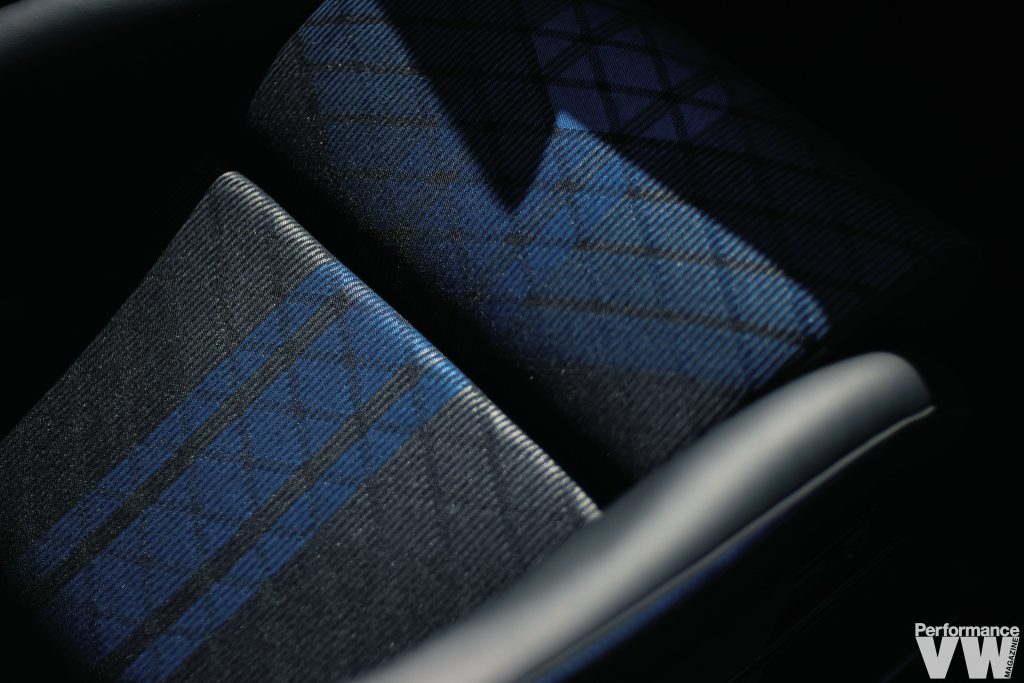
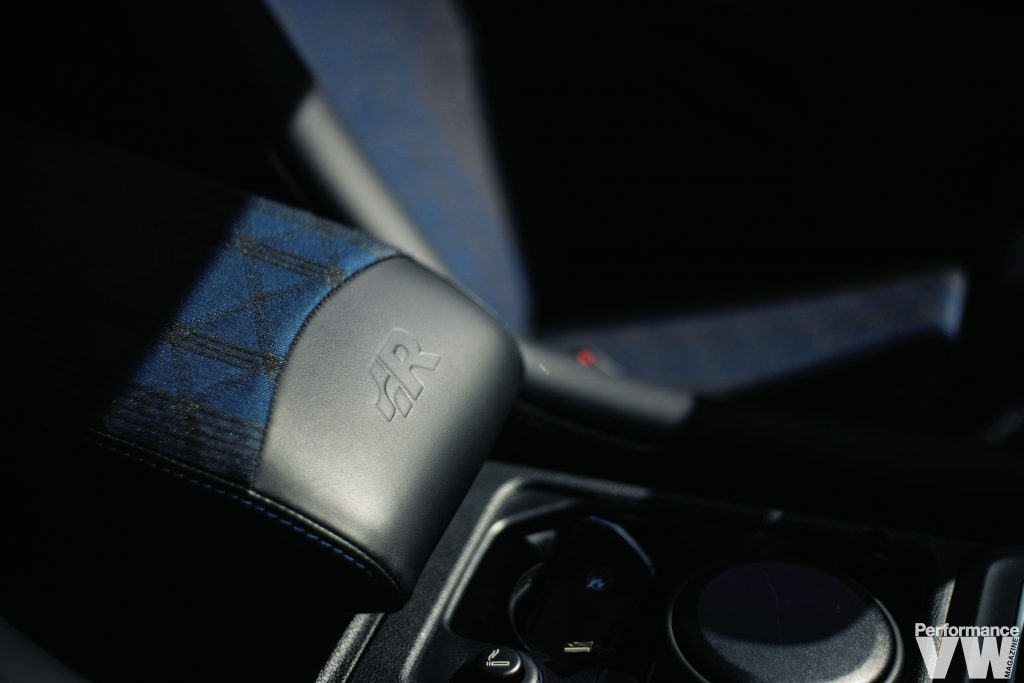
It’s pure OEM+ indulgence inside, as if Volkswagen had sprinkled a little GTI Clubsport into its range-topping model. The front seats were re-worked by famed French upholsterer Alex Sellerie, trimmed in the factory Golf R ‘Sardegna’ cloth and half leather with alcantara back panels. Between them is a matching half-leather armrest, complete with embossed R logo, while the travel bag in the back also uses the same materials. Naturally, all of the belt and pressure sensors are wired up properly, so there are no telltale signs on the dashboard. It could almost have left the factory this way.
That impression fades quickly once you touch the throttle. “We wanted this to be usable as a daily drive, but which could transform into a monster for the track. With multimapping we have four engine maps – you just need to turn the electrics on, press the throttle pedal to select the map and it changes the character completely,” he explains.
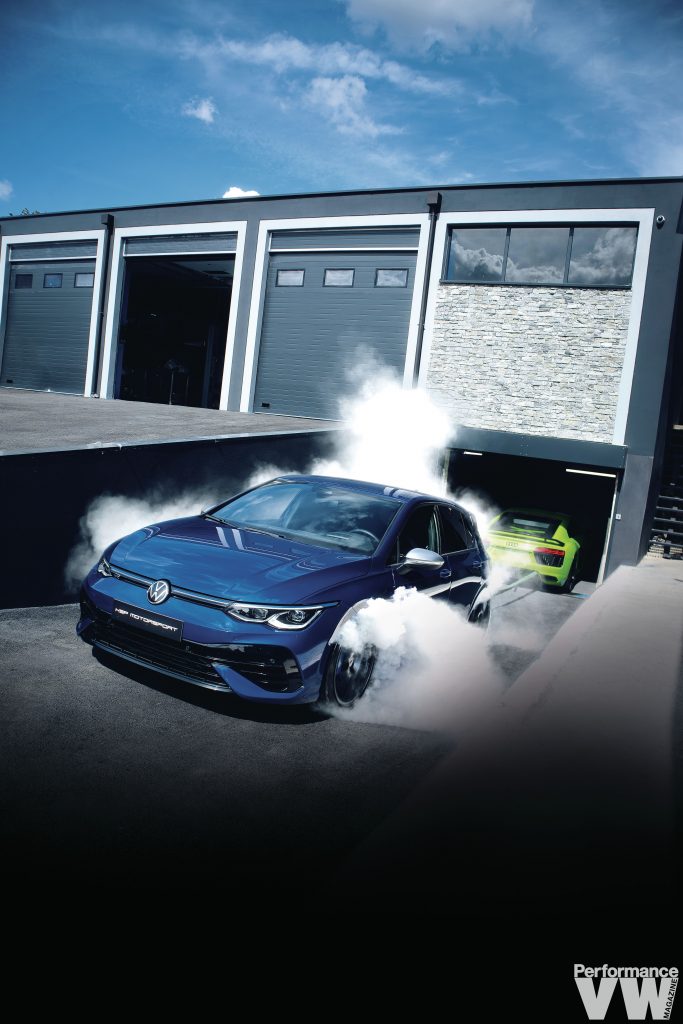
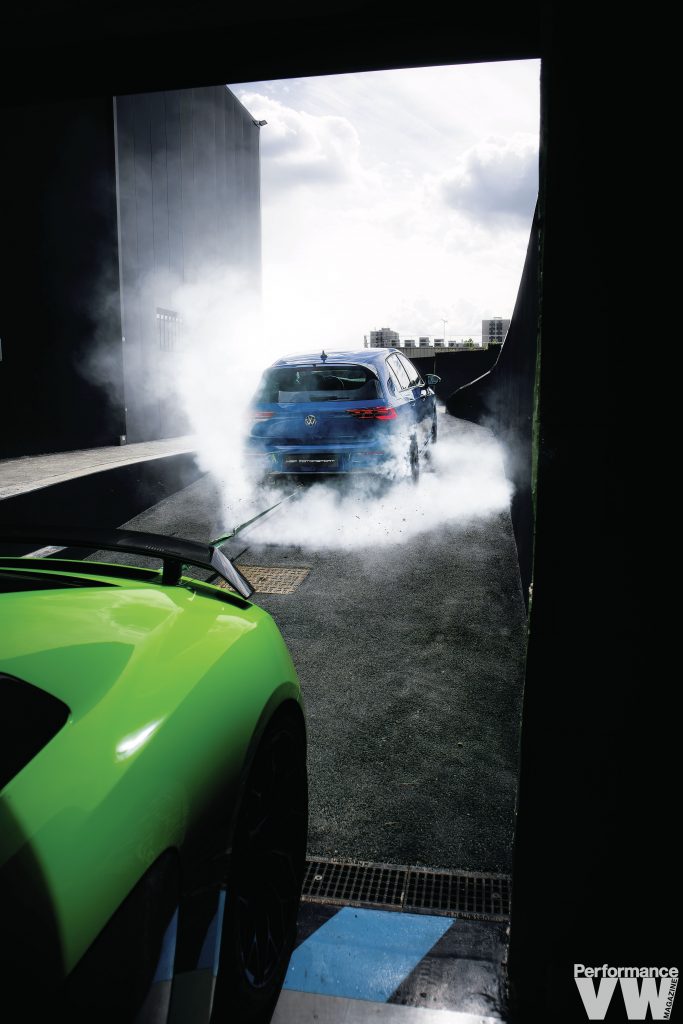
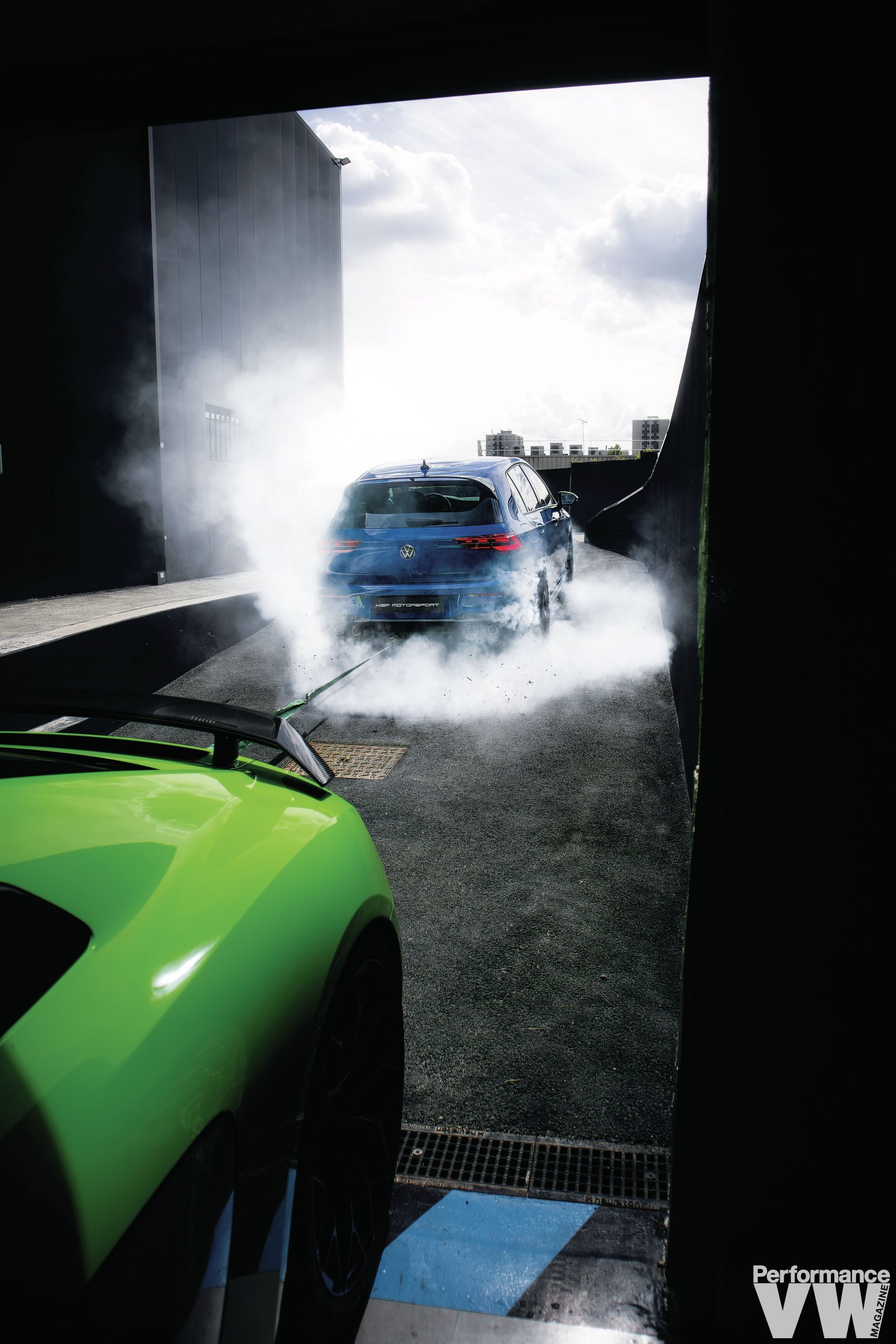
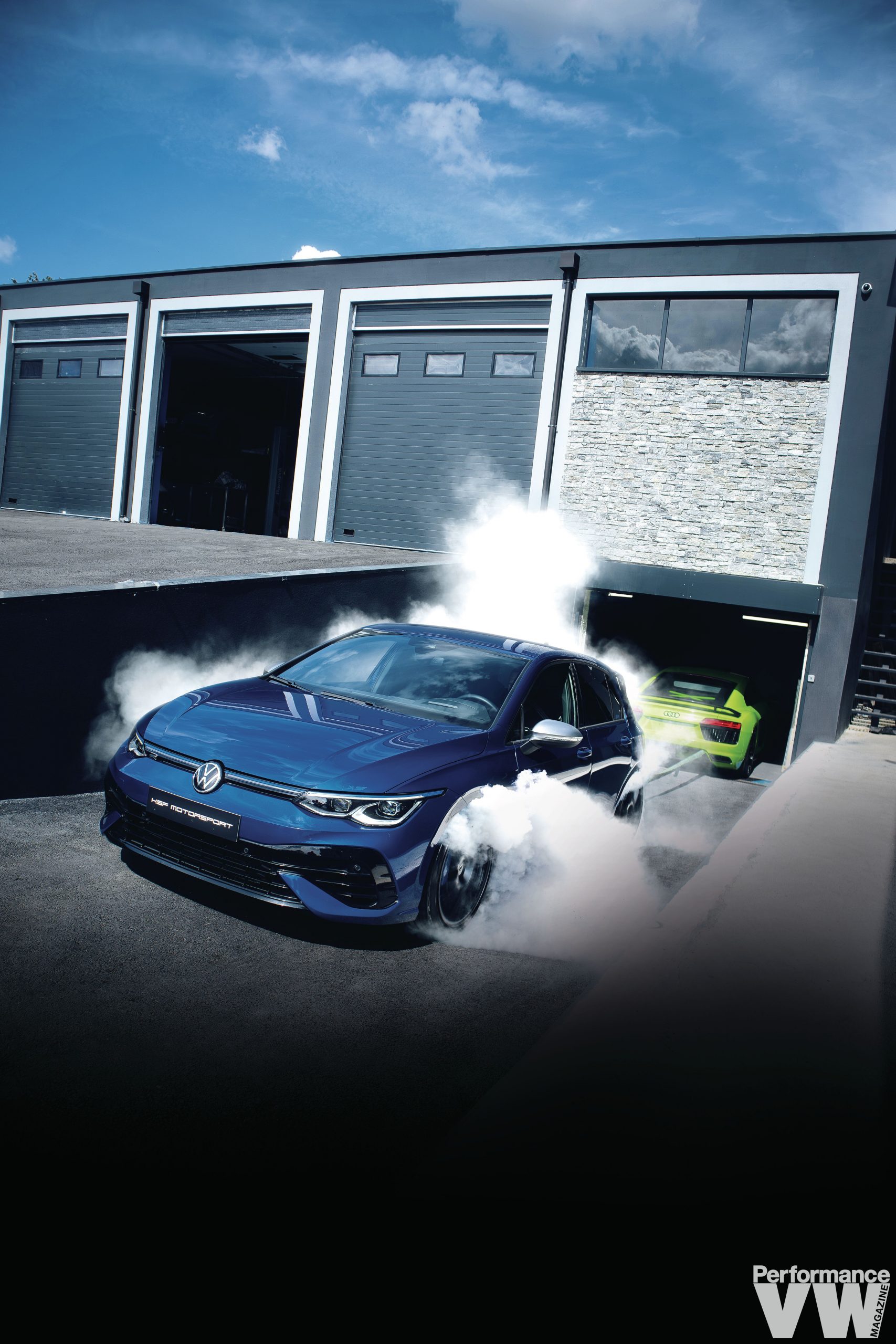
“In Mode 1 it feels like a standard RS3 – everything is normal and the exhaust valve is closed – your mother could go to the bakery in it. Press the throttle four times and in Mode 4 you get the full 900hp with the valves open. It’s really fast, really loud, burns tyres for half a second and then the power goes to the ground. Everything works as if it came out of the factory that way, but with that five-cylinder sound when you’re pushing it hard.”
That’s assuming you’ve got any brain power left to process the way it sounds. Franck claims a 3.7-second sprint from 100km/h to 200km/h (62mph to 125mph, in old money), which is slightly less time than it takes for a stock RS3 to reach 62mph from a standstill. That’s quick enough to run rings around everyone else at a track day or drag strip, but with the ability to dial everything back down and drive it home calmly afterwards – assuming, of course, there’s enough rubber left on the tyres to do so. In that sense, it’s lost none of the Golf R’s character.
Nor any of its accessibility, if you’re happy to take a trip to the Parisian suburbs. The Golf R has made supercar-baiting performance available to the masses, and the end result of this project is a package of parts and expertise enabling others to have that same experience. KSF has already built its first 2.5T-swapped Mk8 R for a customer in Dubai, and there’s plenty of hard work going on behind the workshop shutters developing the next stage of upgrades – and the next generation of performance cars too.
After all, Franck likes a challenge. “I don’t see a future for electric,” says Franck. “But you can already gain nearly 200hp with a Stage 1 upgrade on the Panamera and Cayenne hybrids. There’s real potential in this technology and, if manufacturers go all-in on hybrids, then we’ll know how to make them sing.”
It’s a good sign that there’s plenty on the horizon to stun this car-obsessed word-juggler into another awestruck silence. From Lamborghinis to SEATs, four-figure horsepower supercars to carefully rebuilt classics, KSF Motorsport has rightly earned its reputation as a go-to for meticulously finished builds. But, if you’re ever stopping by, take the time to check out the most subtle project in the workshop. You might be in for a surprise.
DUB DETAILS
|
ENGINE |
2500cc, five-cylinder, TFSI turbo (from 2021 RS3), IRP conrods and pistons, custom cylinder head, Ferrea Racing valvetrain, DAZA exhaust camshaft, RPC Motorsport turbo kit with 3.5-inch downpipe, Precision Turbo 63 turbocharger, KSF Motorsport inlet, custom Forge Motorsport front-mount intercooler, Forge Motorsport dump valve, custom Milltek Golf R/RS3 hybrid exhaust system, Injector Dynamics 1,300cc injectors, dual fuel pumps, high-flow fuel line, Multimap ECU, DQ381 DSG transmission with Dodson Motorsport clutch kit |
|---|---|
|
CHASSIS |
Custom Bilstein suspension, RS3 8Y 380x38mm ceramic brakes, Goodridge flexible hoses, Motul RBF600 brake fluid, 8.5×19 OZ Ultraleggera HLT wheels, 235/35 Pirelli P-Zero 4 tyres |
|
EXTERIOR |
Tailgate badge removed |
|
INTERIOR |
Recaro Pole Position bucket seats trimmed in OE Golf R ‘Sardegna’ cloth and leather by Alex Sellerie, matching armrest with embossed ‘R’ logo |
|
SHOUTS |
The KSF Motorsport team, MRC Tuning, Forge Motorsport, Milltek Sport, Liteblox, Injector Dynamics, OZ Racing. |