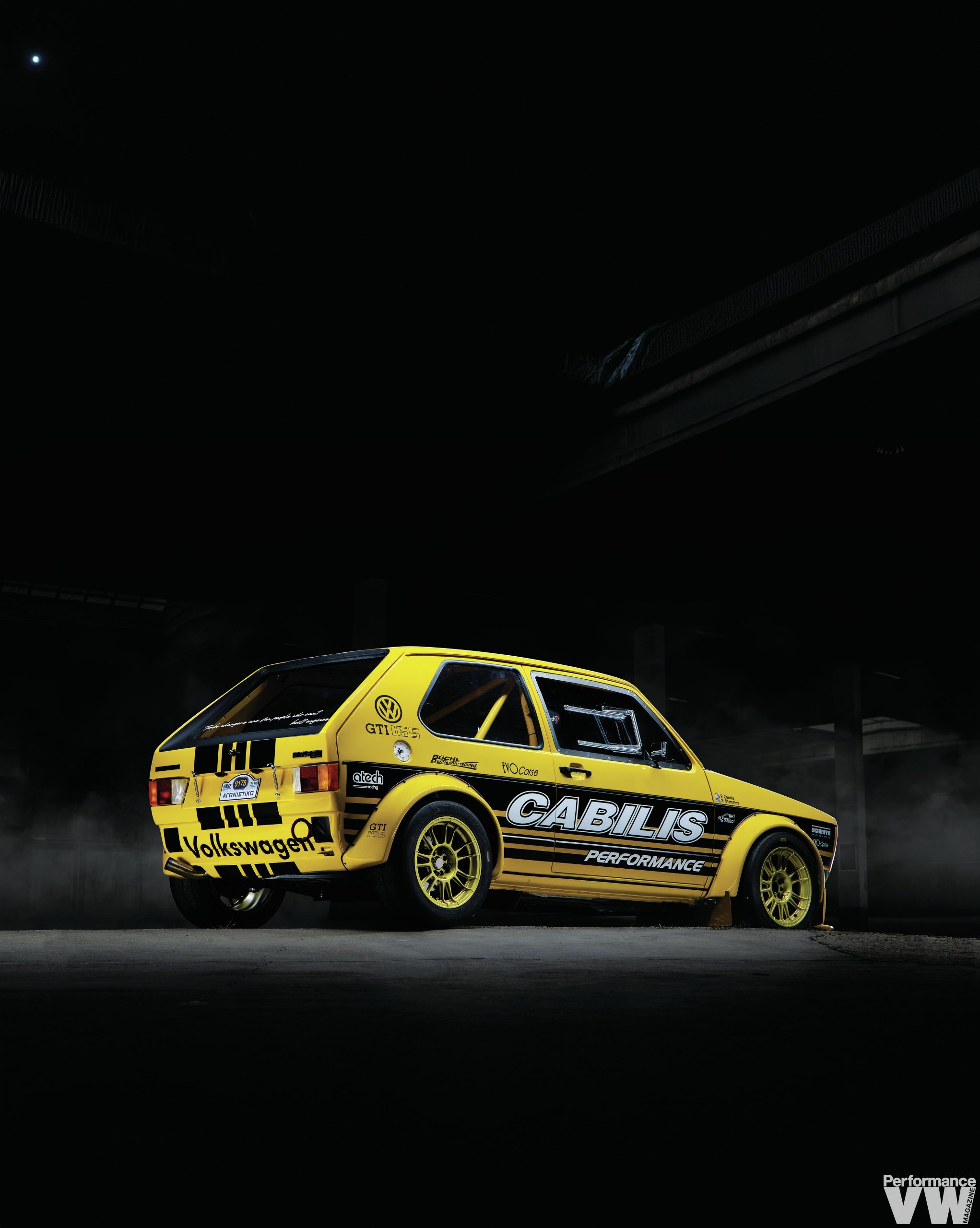
CLIMB DANCE
When we featured Cabilis Performance’s hill climb Mk1 Scirocco back in 2014 we thought we’d seen it all. Shows what we know…
The story of David and Goliath is one that needs no introduction. The pair have been referenced countless times whenever a metaphor regarding the “victorious little guy” is needed. I’m sure Goliath was just misunderstood, but Dave and his trusty little sling with a few river stones brought the giant down. And if David were alive in modern times, there is no doubt he would favour the MK1 Golf that’s on the pages before you. You see, this is an automotive giant killer. A yellow giant killer, in fact. The third of its name.
Takis Cabilis is no stranger to the pages of PVW, but it’s been a hot minute since his previous “project” was featured back in May 2014. That car, a 1977 Scirocco dubbed Giant Killer II, was built to compete and it did just that, taking names and beating behemoths on its path to glory. The original Giant Killer was Takis’ Beetle dragster that cut down the quarter mile in record time back at the turn of the century. A record that stood for three years. Those in Greece, where Takis hails from, need no introduction to Cabilis Performance. A family business that opened over 55 years ago, they originally started as a VW and Audi repair center, but since 1994 have also been running a race team. “Our workshop specializes in high-level mechanical work, performance builds, and historic race car preparation,” Takis tells us, ”all rooted in decades of hands-on experience and a deep passion for motorsport.”
In the years following the Scirocco’s completion, focus was spent on building other race cars for clients, as well as special road-going projects within the VW Group. However, tucked in his garage and waiting patiently for 17 years was the next iteration of the giant slayer, just waiting for its moment in the spotlight. “It originally belonged to a customer of mine,” says Takis.
When it was time to roll the Golf out of the shadows, a short conversation on its future fate was had between Takis and his brother, Kostas. “We debated between a high-end classic restoration or turning it into a race car. The decision came quickly—it was going to be a historic racing car.”
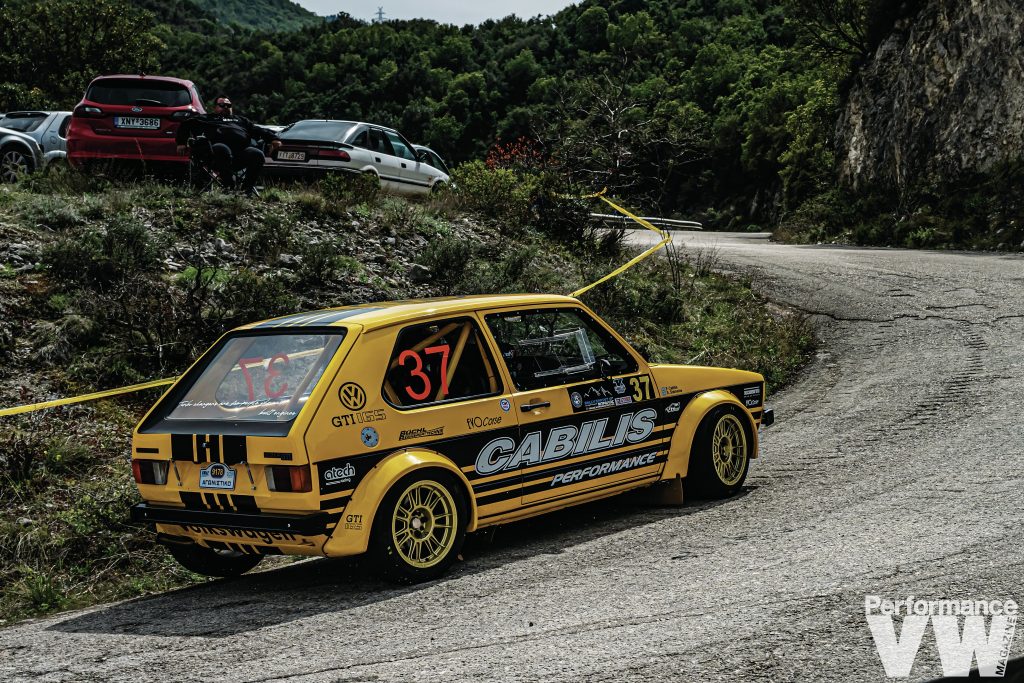
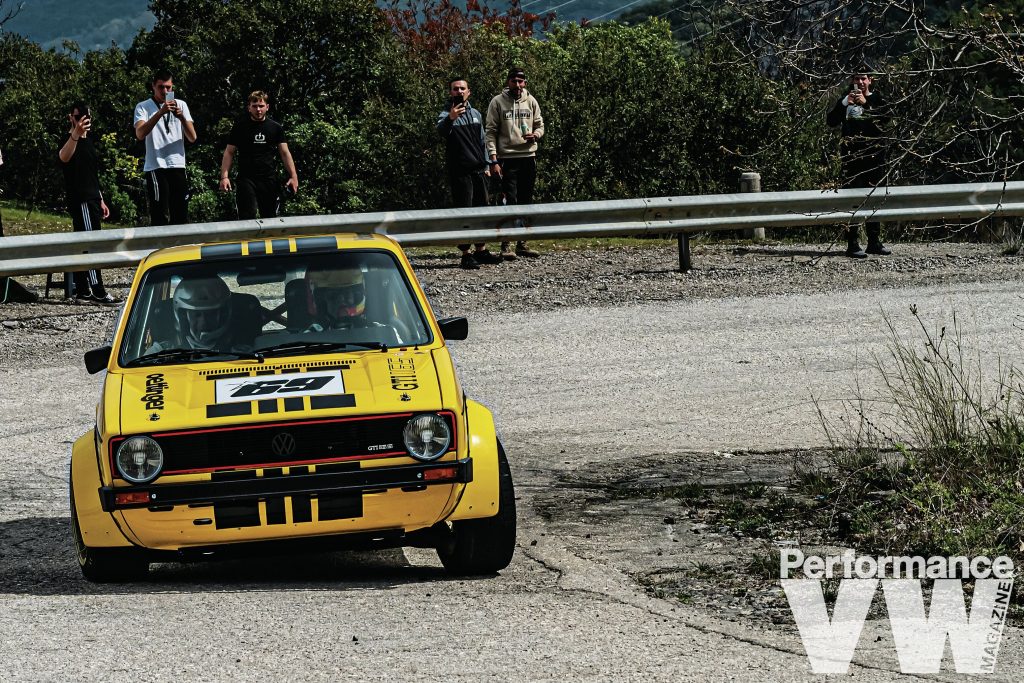
As they’ve never built a MK1 for racing, this was no doubt going to be another canvas to showcase their incredible talents. It was decided they were going to play by the FIA’s Group 4 rules. “The car competes in the historic racing category, holding an HTP (Historic Technical Passport) recognised by the FIA, under the Group 4 classification,” Takis says proudly.
The build started in 2023, stripping the car to a bare shell. “My very first and most vivid memory of this project is washing the car inside and out with a pressure washer,” Takis recalls, “determined to strip away all the years of neglect and dirt it had accumulated. Knowing that I would only keep the chassis and two doors from the original car made that moment feel like a fresh new beginning.”
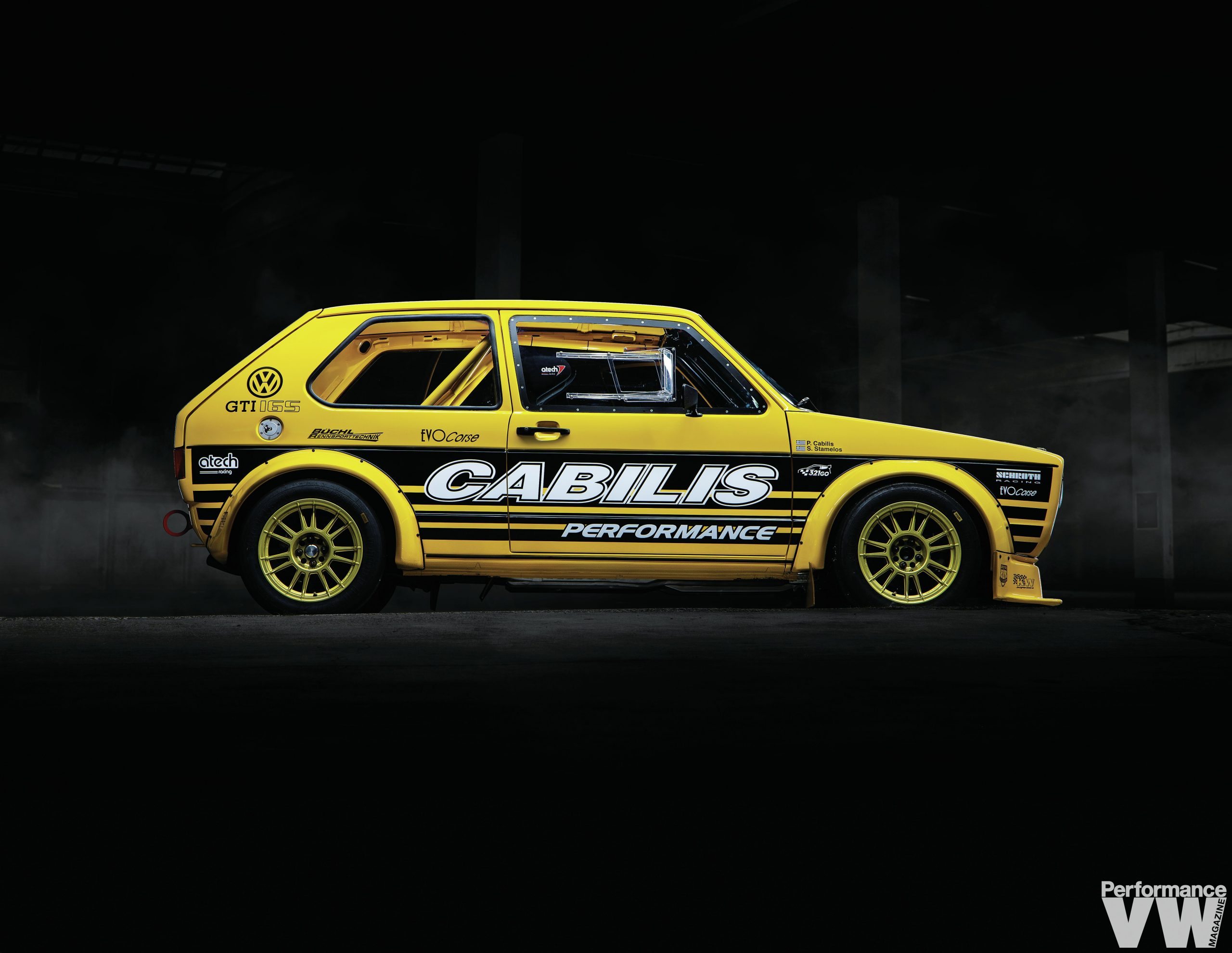
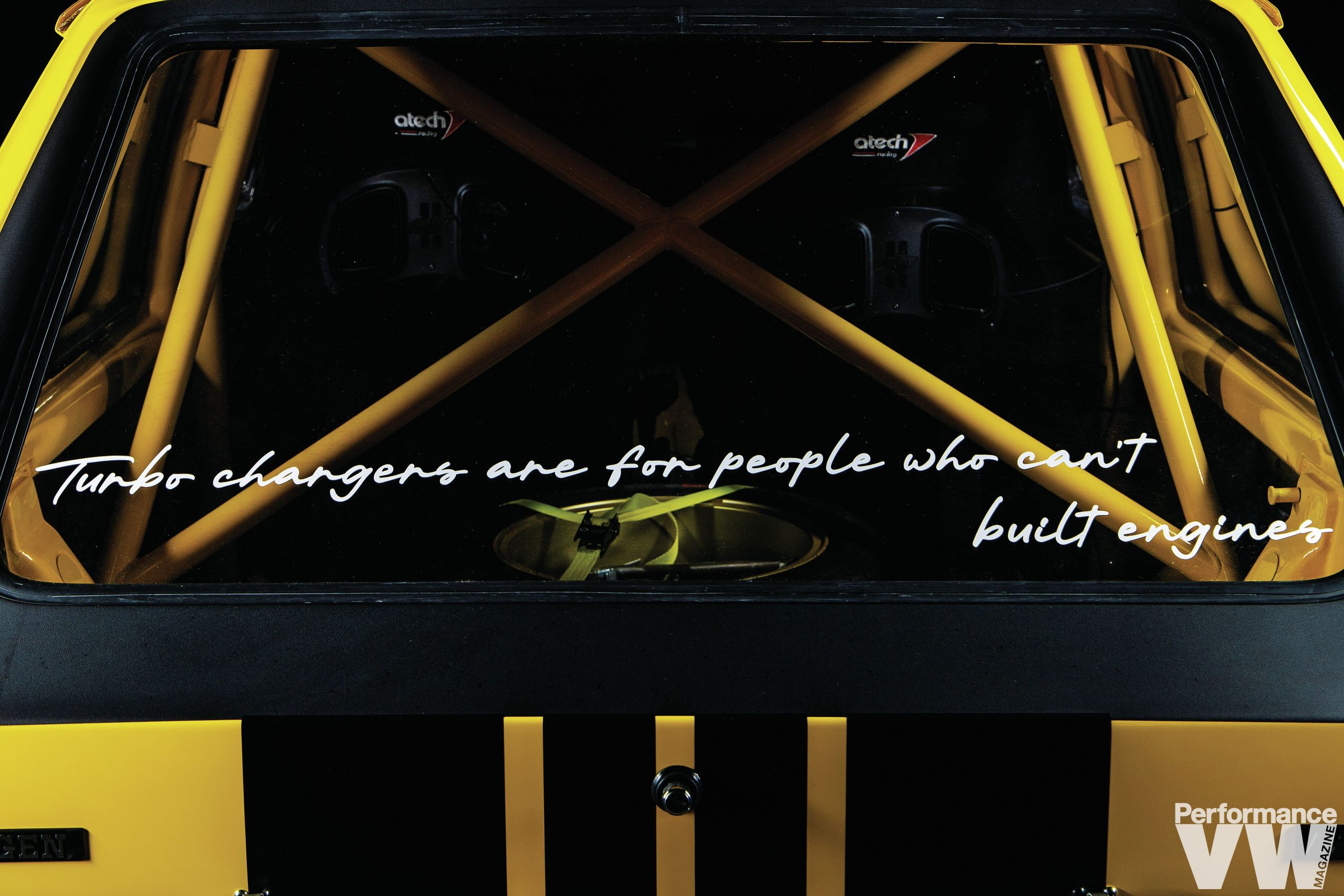
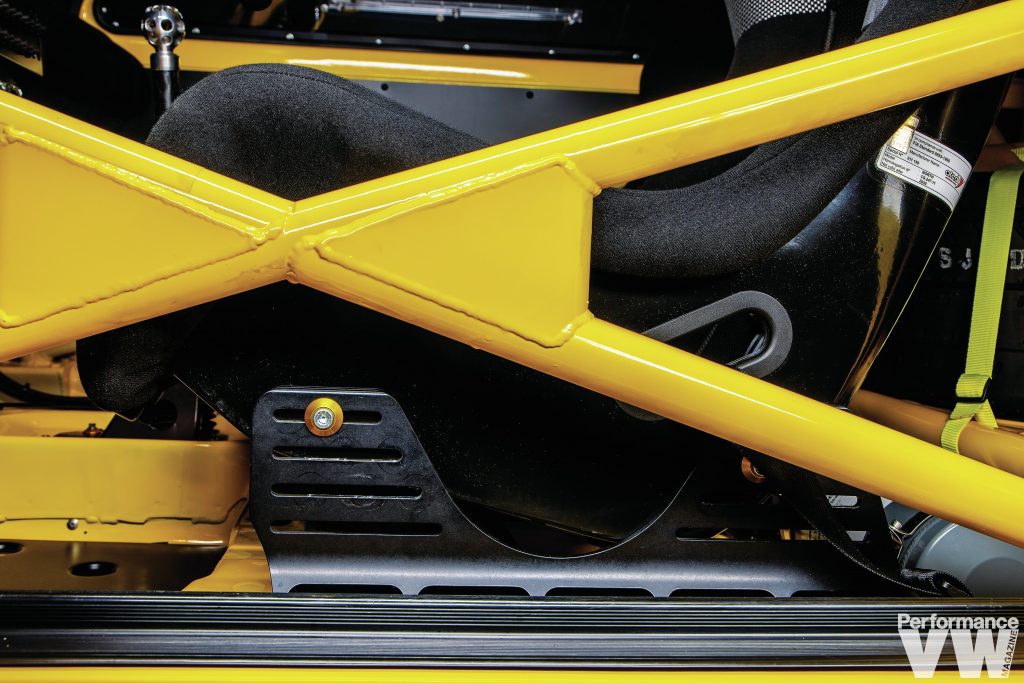
The chassis was reinforced and seam-welded. Looking at the pictures you can spot the care and effort taken to make sure it was more solid than a gold bar. The Sassa integrated roll bar has been welded in and connects key points of the chassis in addition to the required safety element. “Drawing from our previous experience with the Scirocco, we focused heavily on reinforcing the body’s vulnerable areas—especially those prone to rust—and significantly improved the torsional rigidity of the shell. This foundational work was key to ensuring the car could handle the demands of historic racing.” Takis candidly admits the chassis was his favourite part of the build.
If you’re not laying on the ground or you don’t know what you’re looking at, some things can easily be missed by the average observer. Upgrades like reinforced and rose-jointed wishbones, or strengthened and reshaped uprights go unnoticed. “As someone with a deep background in racing cars, I take great pride in the finer details of this build—details that most people might overlook. Creating a competitive race car almost entirely from vintage components, with minimal use of modern technology, is a challenge that requires total commitment, precision, and experience.”

“One such area is the electrical system. The entire wiring harness was custom-made using Raychem motorsport-grade materials and premium connectors to eliminate any chance of electrical failure under racing conditions. It’s the kind of work that disappears into the car but makes a huge difference when it matters.” While this doesn’t have a shaved bay with a wire tuck, Takis stands firm about doing it right even on things you can’t see. Imagine being on course and having some hack wire job melt and short circuit your race day?
“Similarly, the suspension system is another hidden strength. Almost every component—including the mounting hardware—was custom-manufactured by our trusted partner in Italy, following the original Group 4 homologation specs for the Golf Mk1 GTI. We placed particular focus on the front and rear hubs, and the selection of high-performance bearings. Extensive use of rose joints throughout all moving suspension parts further improved responsiveness and precision.”
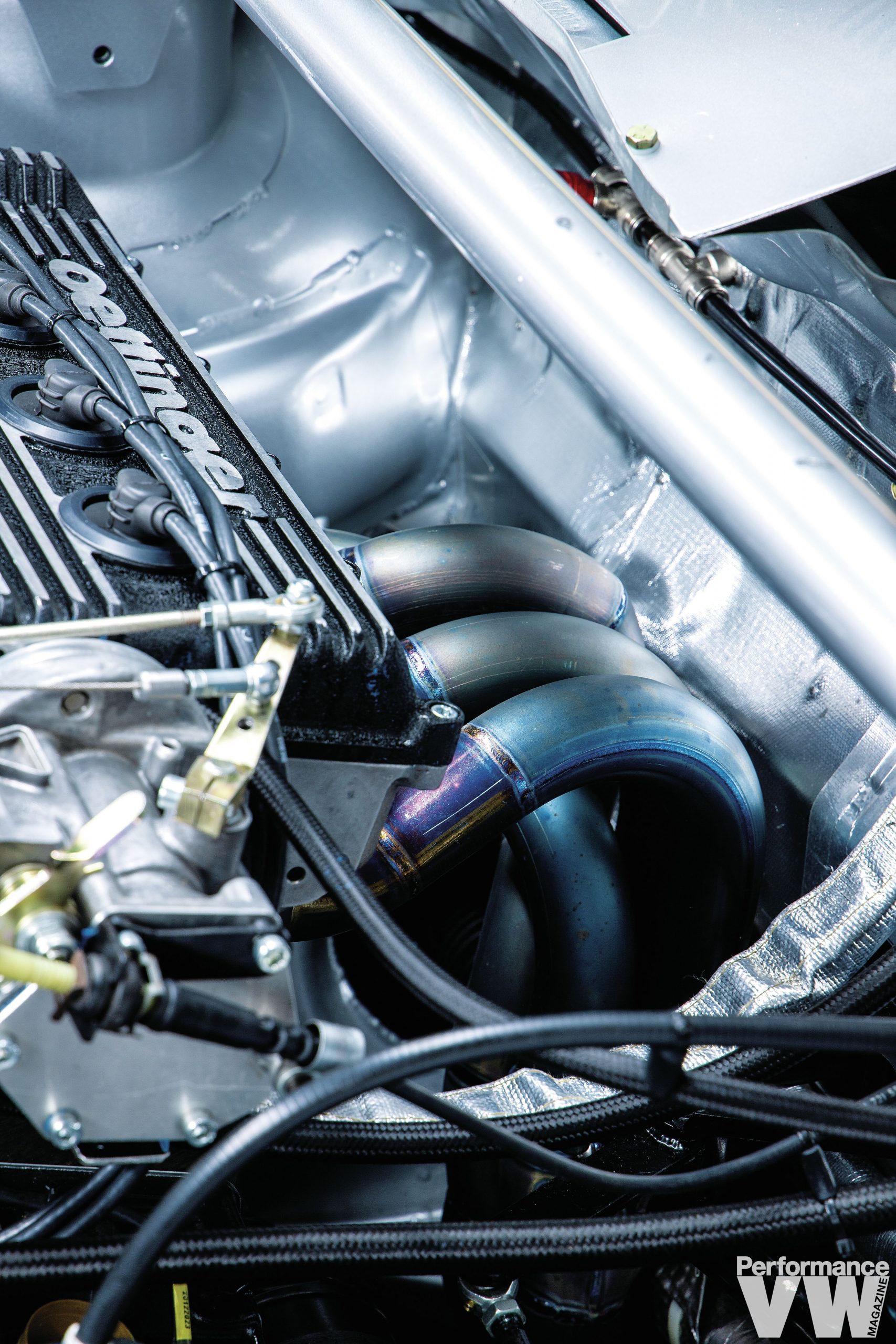
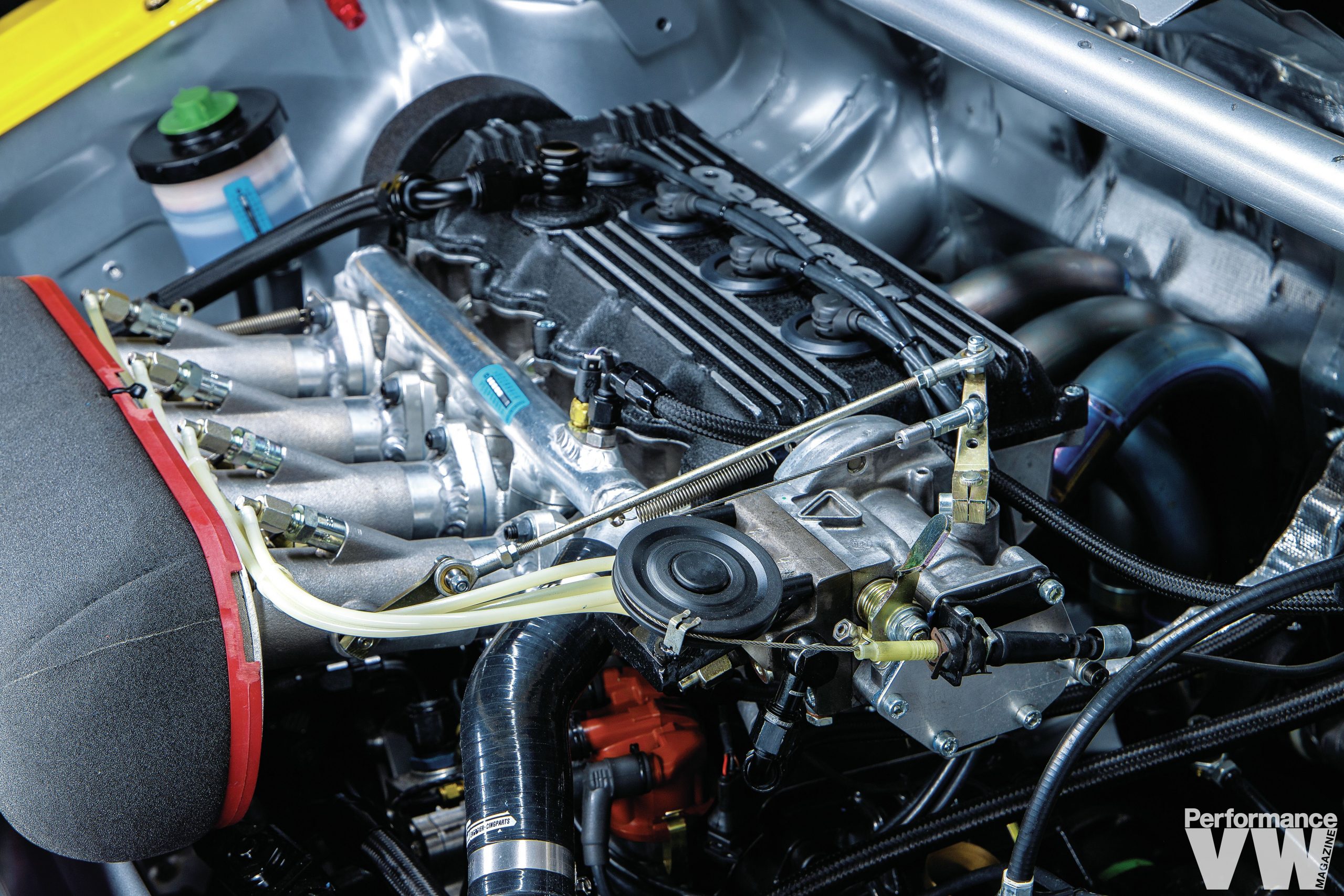
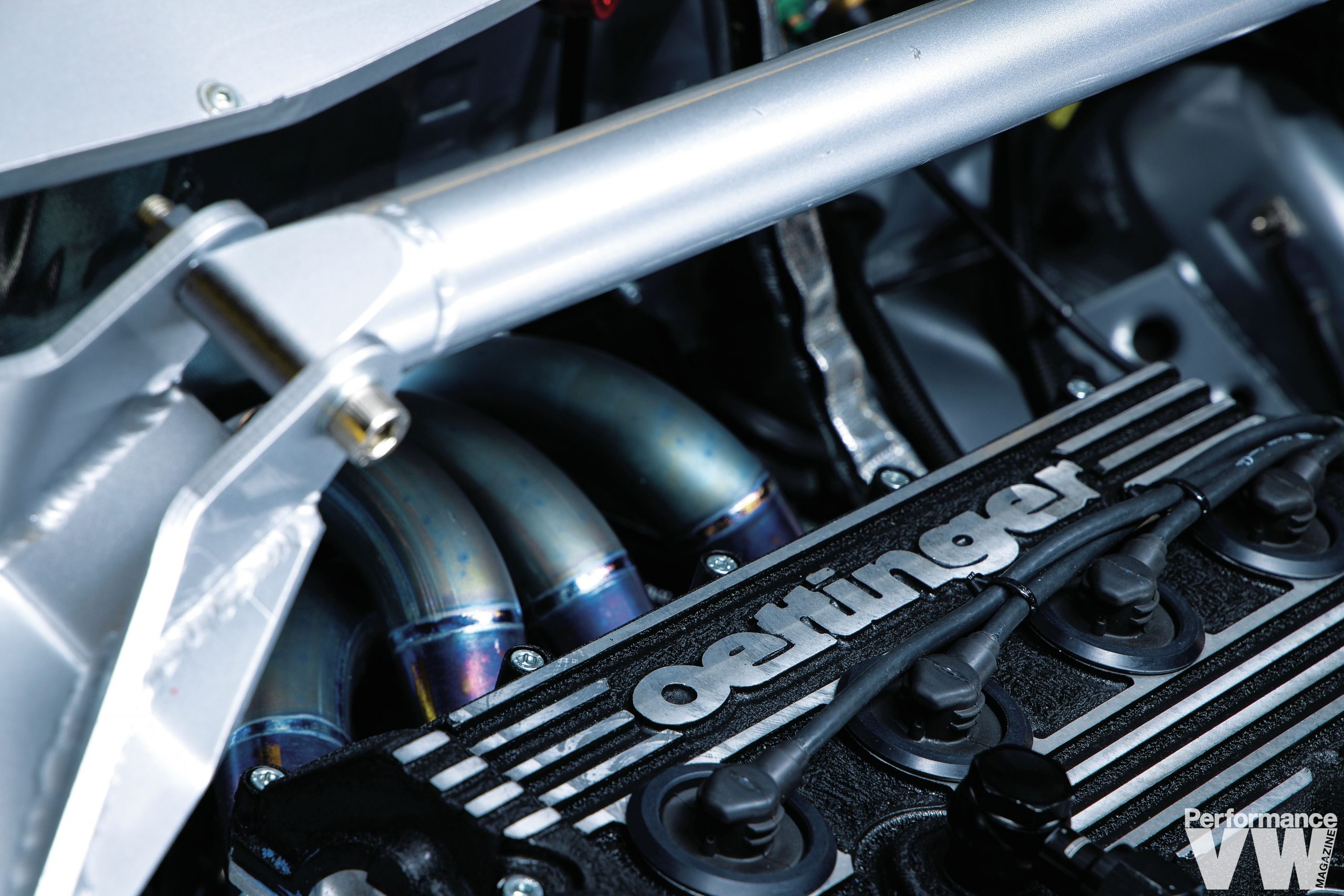
The biggest challenge for Takis recreating a Group 4 GTI for historic racing was the centerpiece of the car itself – the motor. “The specific requirements of the Group 4 category—particularly the integration of the Oettinger 16S cylinder head—made the project highly complex,” Takis reveals. And regardless of their comfort level in building racing engines, this particular car would serve as a final boss in testing those skills. And it was sourcing the proper engine parts that proved the most difficult part of the build. “The sixteen-valve Oettinger head was found by my colleague Oswin, owner of the company Büchl Rennsporttechnik. The engine development was done in collaboration with [them], while the electrical system was supported by Stratos Electric.”
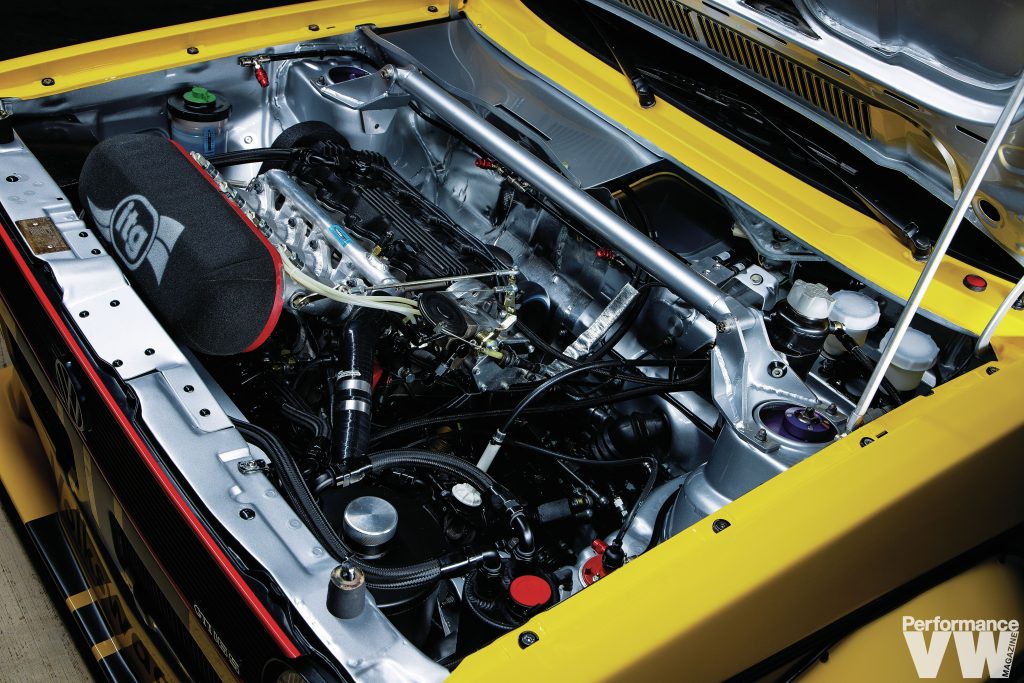
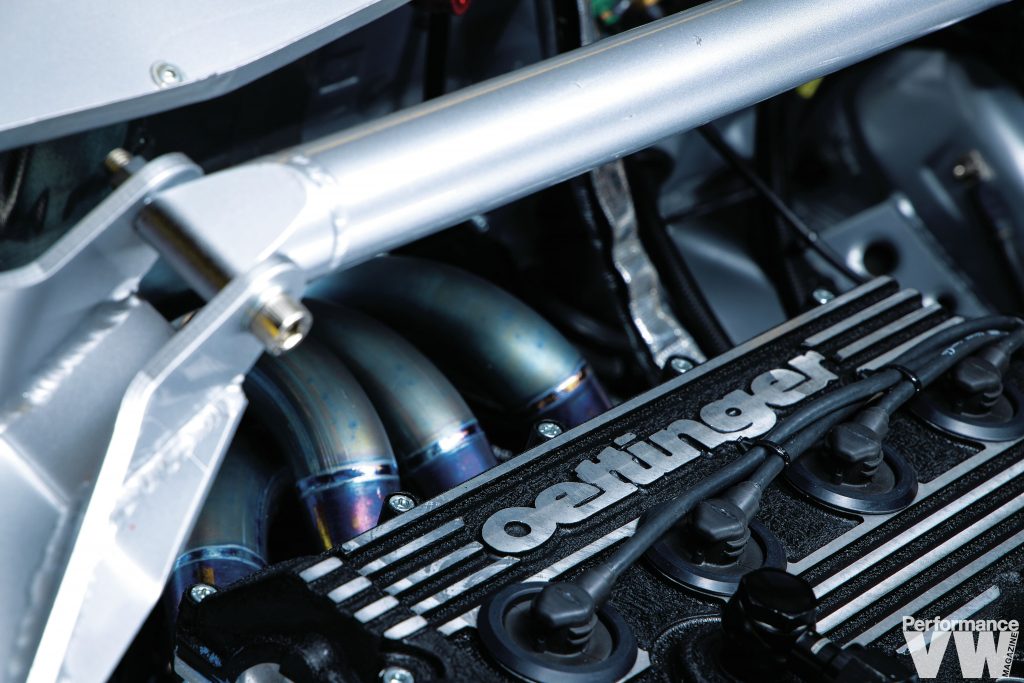
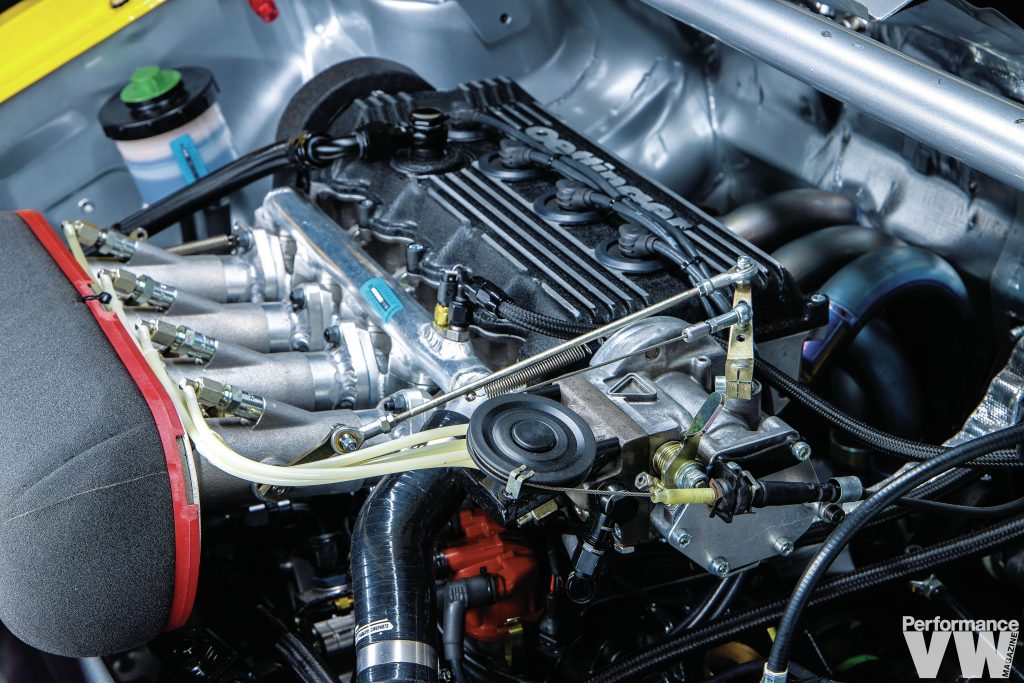
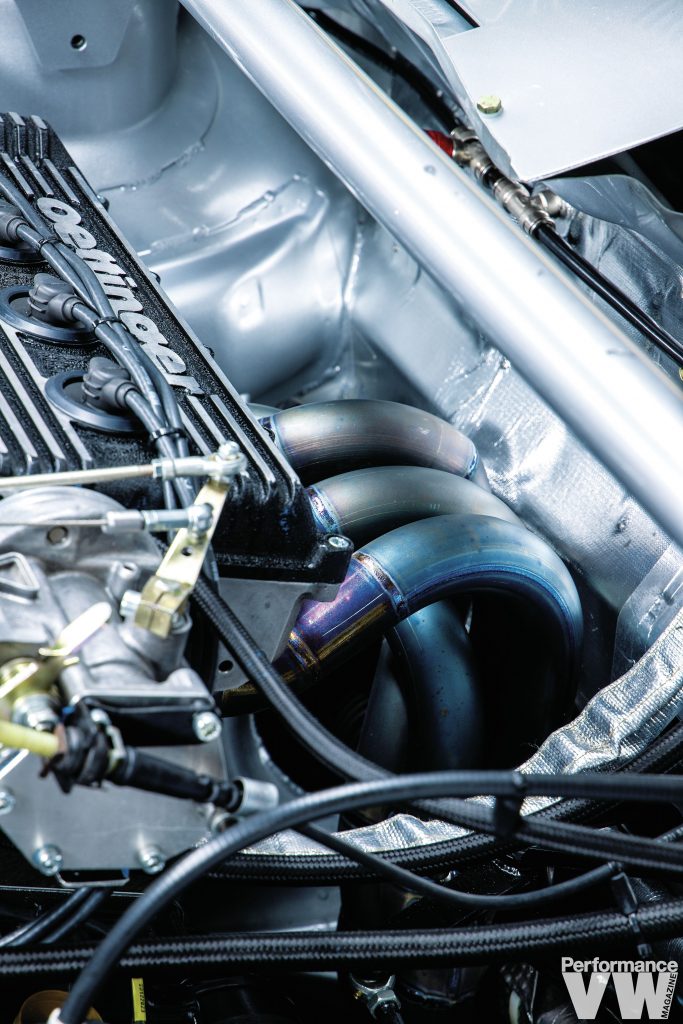
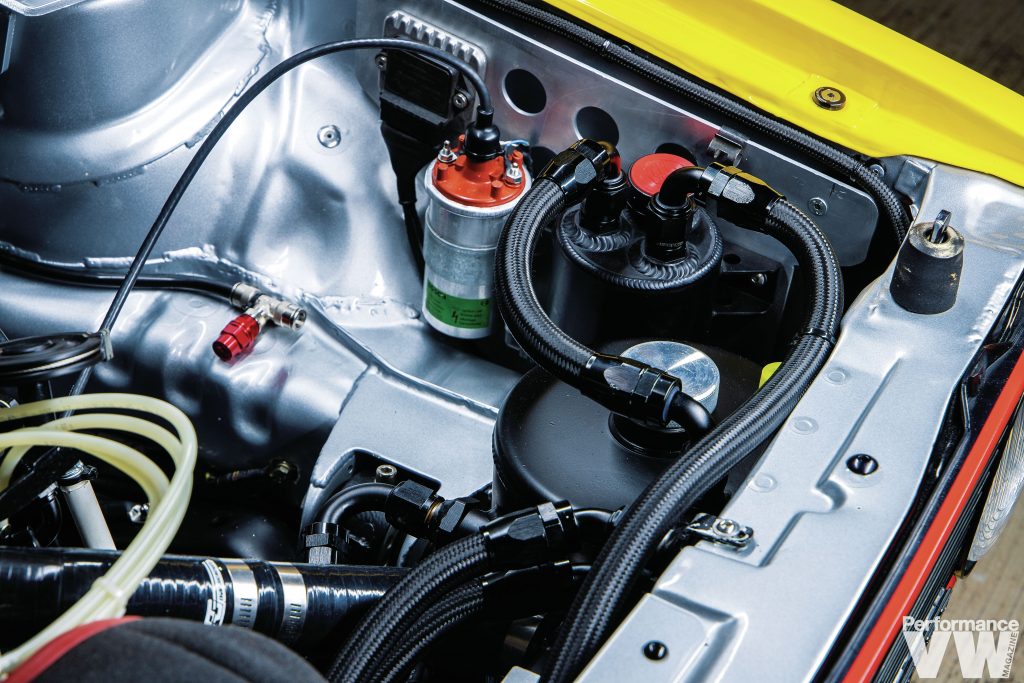

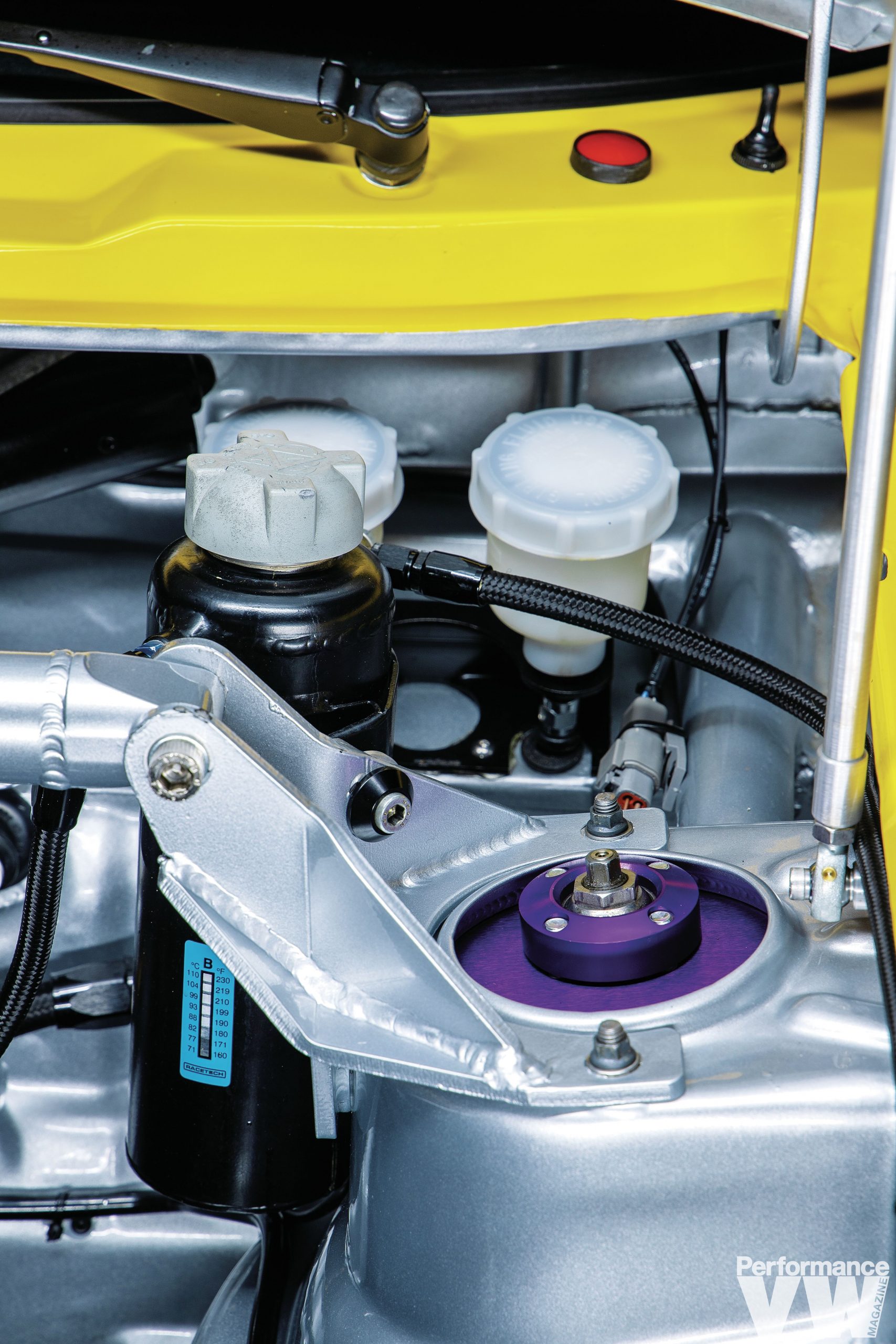
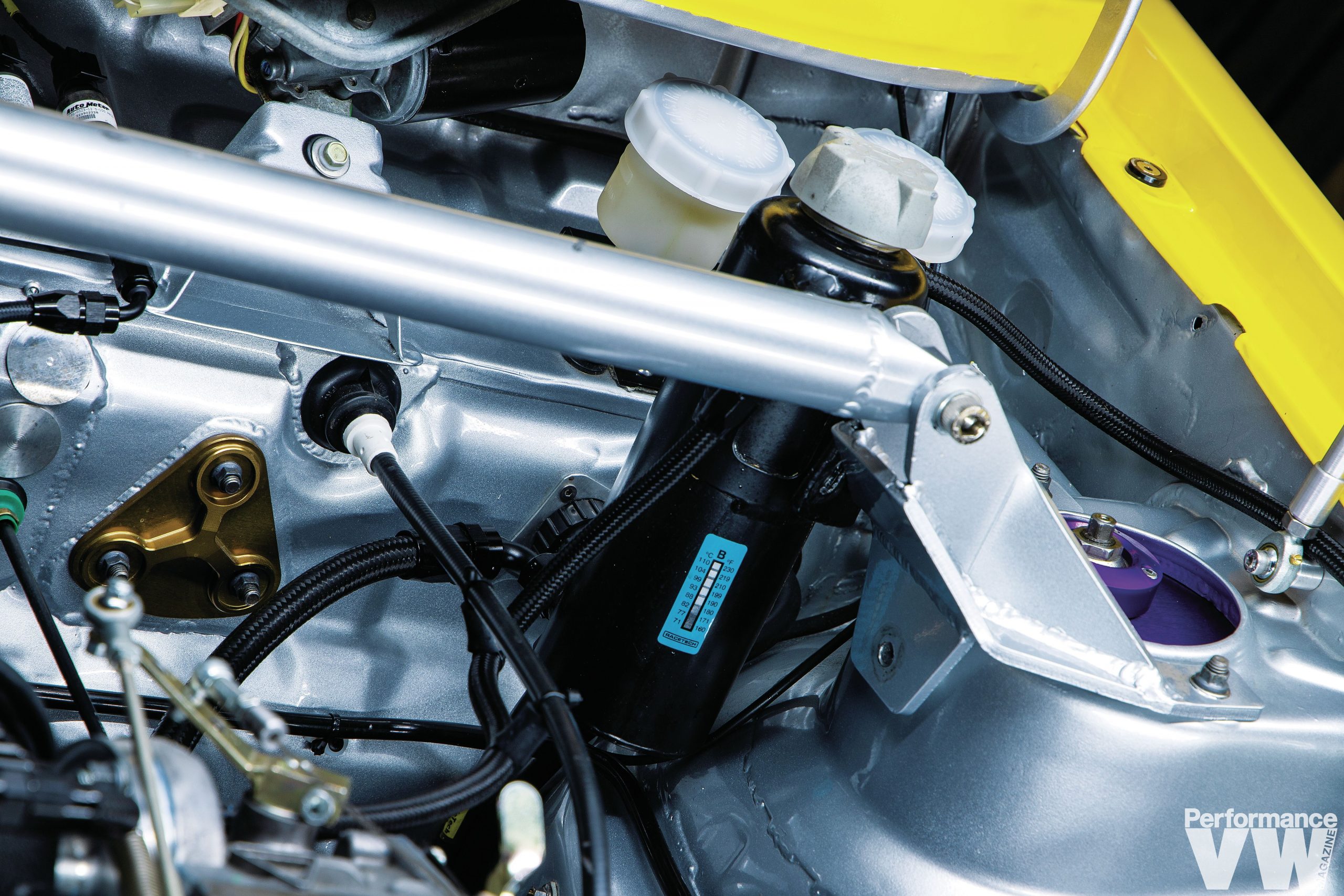
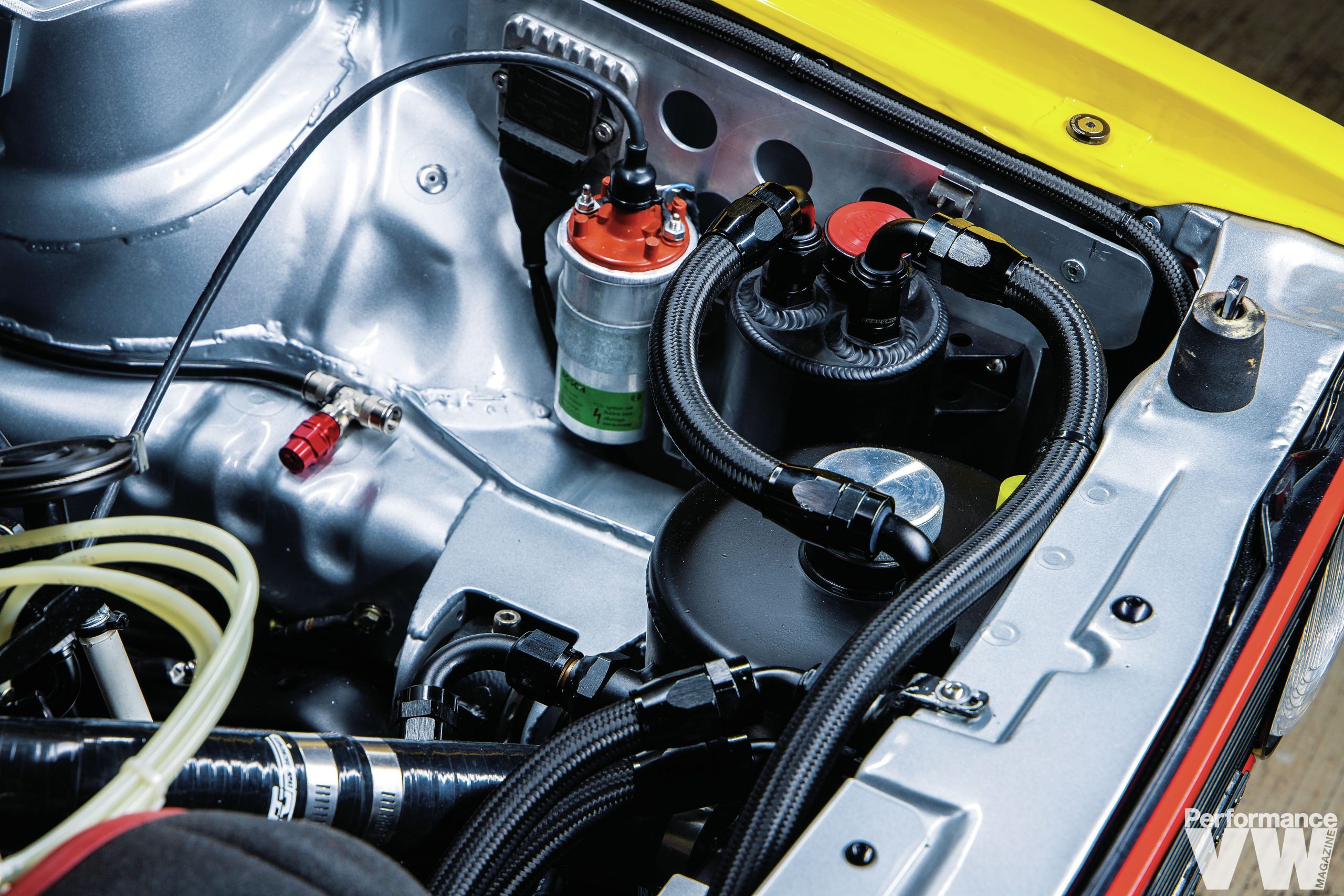
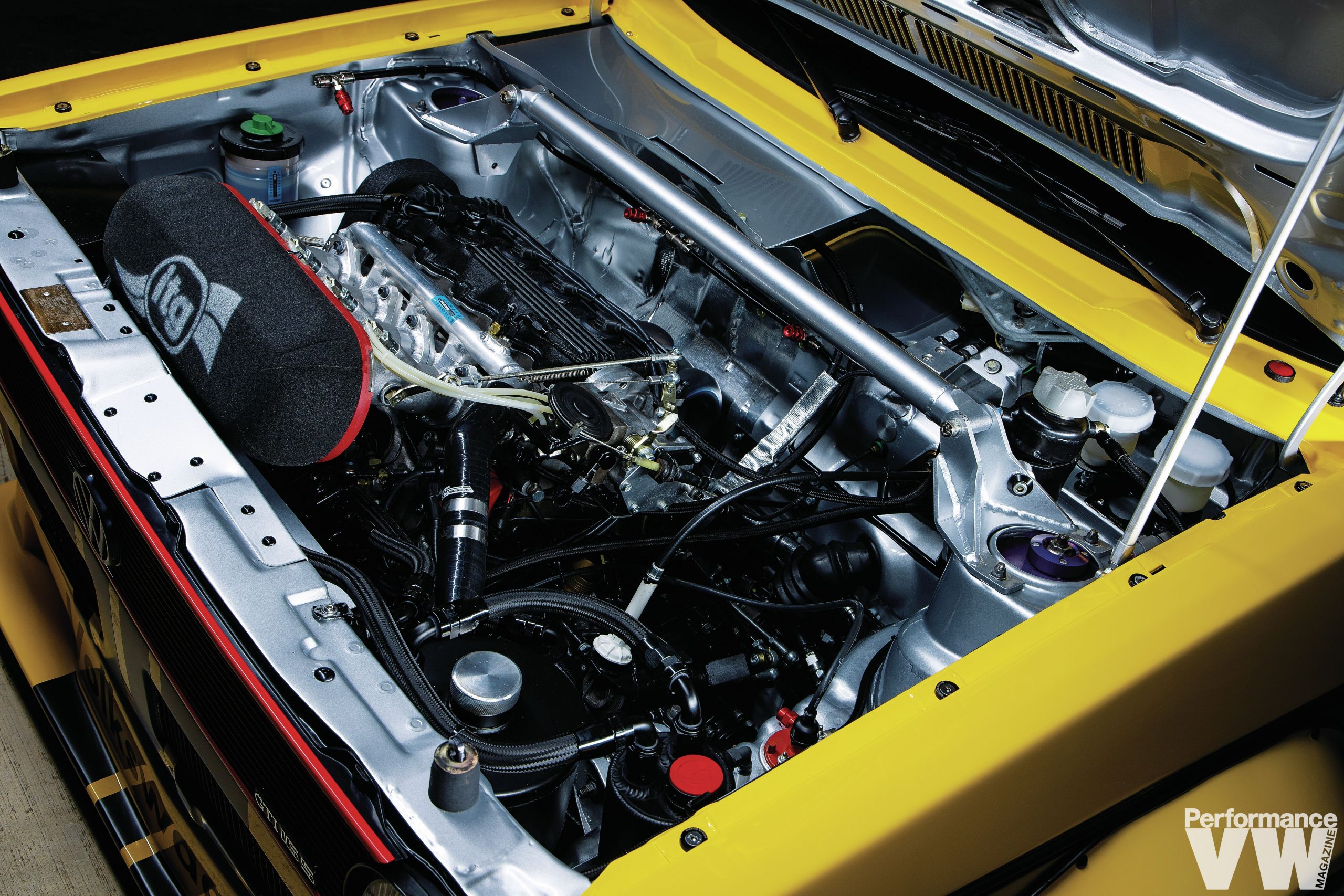
The silver tones of the engine bay looks like the Tinman from Wizard of Oz was melted down and spread throughout, its Technicolor parts gleaming like an art installation. They went with a dry sump lubrication system and chose a Kugelfischer mechanical fuel injection instead of finicky carburetors that would require tuning and constant attention. “Our goal was to extract the maximum possible performance from this setup, especially given the fierce competition in historic racing,” says Takis. And that goal was certainly achieved, realizing 212 horsepower at 8,000 RPM.
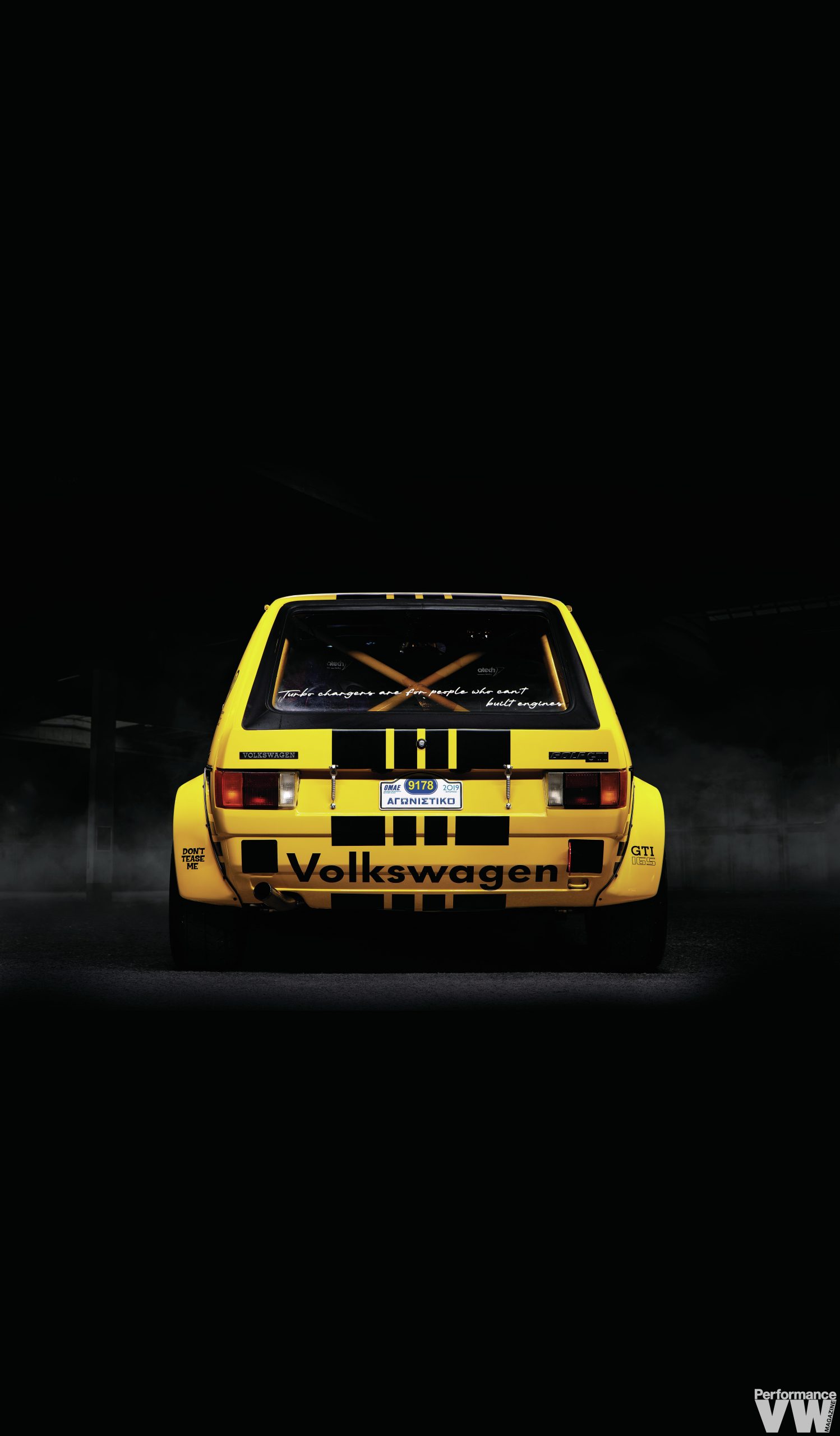
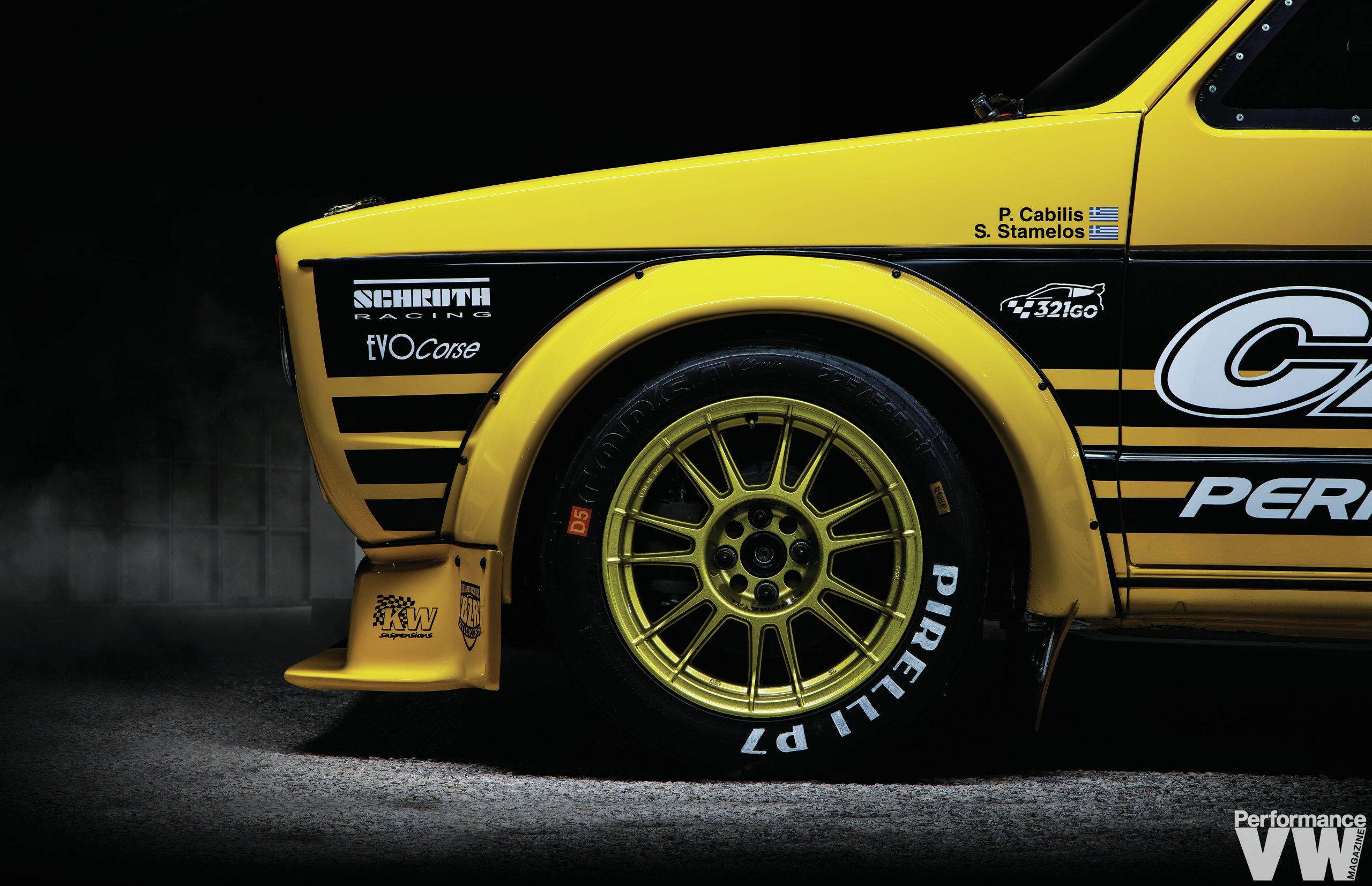
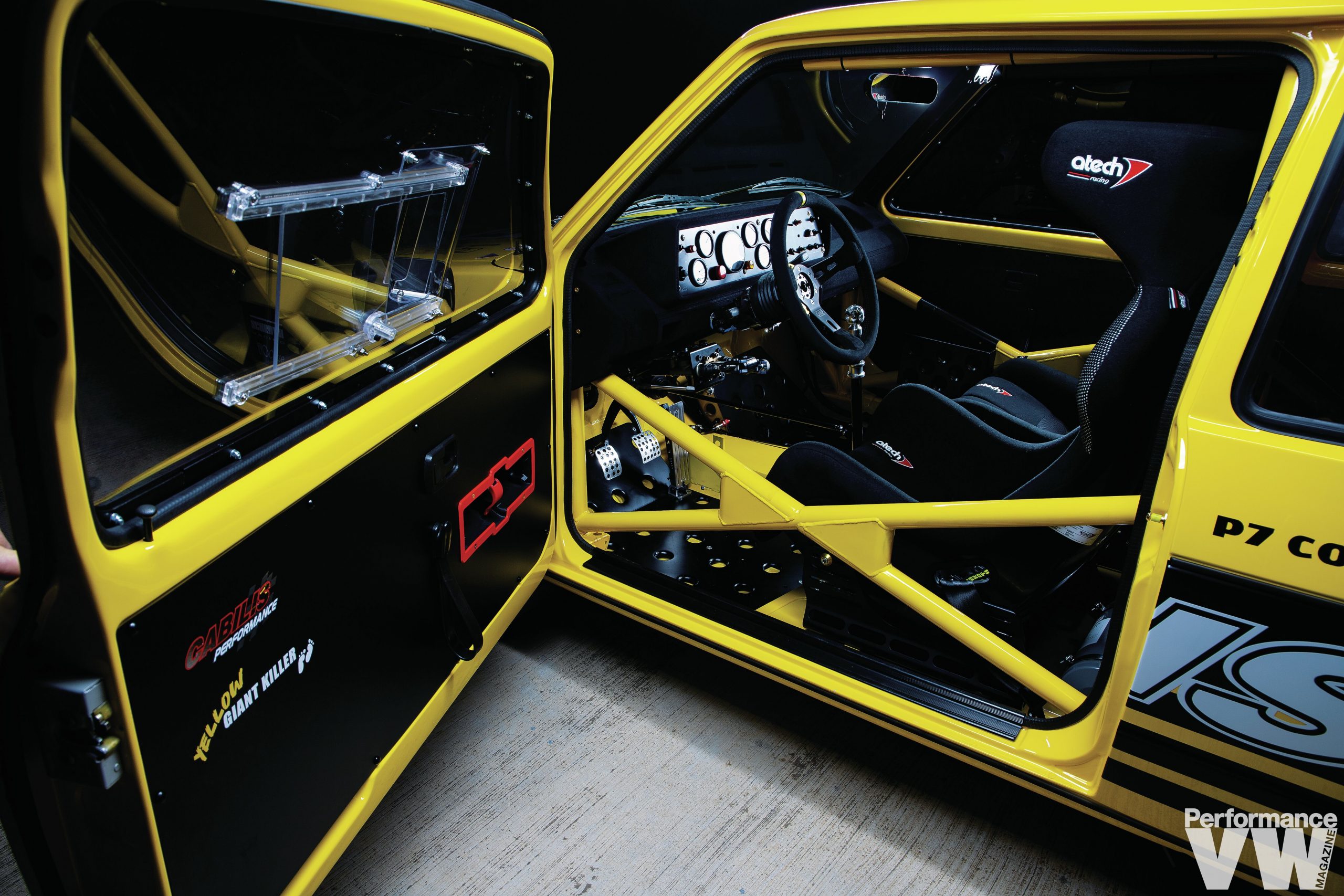
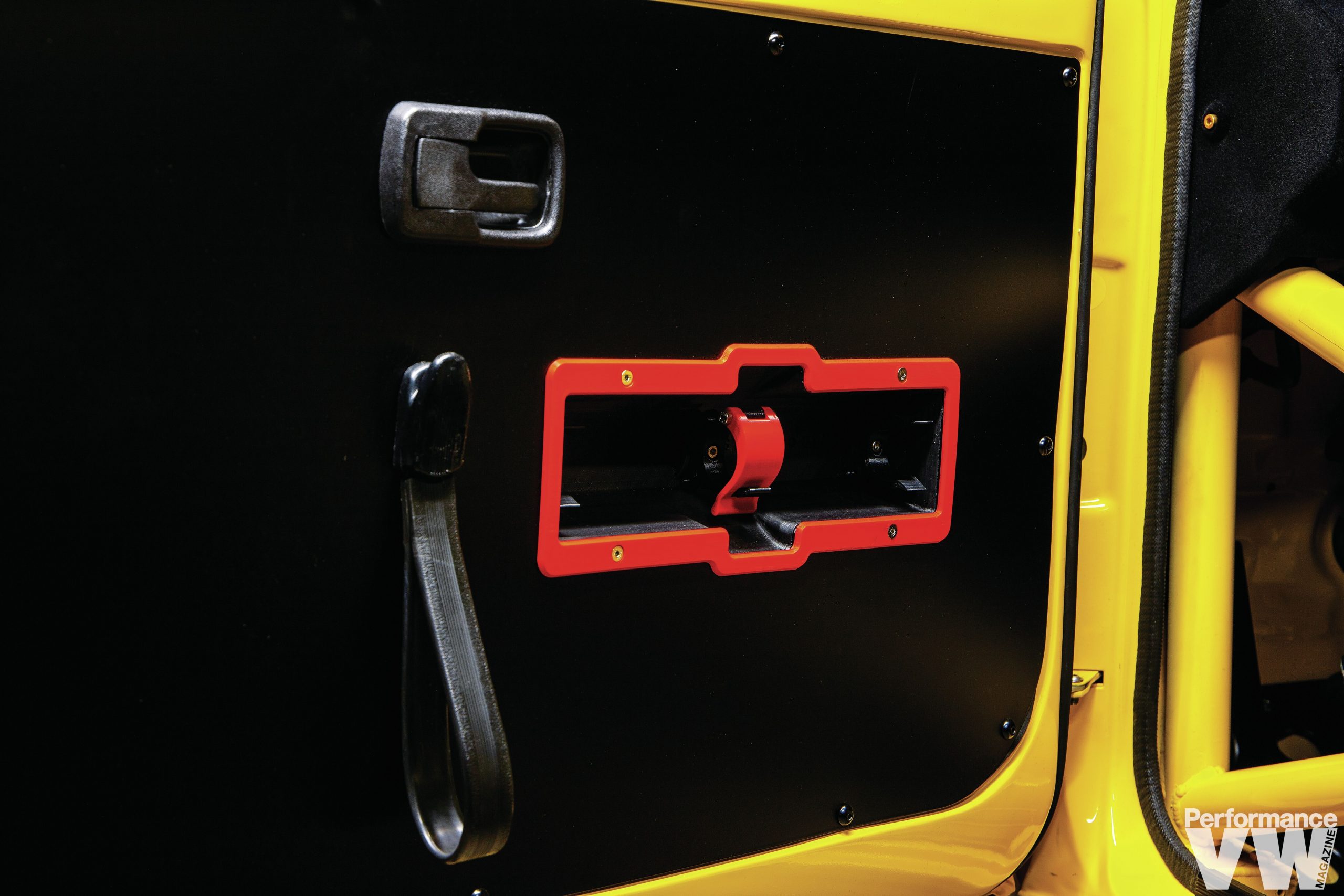
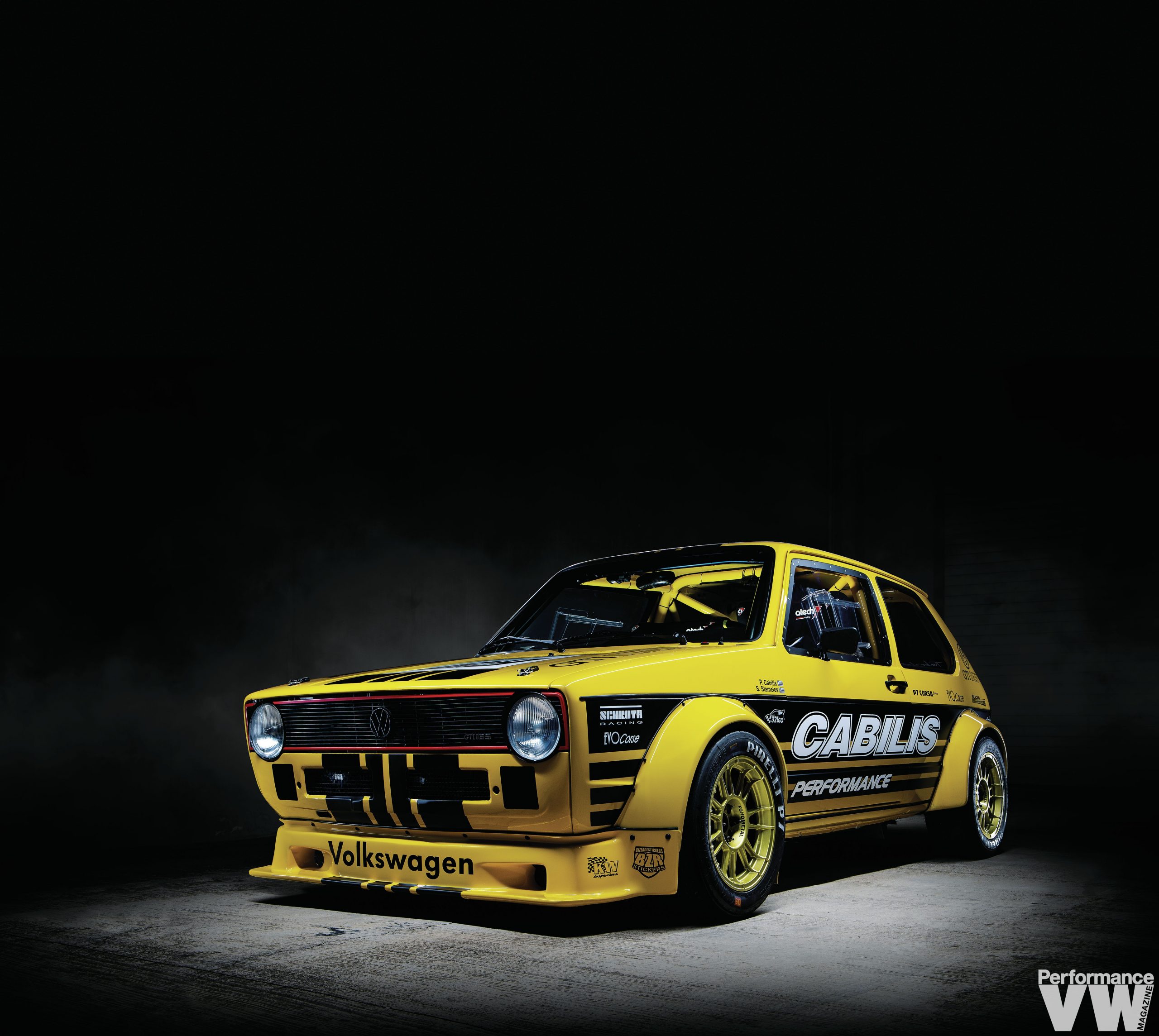
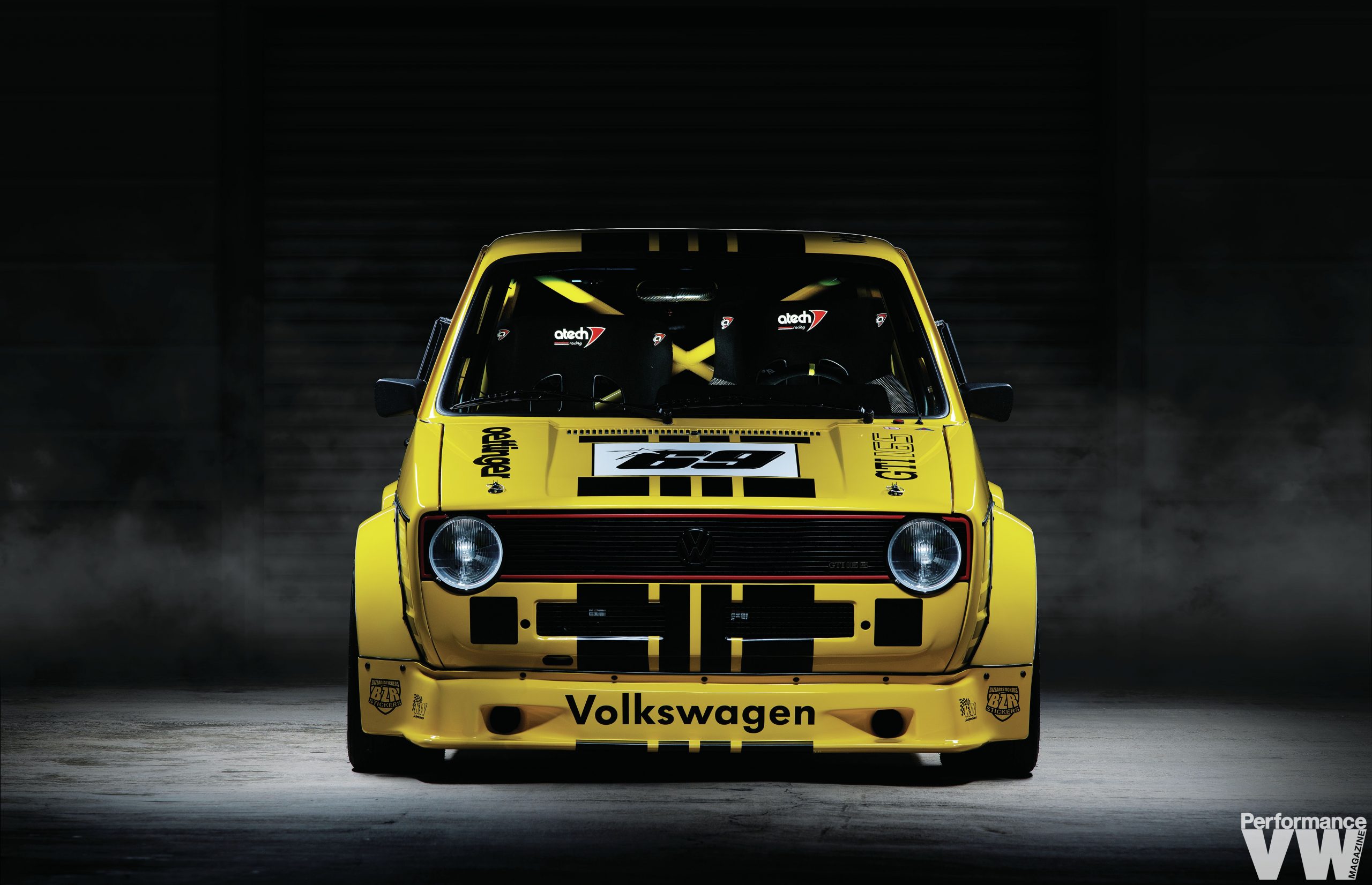
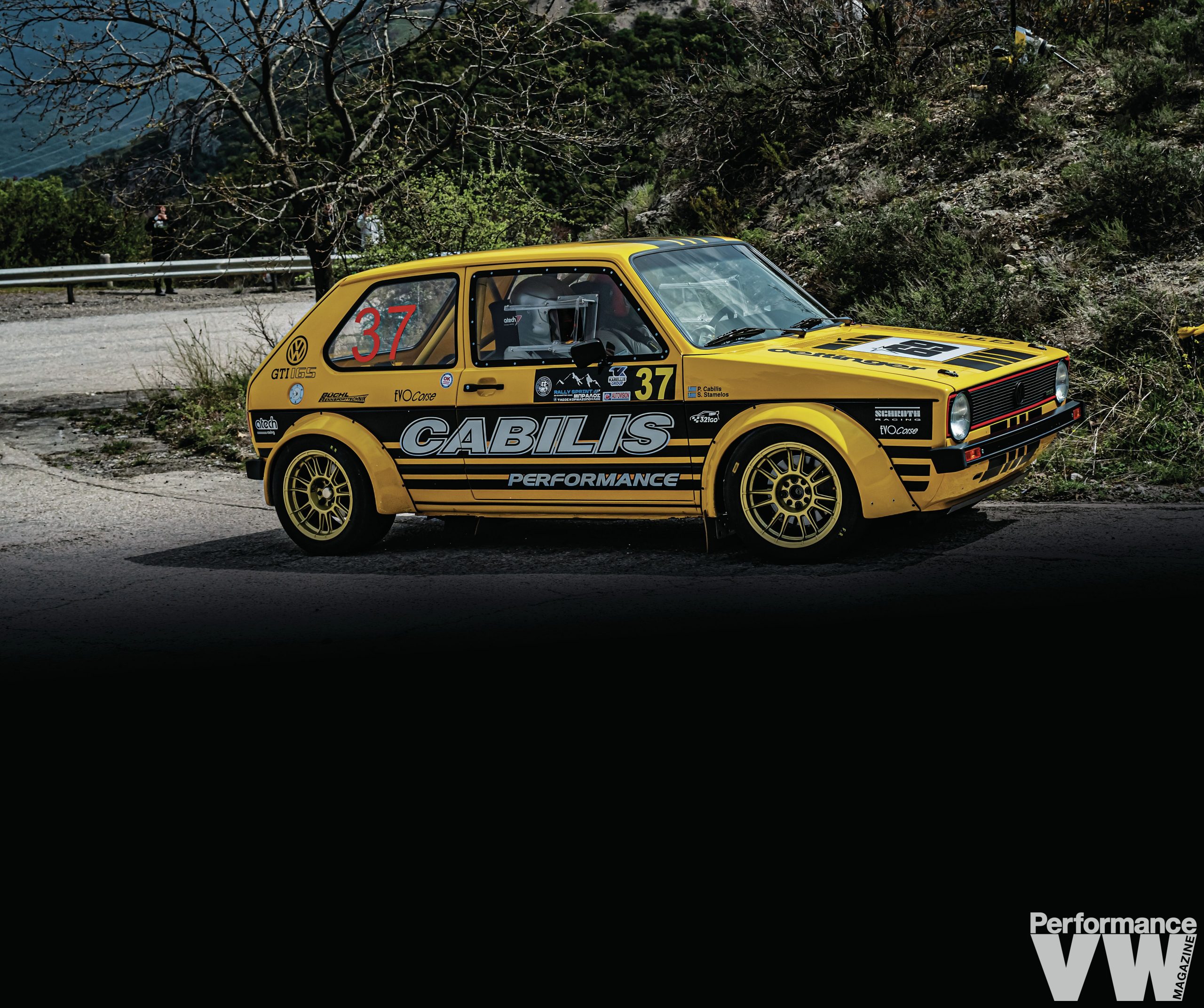
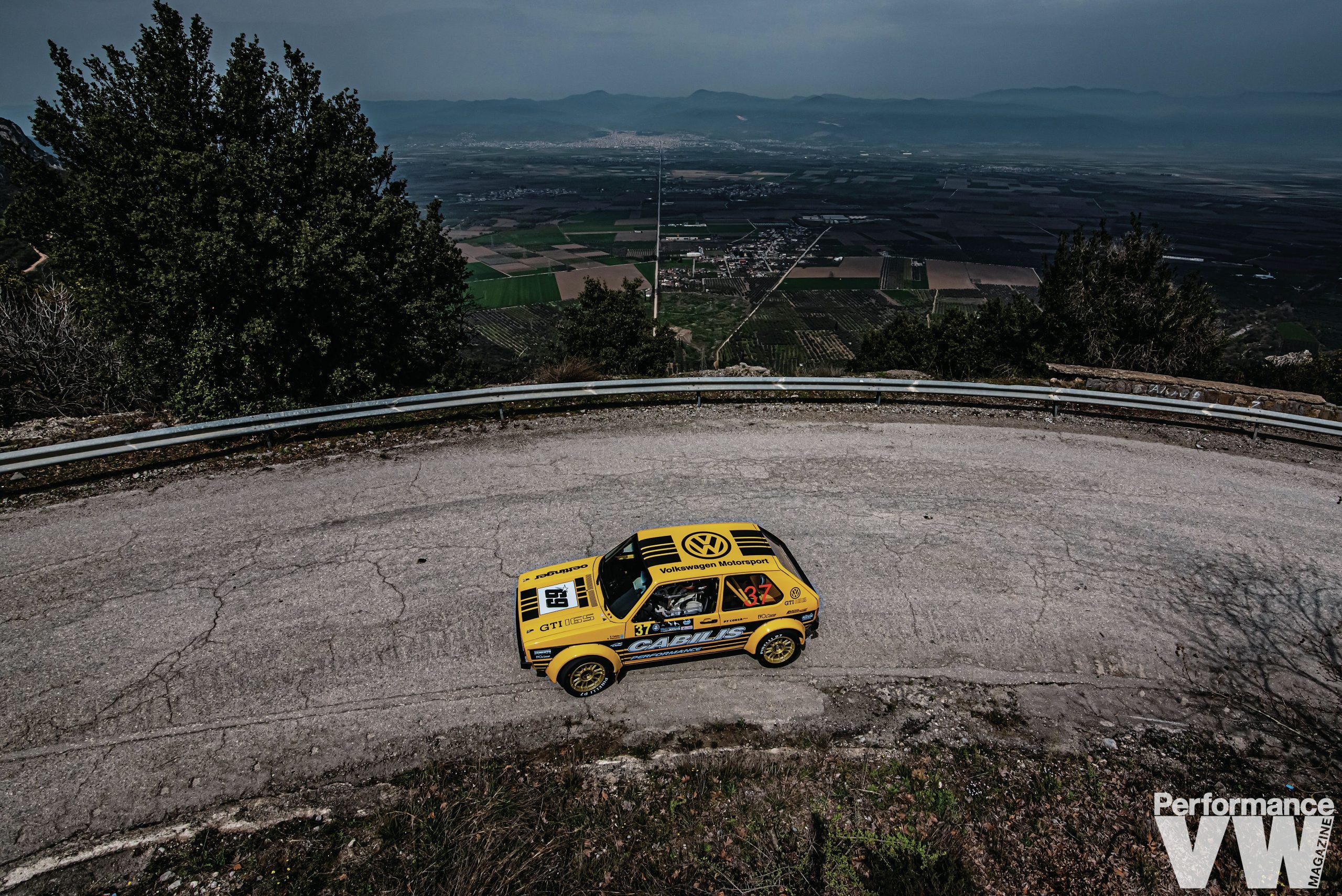
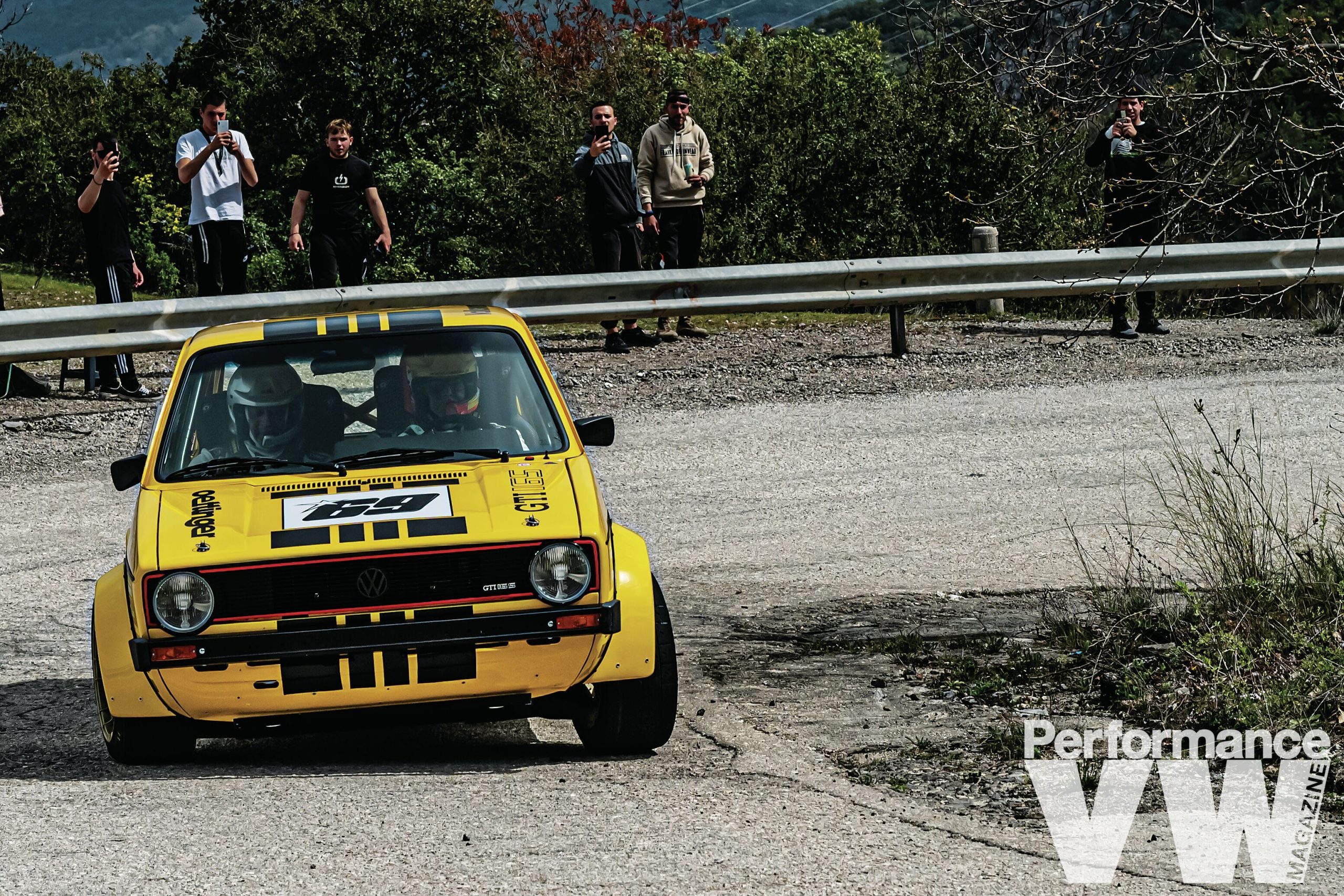
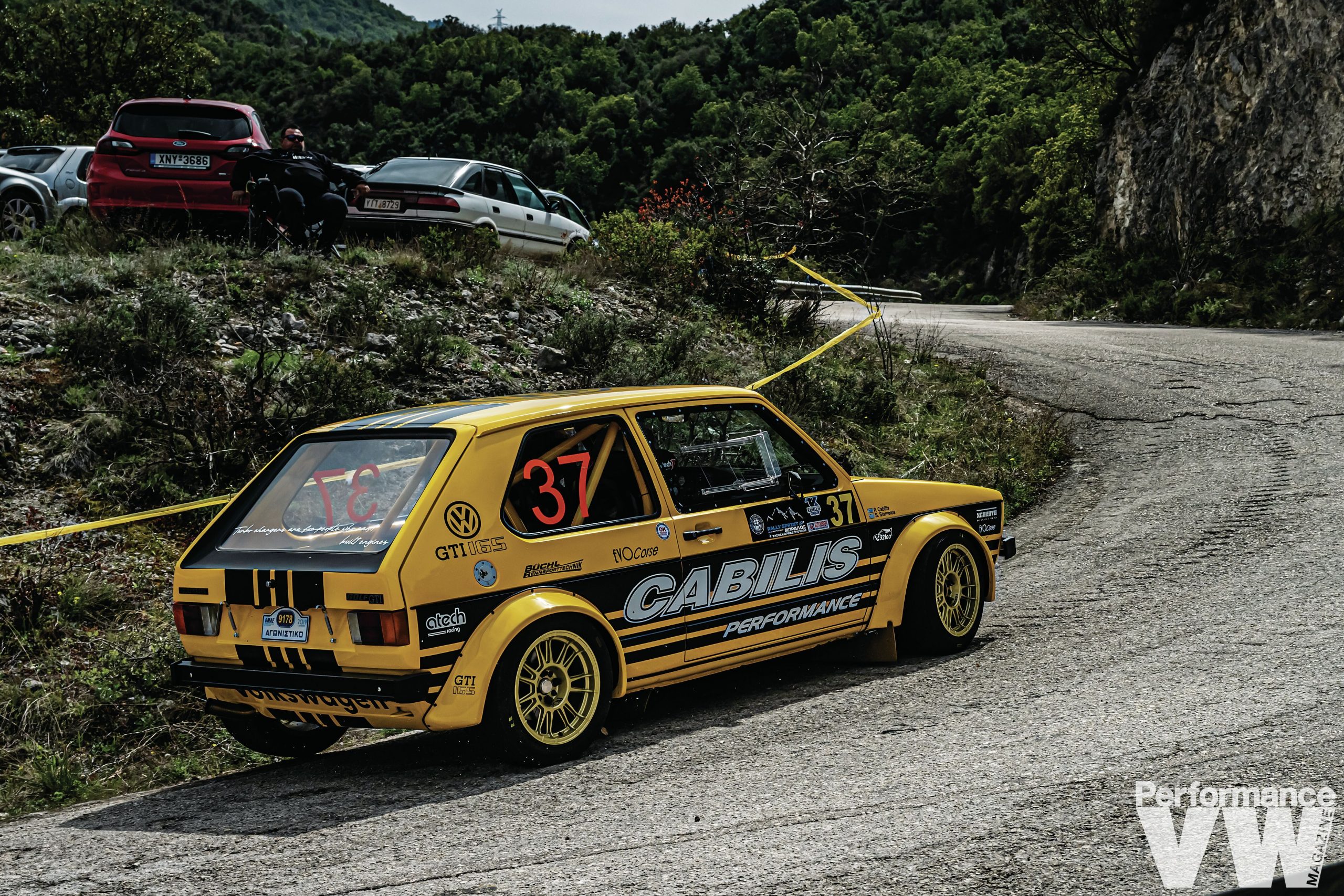
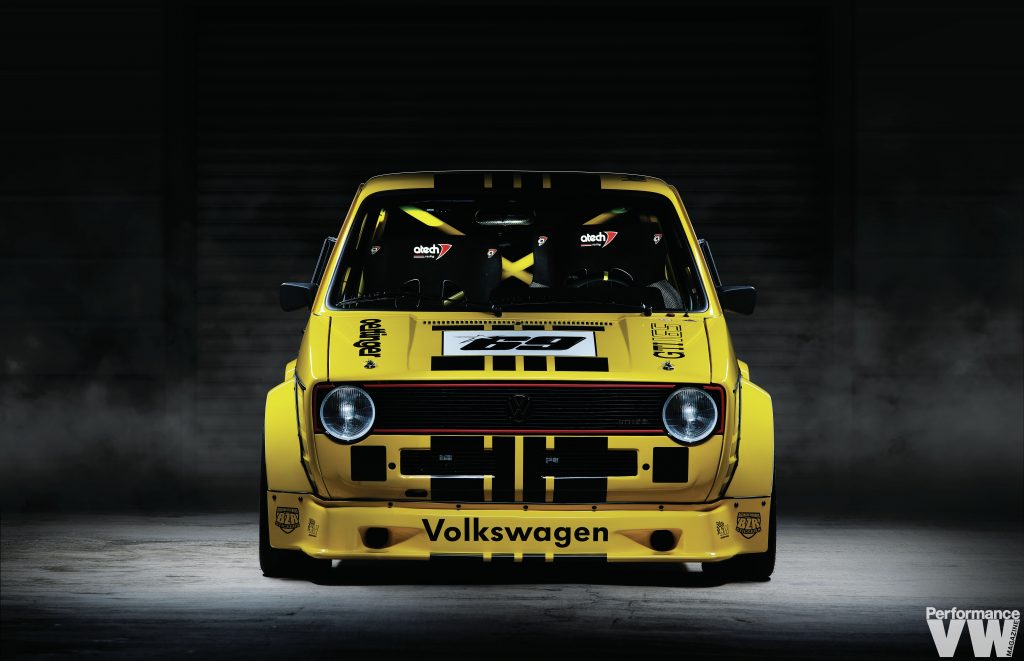
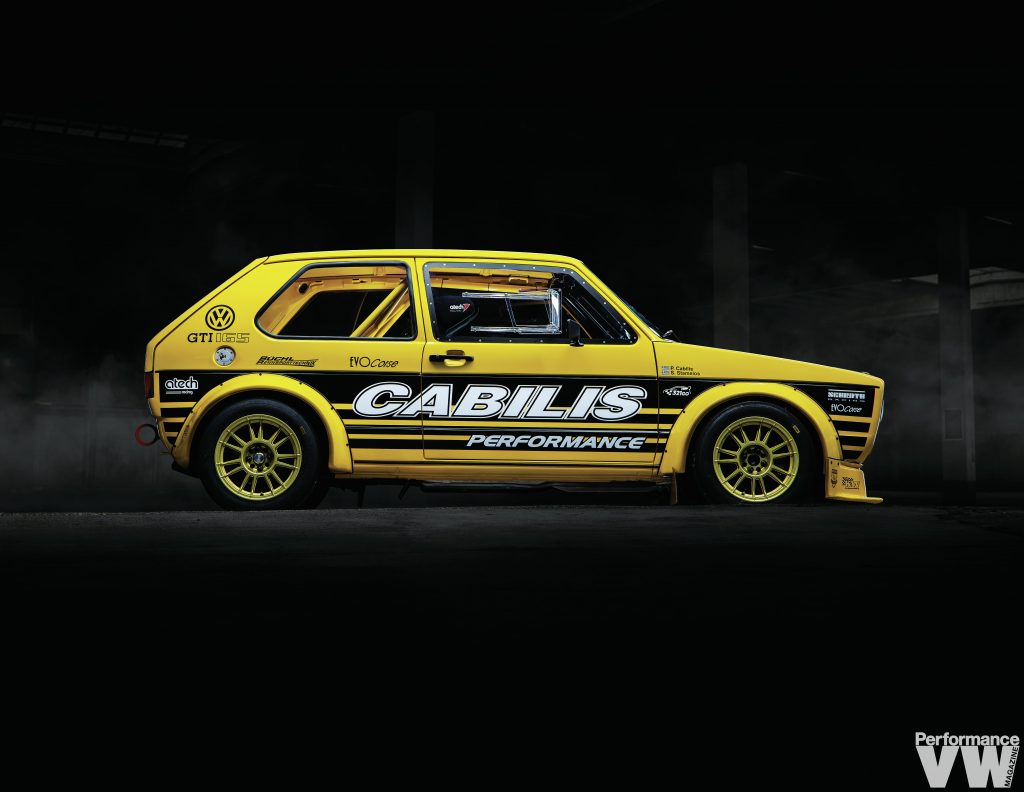
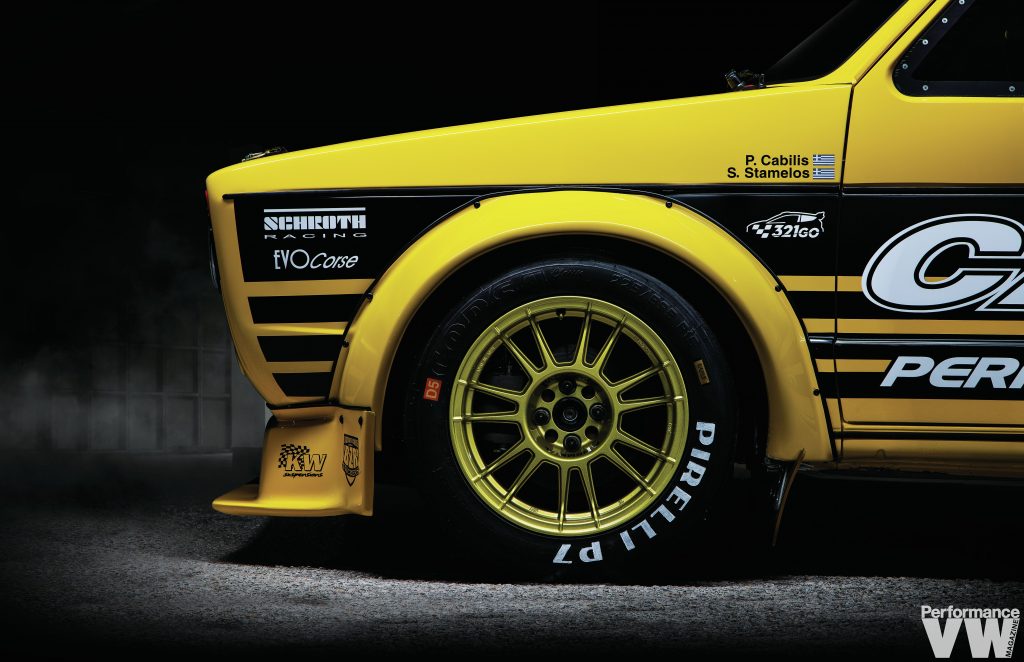
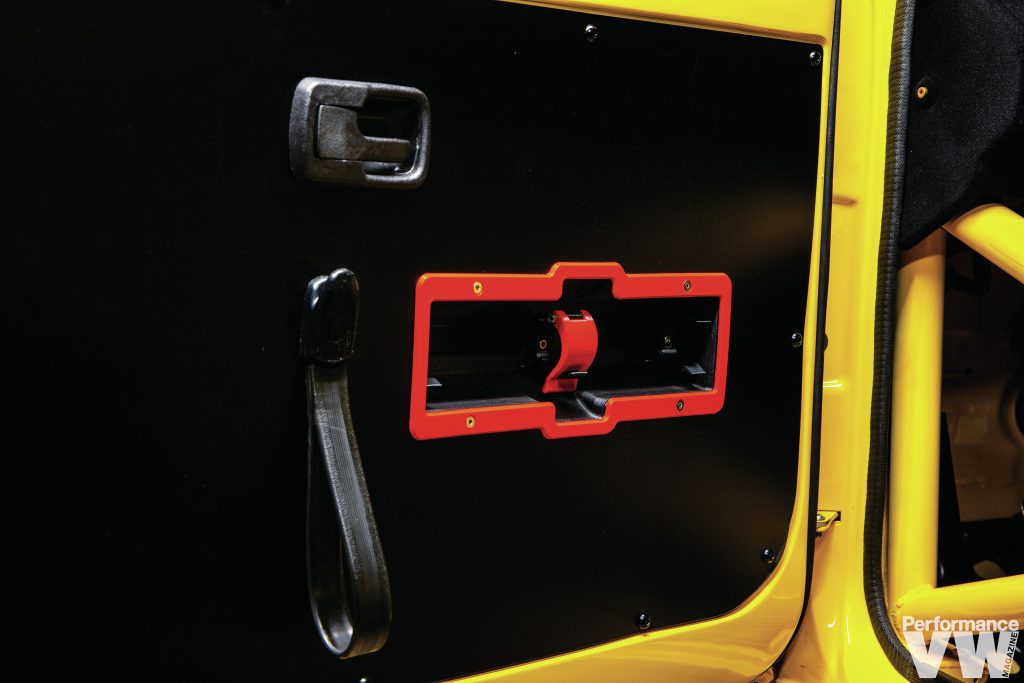
Despite the small stature of the MK1, this Group 4 racer has big presence. The bright yellow and black hatch has big yellow jacket vibes, and if you’re not careful around it you will be stung. All paintwork was completed by Takis’ brother, Kostas, who runs the paint shop department at Cabilis, while the design of the exterior is attributed to Takis. Graphics were completed by Bizarre Stickers. The Berg-cup inspired fibreglass wheel arches give it a bulldog stance and cover the 8×15 EVO Corse X3MAZero wheels. Lightweight side windows feature sliding slots to allow for drive-thru collection of fast food – or in a race car’s case, ventilation or communication with the outside world.
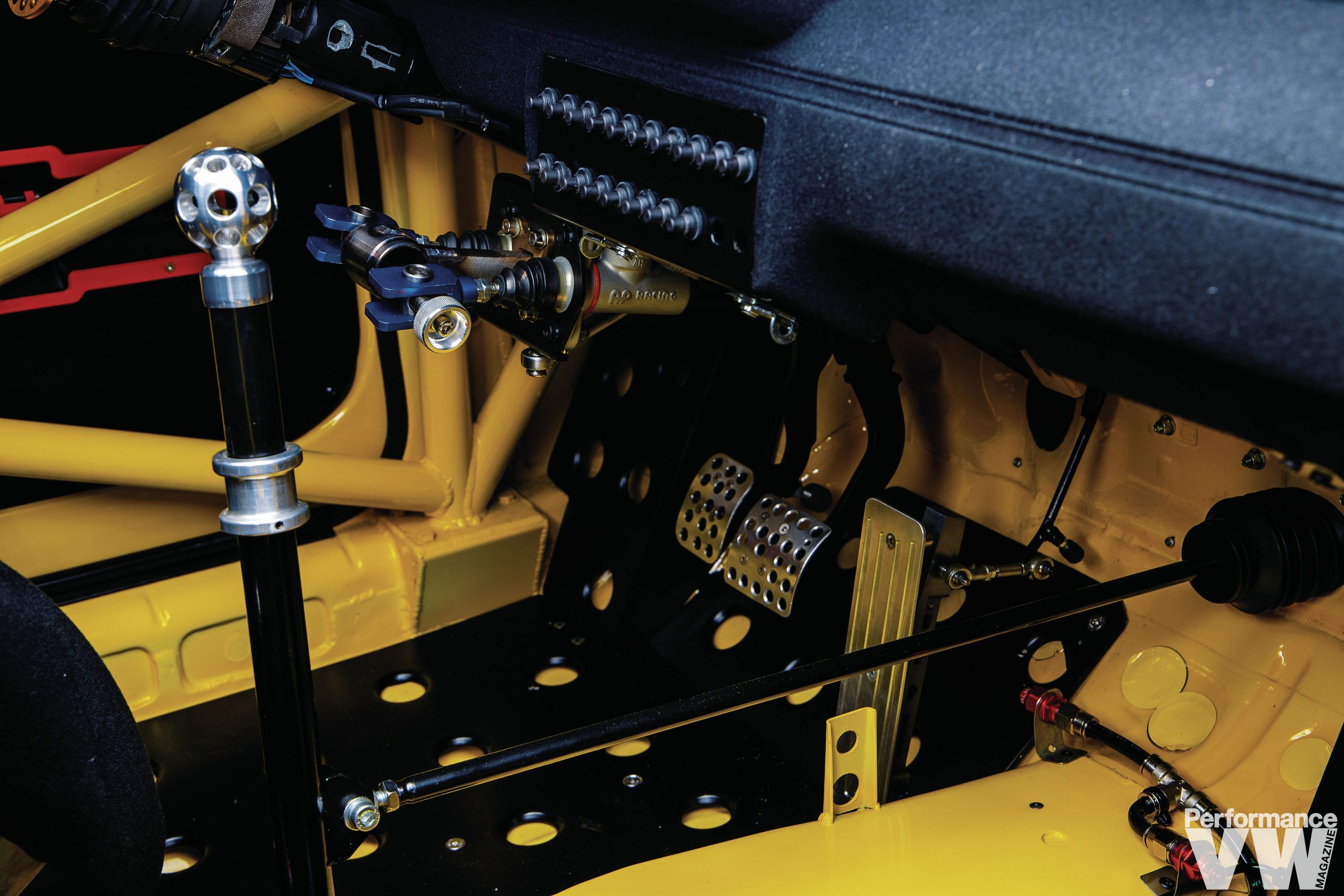
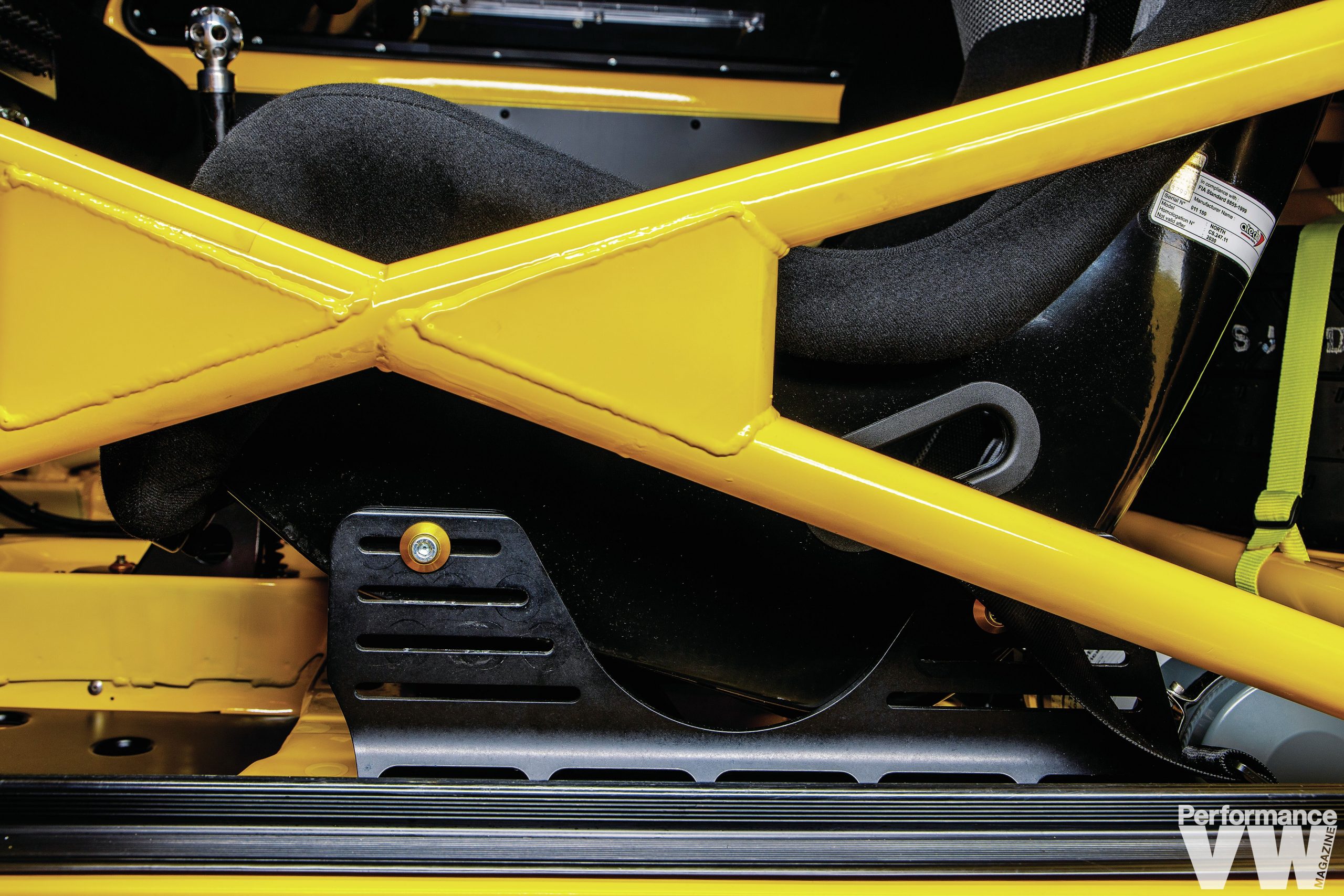
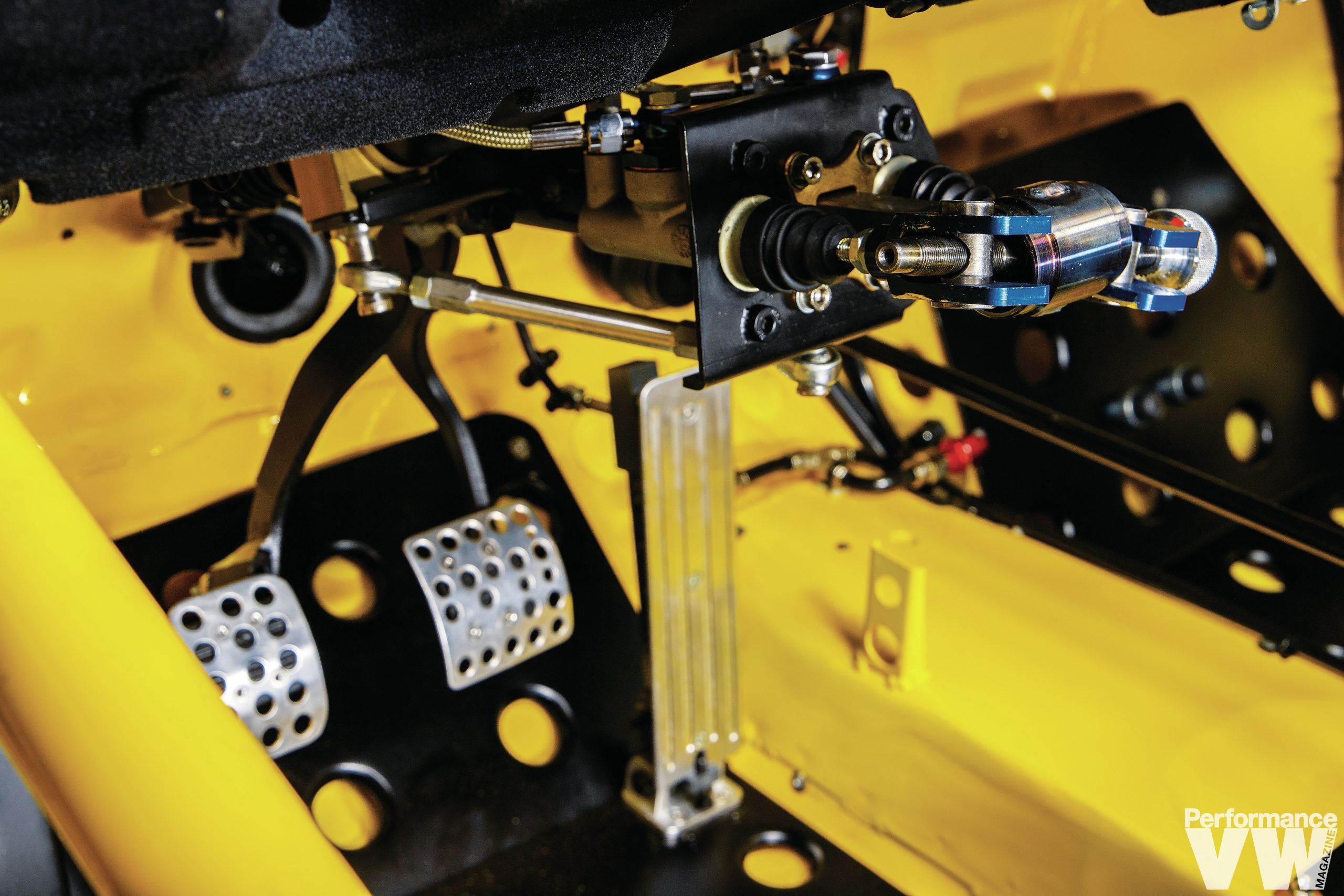
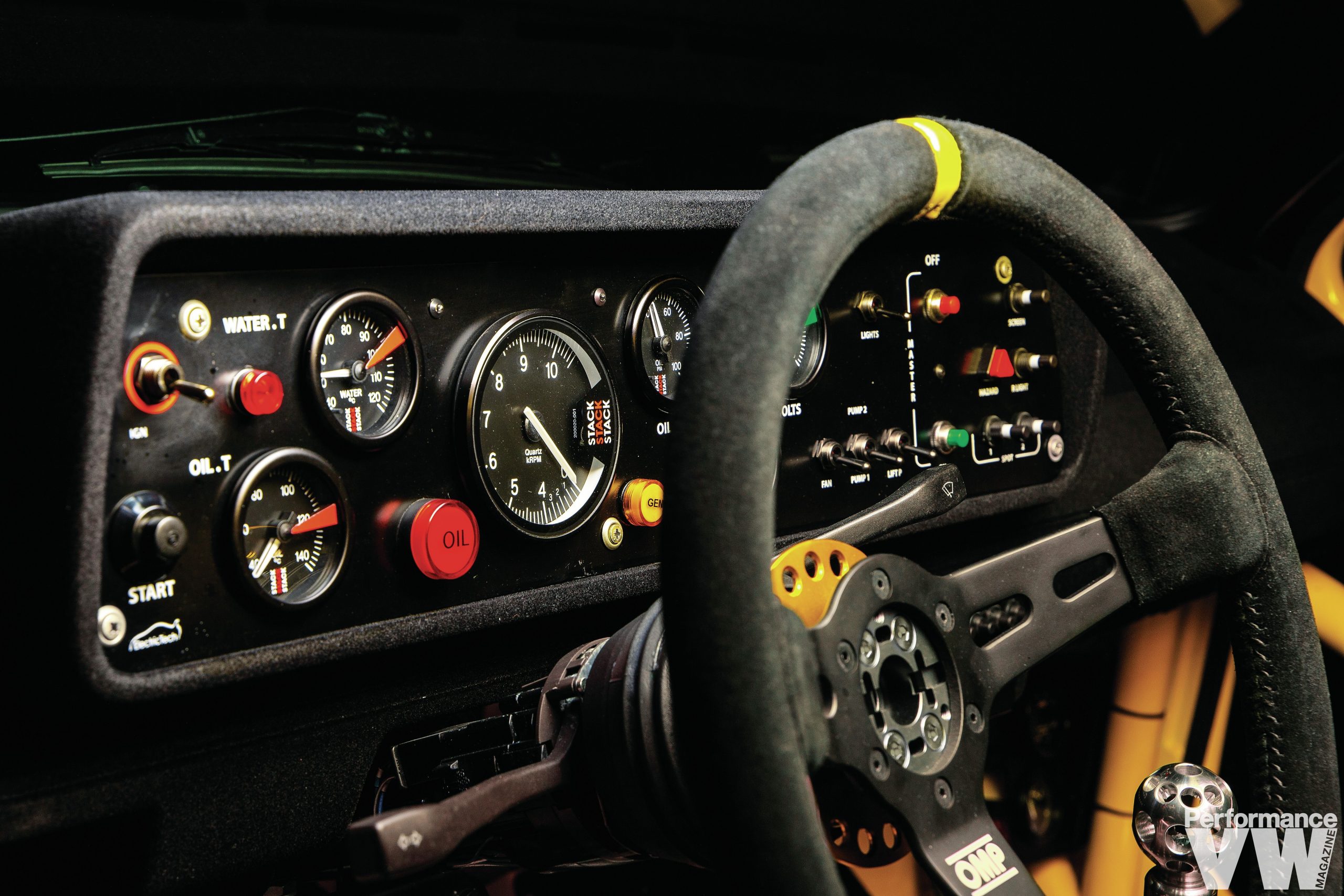
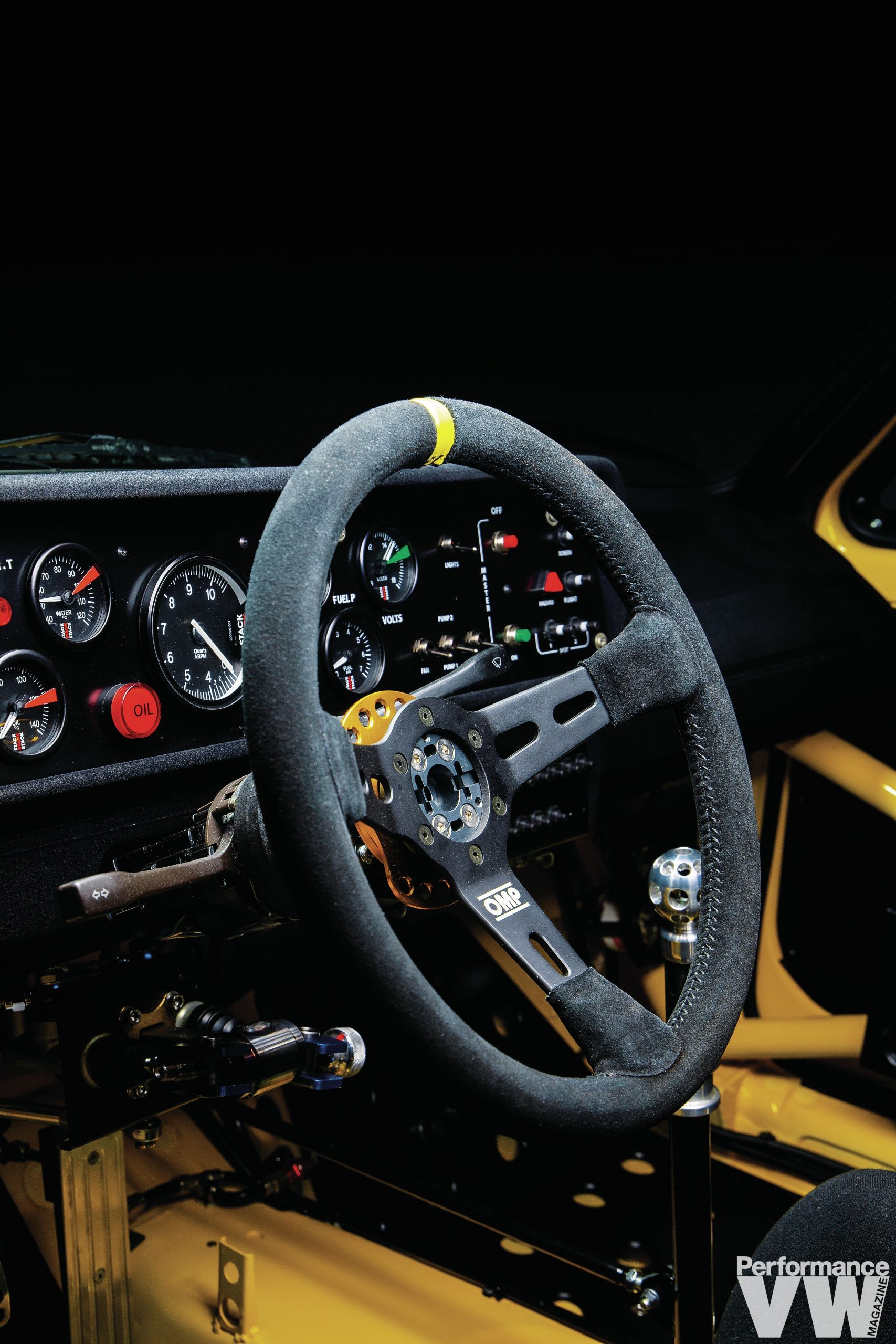
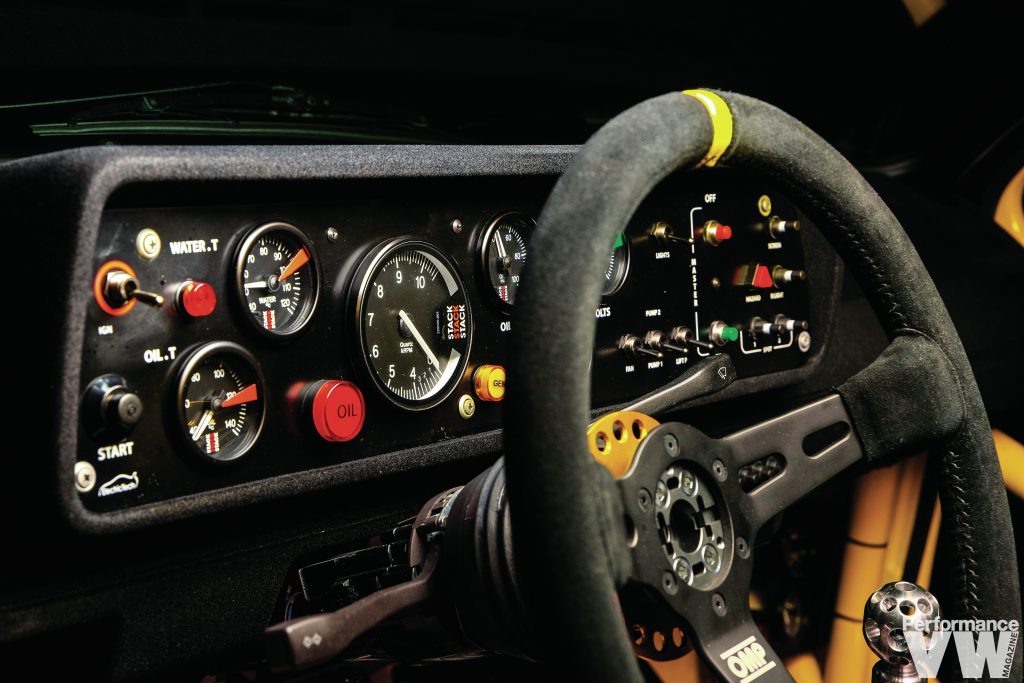
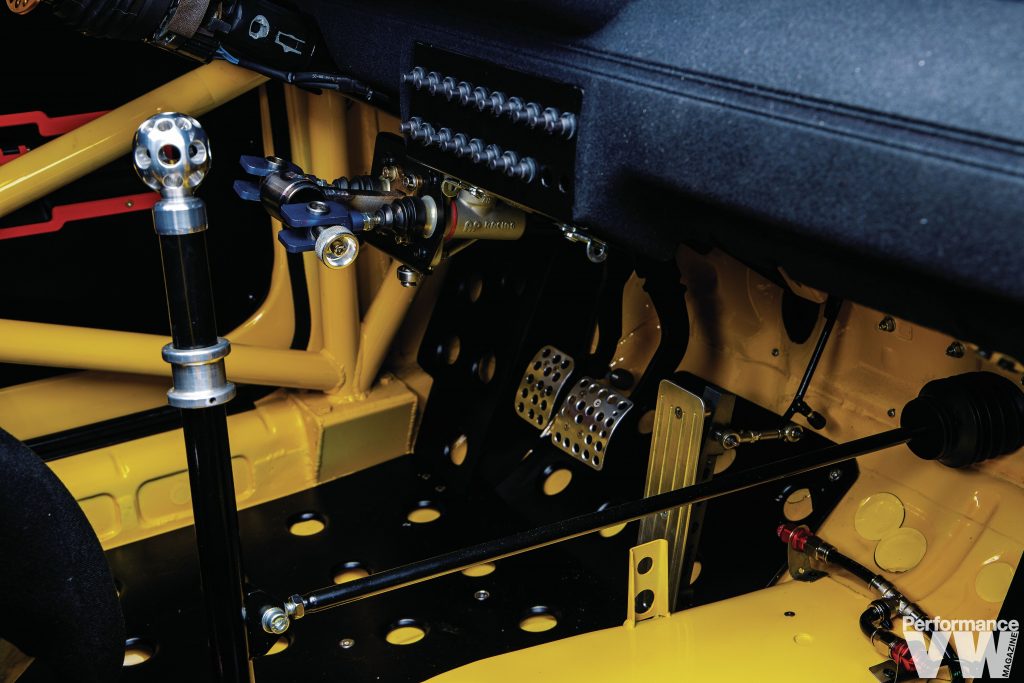
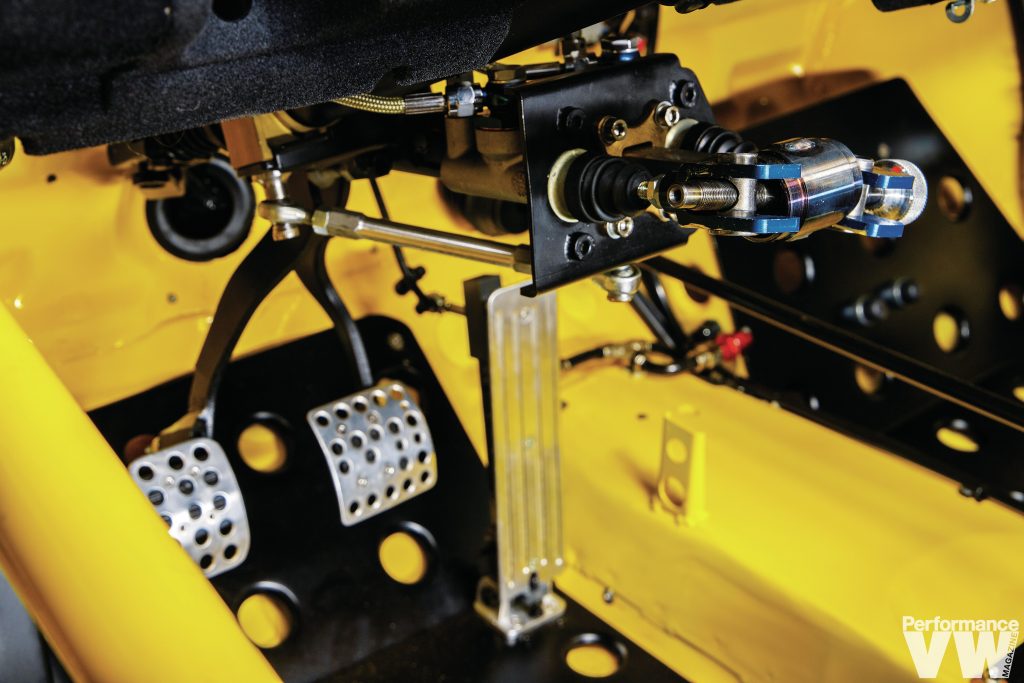
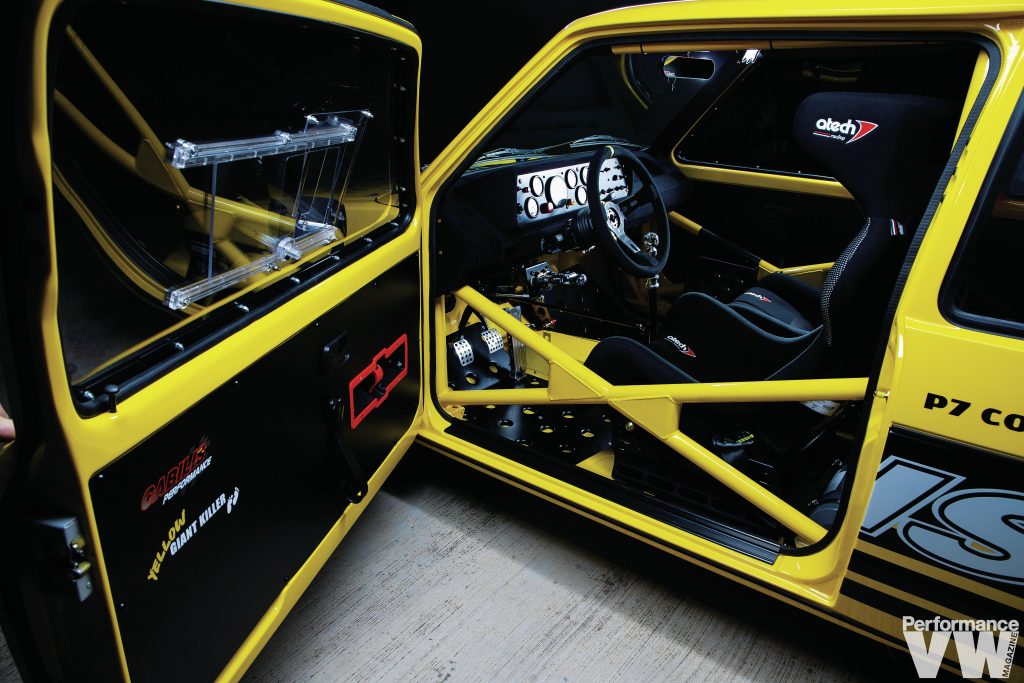
Since this is a bona fide race car, the interior is missing everything that would be considered a creature comfort. The pair of Atech racing buckets hold the driver and passenger in place and are surrounded by a custom fabricated roll cage by Alex Magiafis of Drift Weld. It is truly all business inside, with bare painted surfaces everywhere. The dashboard has an array of gauges and buttons that are all clearly marked with their function. The shifter has beauty in its mechanical simplicity that must be mentioned. It’s connected to an 020 casing with racing synchronized gears homologated for Group 4, supplied by Zanghellini Motorsport in Italy, another partner of Cabilis. They also worked on the suspension components.
The car was completed in the beginning of of 2025. Takis tells us about 90% of the construction was completed in-house at Cabilis Performance, with all of the decisions, from concept through final execution, resting with them. “We handled the full assembly, planning, and integration, with support from long-standing technical partners in a few specialized areas. These partners have worked with us for over 30 years, forming a trusted network that is crucial when building a competition-grade vehicle at this level.”
What’s it like to drive the car, as so far it’s competed in just one sanctioned hill climb. “It’s exhilarating,” says Takis. “The car feels incredibly light, with sharp, precise steering and immediate throttle response. Despite being a race car, it remains quite comfortable over bumps and road imperfections.
That said, it’s challenging to readjust to the driving style it demands—respecting the synchronized gearbox, the way I modulate the throttle, and the absence of using the left foot on the brake. Driving it is both thrilling and demanding.”
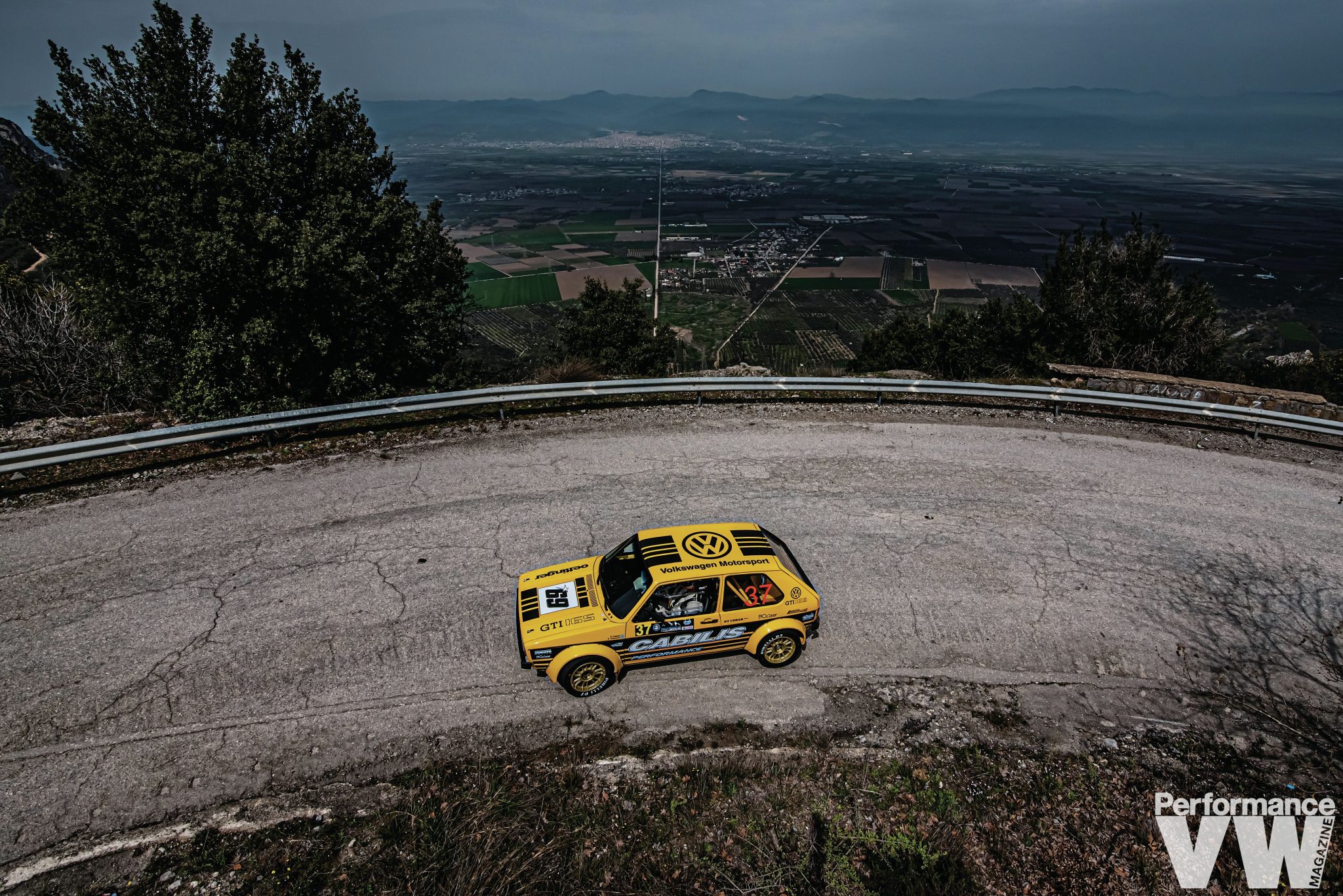
During that first event, Rally Sprint Bralos, it was up against the usual suspects of rallying legends: Ford Sierra 4×4, a Delta integrale, an Alfa Romeo GTV6. According to Takis, it held its own ahead of much more modern racers during the 14 km hill climb. It was able to demonstrate its potential while standing out amongst its fellow historic racers. When asked who its competition was, his cheeky response was anything with four wheels. Confidence is high, repeat confidence is high. One thing is for sure though, this will only be a hill climber and a tarmac rally participant. “Circuit racing is out of the question, as it often involves contact between cars.” Regardless of where it turns a wheel in anger, it will be continuously developed to give the Davids of the world something to look up to.
DUB DETAILS
|
ENGINE |
Original Golf GTI 1.6/1.8-litre 8v block, custom steel billet crankshaft (80mm stroke), one-off forged billet design pistons (79.75mm diameter with custom crown and sidewall geometry), one-off billet steel connecting rods (18mm pin), SPIESS-style dry sump pump system, custom aluminium oil pan with dual scavenge collectors, genuine Oettinger 16S head fully ported for rally-spec airflow, oversized valve seats, Schrick valves (33mm inlet / 30mm exhaust), dual heavy-duty Schrick valve springs, Cat Cams rally-spec steel camshafts, one-off billet aluminium camshaft carrier engineered to survive high-RPM loads (resolves original design weaknesses), custom 45mm throttle bodies with integrated water cooling, Kugelfischer mechanical fuel injection (rare and period-correct, high-performance setup), one-off ultra-lightweight exhaust system. Compression ratio: 11.8:1. Power output: 212hp @ 8000rpm, 195 Nm @ 5500rpm. Africa-spec aluminium radiator with dual SPAL fans. Aluminium oil cooler with in-line thermostat, 7-litre dry sump oil reservoir, Mocal steering pump oil cooler, custom-made aluminium expansion tank. |
|---|---|
|
CHASSIS |
8×15’’ aluminium EVO Corse X3MAZero, 5.1 kg each (rally set-up), 8.5×15’’ GRAKU 3-piece forged aluminium wheels (1980s motorsport heritage), 3.0kg each (hillclimb set-up). KW coilovers, tarmac rally specification – gas-charged, 2-way adjustable. Independent bump and rebound control for precise tuning across varying surfaces and stages. Front Suspension: Reinforced wishbones rose-jointed at both ends; caster-adjustable modification by Zangellini, Italy. Uprights: Zangellini strengthened and reshaped for corrected wishbone geometry; lower tower adapted to rose joint. Hub Carrier: Zangellini billet construction, revised to fit a different ball bearing. Top Mounts: Adjustable for both camber and caster. Anti-Roll Bar: Special setup developed but currently not in use. Subframe: Custom chromoly tubular subframe, reinforcing the front to reduce flex at wishbone mounting points.Rear Suspension: Axle reinforced, rose-jointed with additional bridge supports. Anti-Roll Bar: Interchangeable type for tuning. Rear Hub: Billet rear hub with billet aluminium-steel hybrid ball bearing carriers. Axles: Modified to accommodate the same bearings used in the front, by Zangellini. Custom short-ratio rack (2 turns lock-to-lock) steering rack based on Golf Mk1 Convertible, modified for racing. Front Brakes: 280mmx22mm floating discs on aluminium bells, AP Monte Carlo 4-pot racing calipers with Ferodo DS Uno 1.1 pads. Rear Brakes 265mm x 10mm discs on aluminium bells, Girling 2-pot racing calipers with Ferodo DS3000+. |
|
EXTERIOR |
Front spoiler and GRP wide wheel arches (classic old-school motorsport design) |
|
INTERIOR |
Fully lightened, seam-welded monocoque shell, integrated full roll cage (Sassa, welded-in), custom aluminium mounting bracket for coil, ignition, and oil breather system, old-school aluminium strut tower brace, tubular front steel support frame mounted below radiator, custom-engineered mounts for improved stiffness. Full Stack Instruments, toggle switches and custom fuse-switch interface. One-off steering column integrated with twin master cylinders for split braking system, adjustable brake bias, custom-made clutch, brake, and throttle pedals tailored for driver ergonomics, hydraulic “fly-off” type handbrake — custom-built. Atech racing bucket seats, Schroth 6-point WRC harnesses, custom 6061 billet aluminium side seat mounts, custom driver and co-driver footrests (aluminium), fully custom short-throw gear shifter assembly, ball-jointed, 50% reduced throw from stock, ATL racing fuel cell, FEV fire suppression system |
|
SHOUTS |
Cabilis Performance, Engine Builder: Buchl Rennsporttechnik |