BYE, THE BLADE
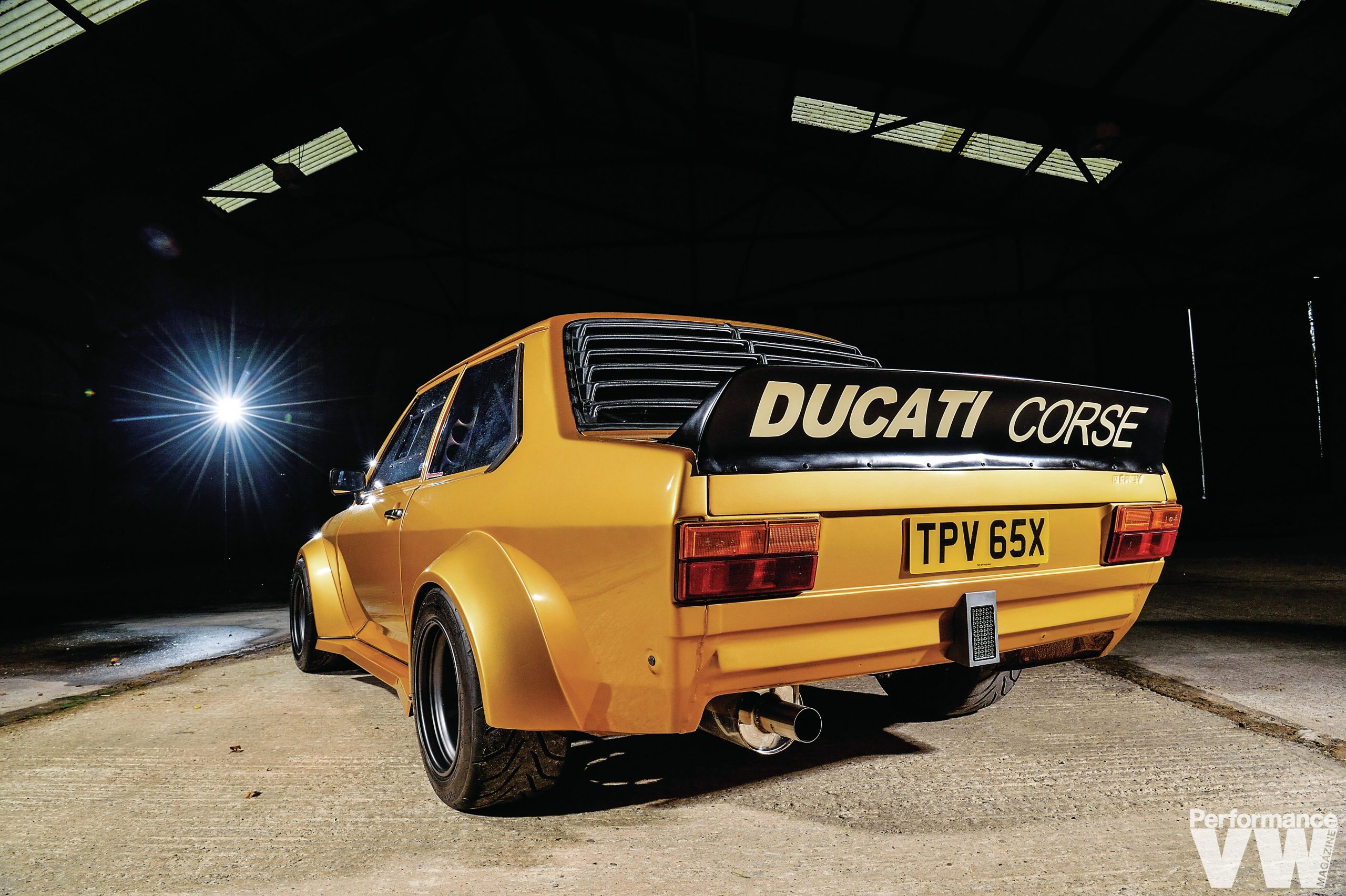
Part motorbike, part Berg Cup inspired road racer, Dave Custance’s one-of-a-kind, globe touring Mk1 Derby embodies 25 years of not taking the easy route.
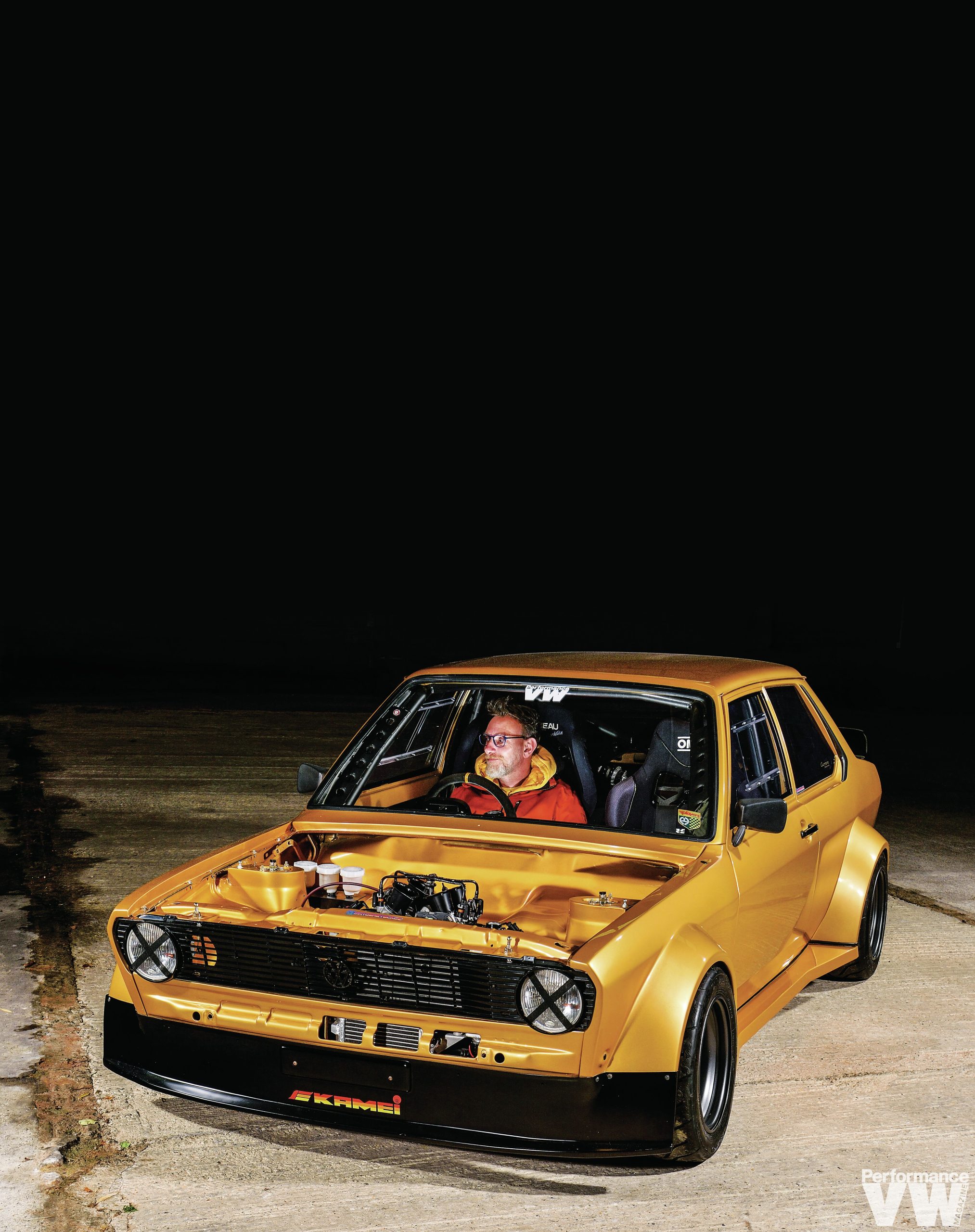
Unique. It’s a staple adjective of the modified scene, but not without shades of grey. There’s no shortage of fresh takes on how a build might unfold, and no two cars are the same after that process is complete, but only a few can be picked out of the masses with a handful of words. Beginning with a Mk1 Derby (effectively a Polo saloon) gave Dave Custance a head start on that front, of course. Adding a bike engine and Berg Cup arches took this one into an exclusive club – on both sides of the Atlantic.
“The Derby was a part exchange for a Caddy van I’d just finished, back in 2000,” he tells us. “It was just an empty shell, and I had no idea what a Derby was, let alone how rare they were or what I was going to do with it. But I had a rented workshop with a group of friends at the time, and one of them joked that it would be fun with a bike engine. It seemed like a good idea, so I bought one on eBay and went at the shell with an angle grinder.”
If you’re familiar with Dave by name, then it’s worth understanding the very different context under which this process started. As the owner of Retrofitted, custom work pays the bills these days – the workshop has a high throughput of modified campers and other vans and it’s where this took shape – but that’s not where the Derby build began. That unit he rented with friends was funded by a day job as a van driver, and this car’s first round of surgery was rooted in hobbies rather than professional training.
“It took me about a year to lash it together out of bits of scrap, whatever I could find lying around,” he laughs. “Putting the engine in the back felt like it would have been too easy. Every car on the market back then had an engine up front, which keeps the back end light. I just wanted something I could drift around the farm and have fun. It was very rough, but surprisingly quick and good fun.”
There’s a lot to be said for that. The engine – lifted from a ’98 Honda Fireblade – displaced a little less than Volkswagen’s 1,272cc inline four, but made up for it with a lively 130hp, simple electronics and a cable clutch compatible with the standard pedal box. And that’s probably just as well, because there’s no easy way to get a prop shaft, Mk2 Ford Escort Atlas axle (a popular option for rally cars) and Panhard rod (which keeps that axle central) into a body that was never designed for anything like this.
Dave continues: “I tried to make the Volkswagen floorpan work with the Ford axle, but there are no notches in the chassis where an axle can sit so it always sat quite high, and I never liked it. In the end, I just decided to cut the entire chassis out and make my own, which is 200-300mm higher than the factory floor. Then it became apparent once the wheels were on it that it would need wider arches, and looking like a Berg Cup racer felt like the natural thing.”
Although the basic concept hasn’t changed much in the meantime, the Derby’s ongoing revolution from rough-and-ready 10,500rpm farmyard screamer to what you see here has taken place over a much longer timeframe, nudged by a change of career. Dave’s stint as a mechanic, then engineer with a race team gave the project the injection of hands-on experience that’s re-shaped a fun idea into something a lot more polished. A process that’s been hampered, frequently, by his day job and founding Retrofitted in 2016. But that’s also come full circle, as moving the business into a bigger workshop offered some useful space to get it over the line.
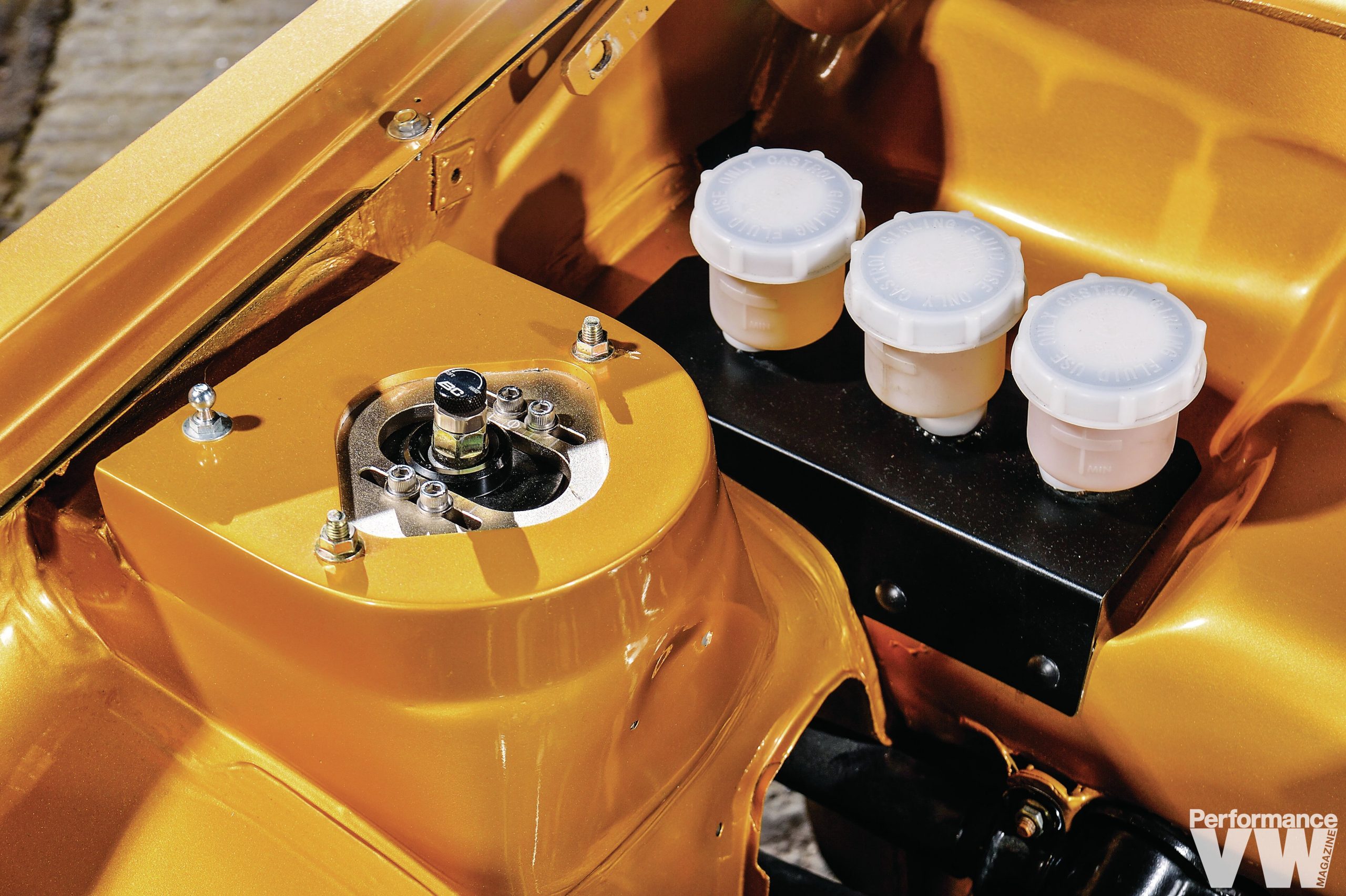
This hasn’t retained many factory parts. Frustrated by the “horse and cart” front suspension setup – a single-piece hub and upright with simple track control arms, which offers basic adjustment and gets in the way of lowering the car – Dave took advantage of the lack of driveshafts and opted to start again. The Mk1 Golf BC Racing coilovers bolt into custom-made shock towers with camber adjustment, and they’re paired with MINI hubs and rose-jointed steering arms at the bottom end. Major components were 3D printed for test-fitting before being re-made in metal.
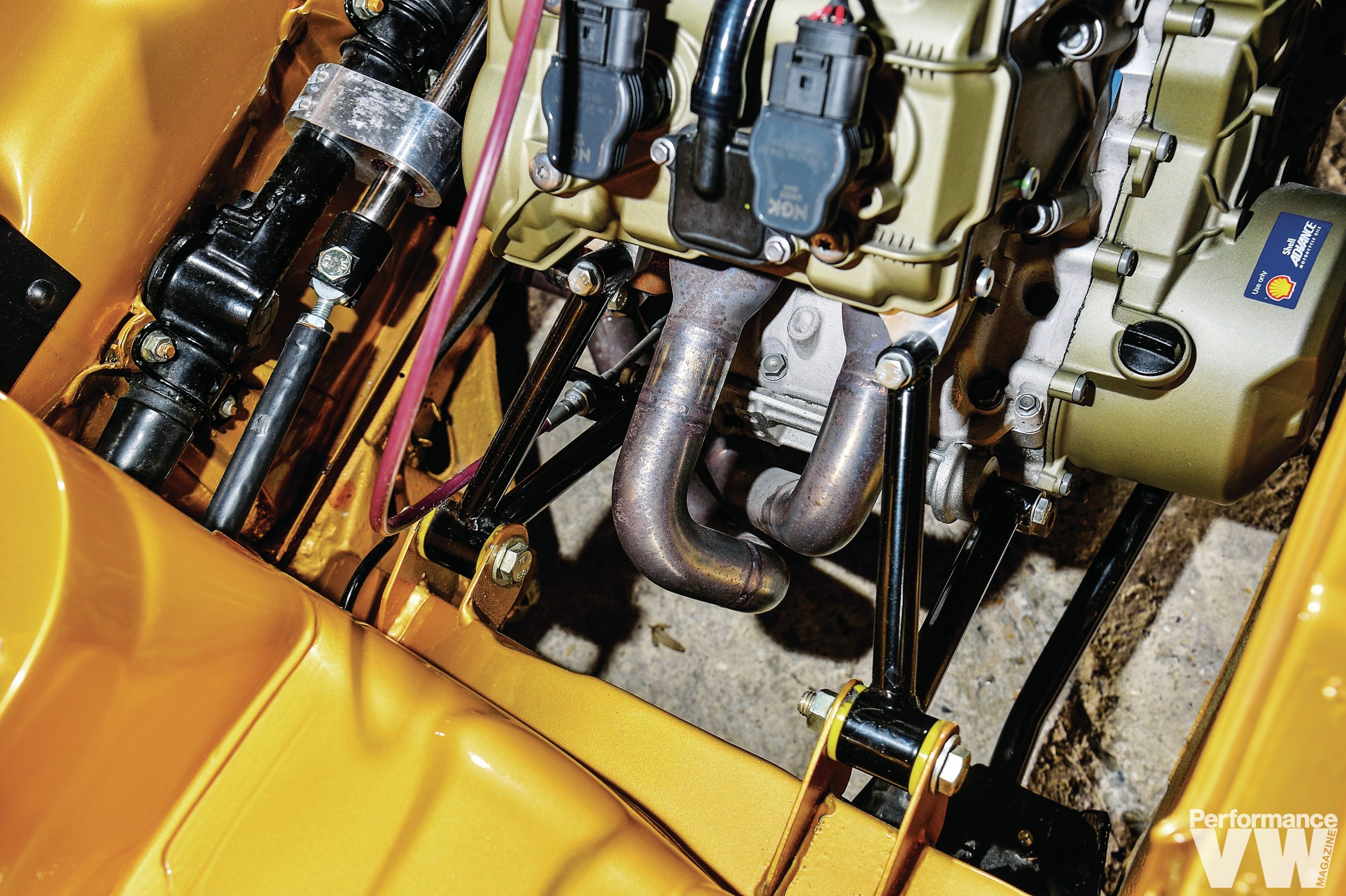
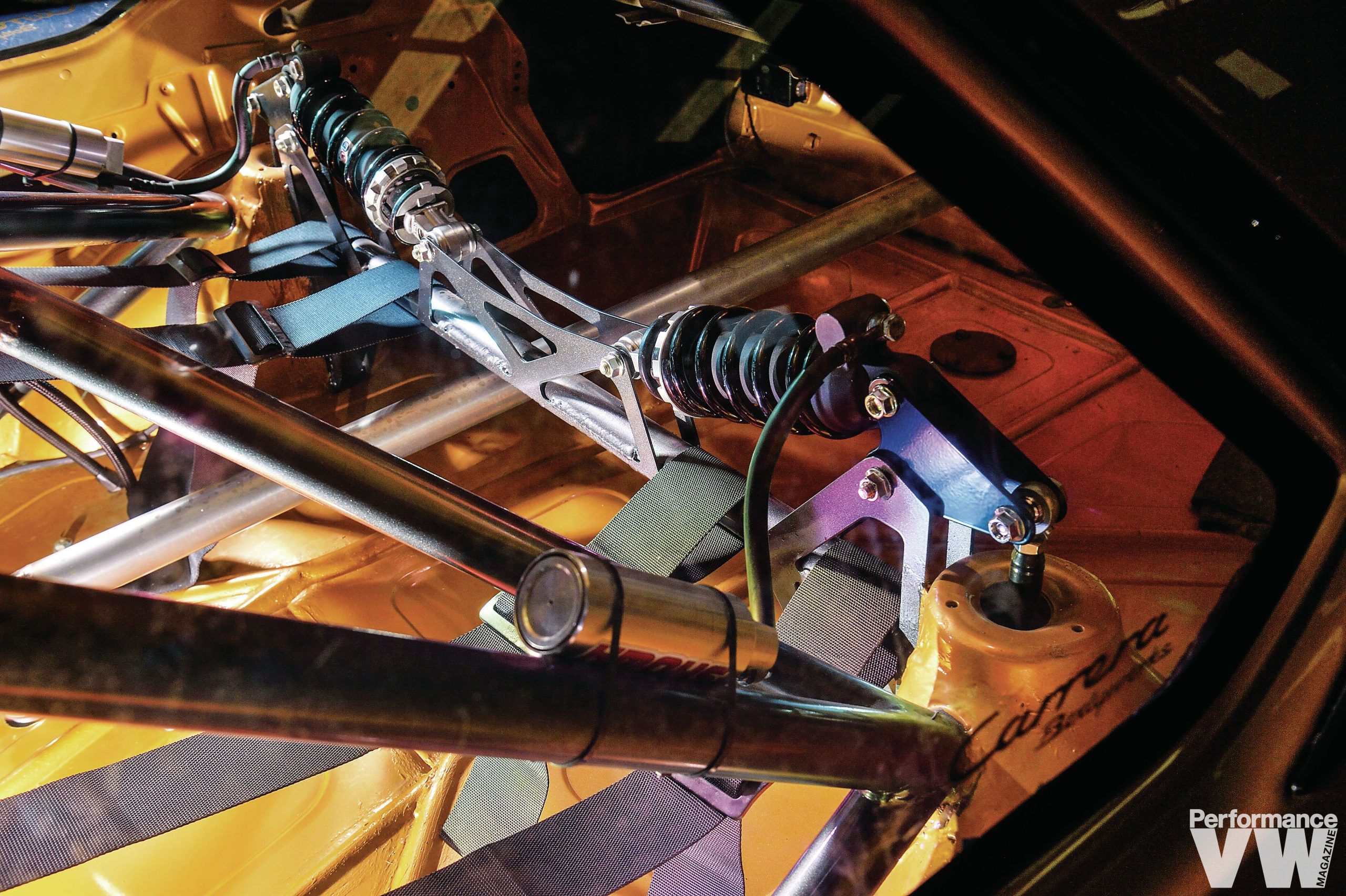
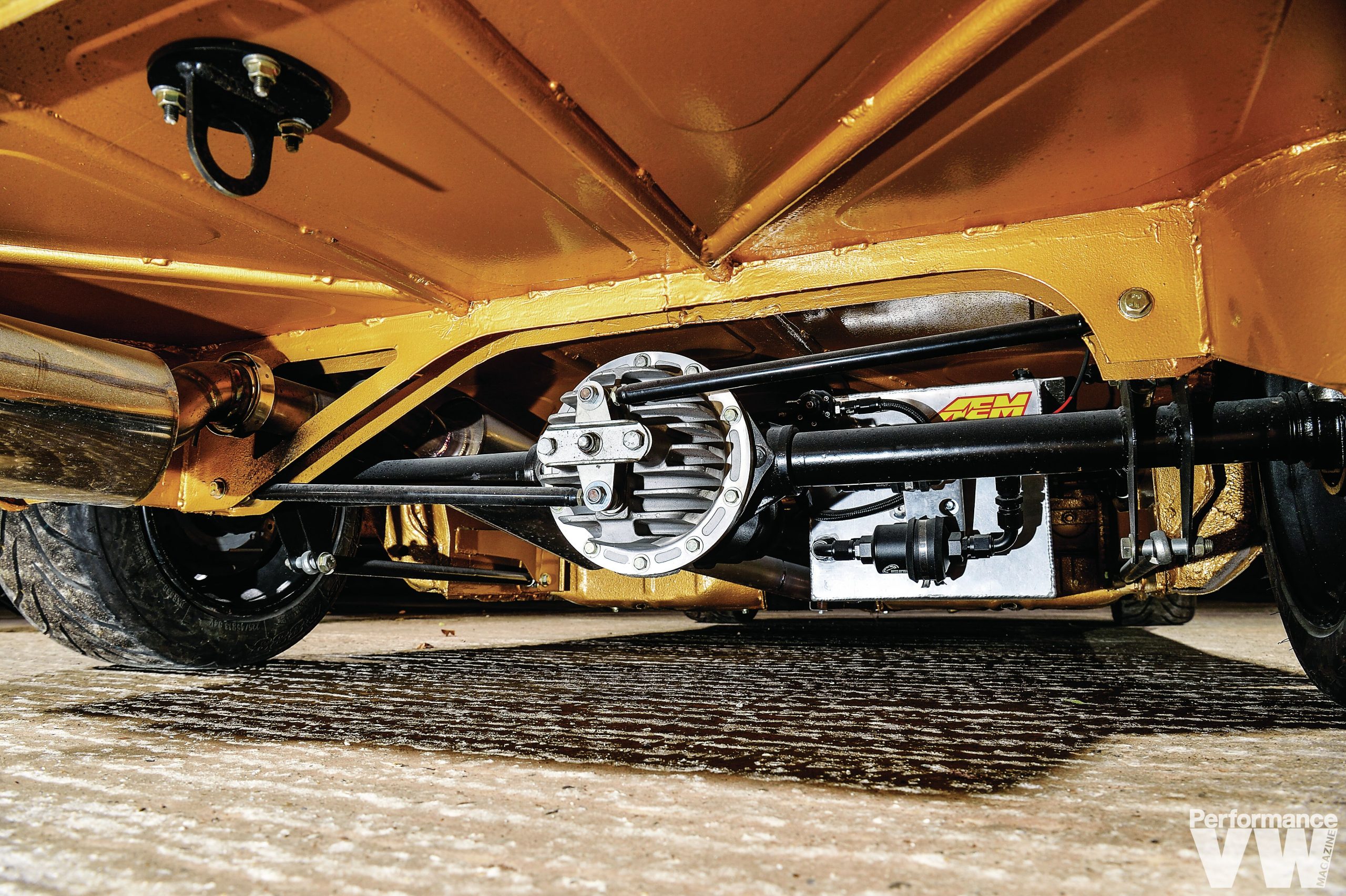
And if the front suspension is a custom work of art, it’s got nothing on the back end. The shell is braced by a roll cage, with a Formula 1 style pushrod suspension using Honda CBR600 bike shocks occupying the space where the rear seats once were. Crouch under the rear valance and you’ll spot fabricated structures carrying a sturdier four-link setup with a Watts link on the axle – two stabilisers, instead of the single Panhard rod – and the underside of a new custom floor panel.
“There’s probably two years’ worth of work in it, but spread over 15 years,” he says. “I always find the best way to learn is by doing things the hard way, which means everything takes twice as long as it should. But there were a few times where I thought I’d never get it finished.”
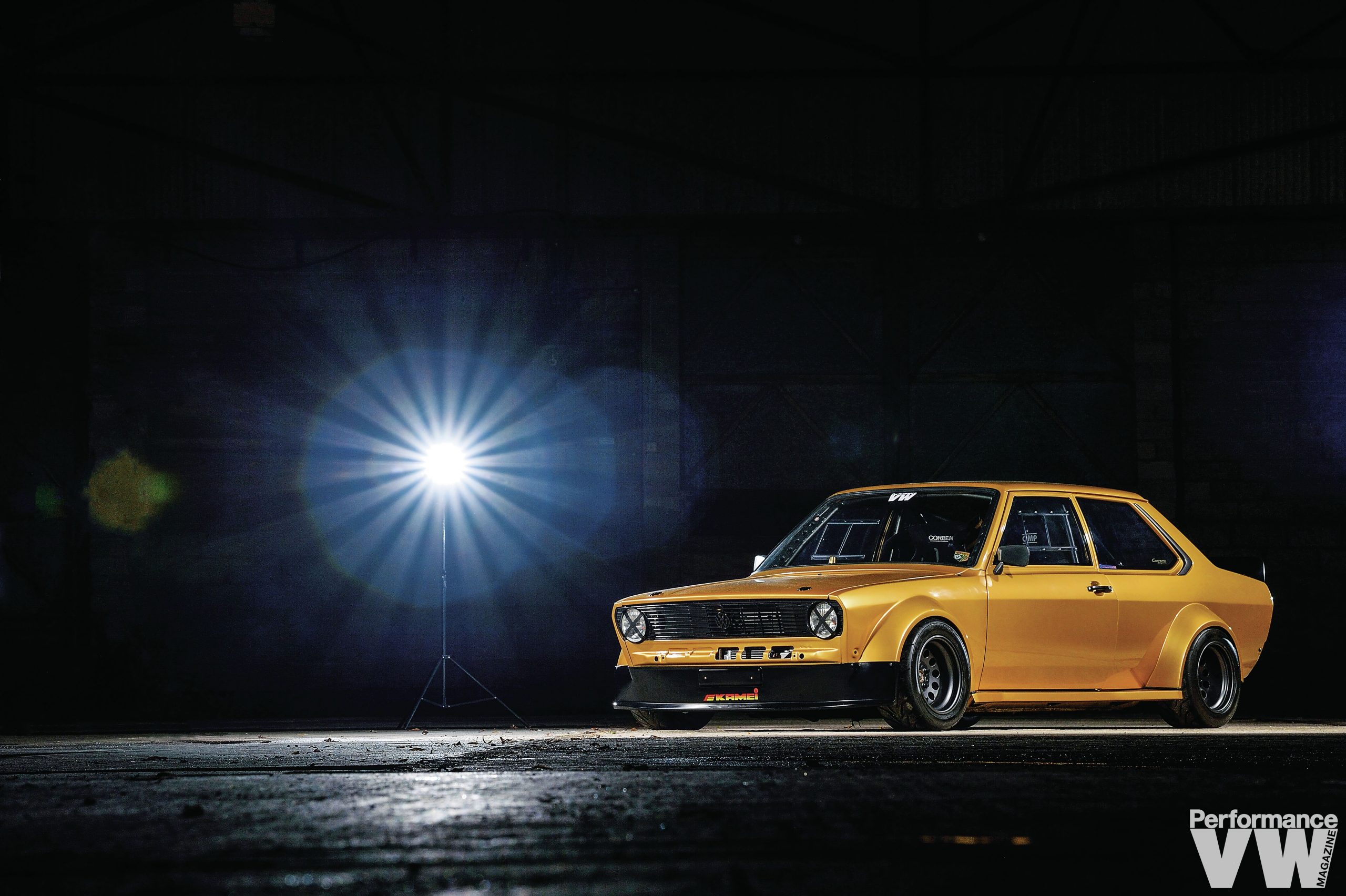
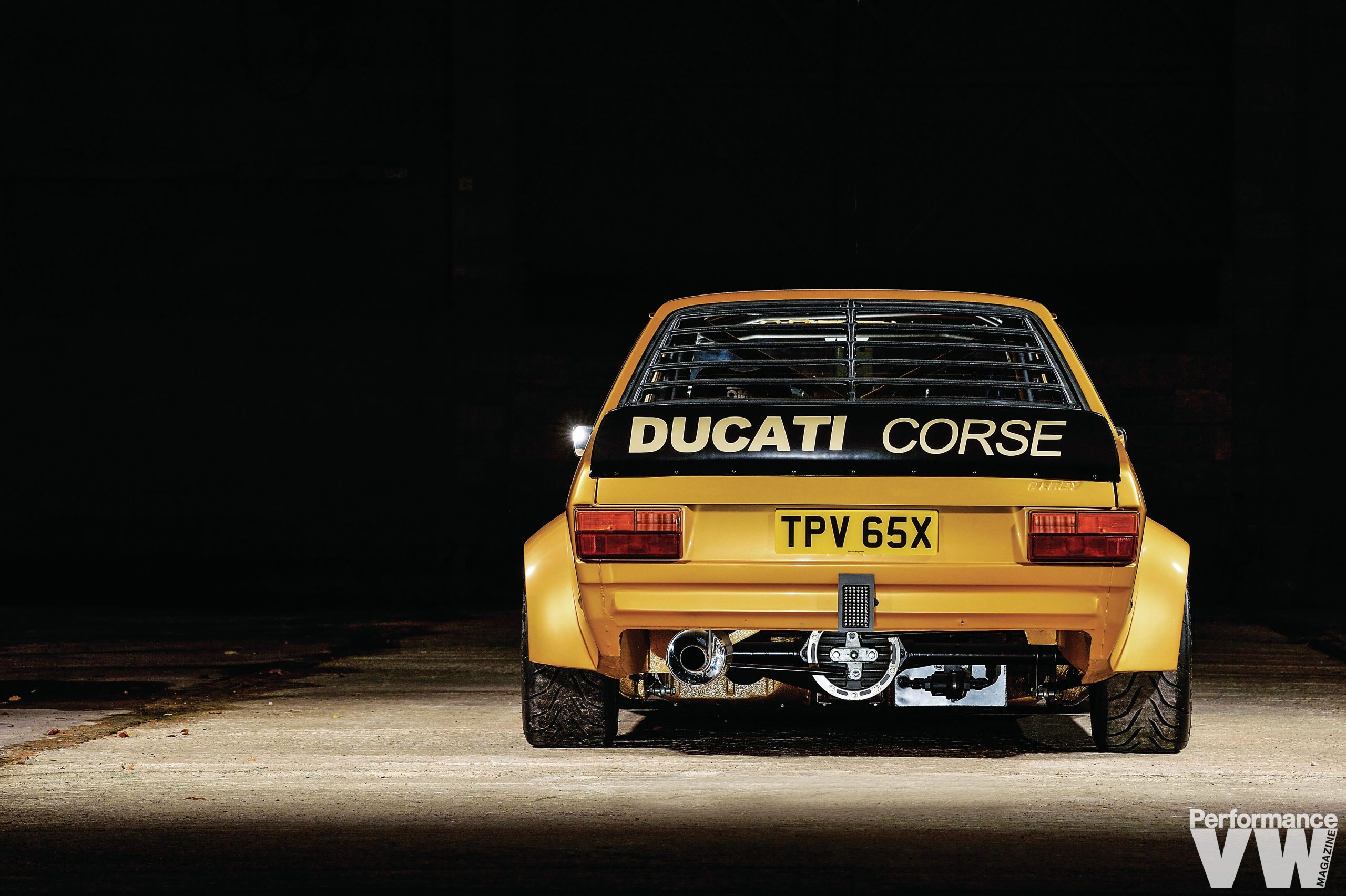
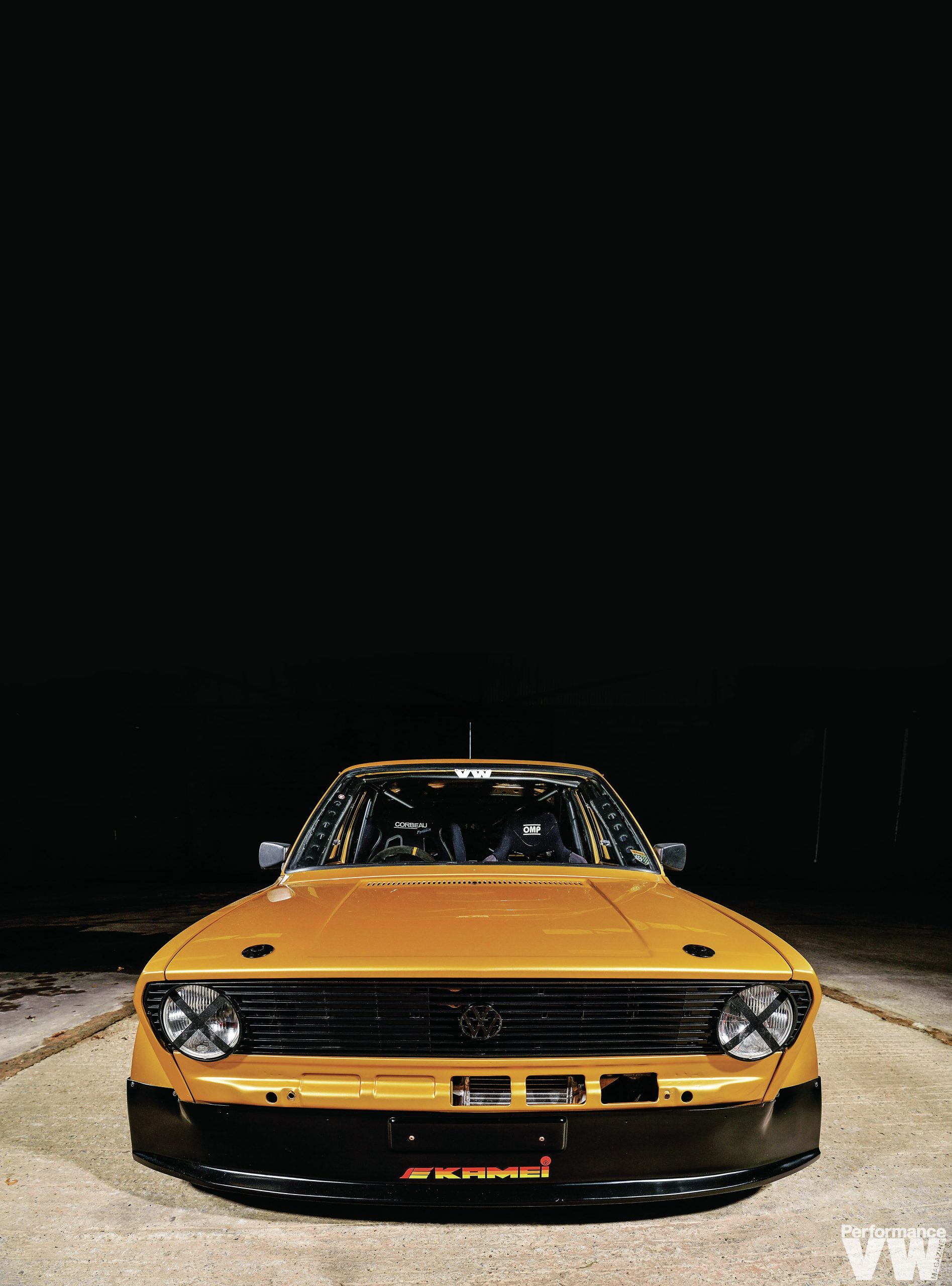
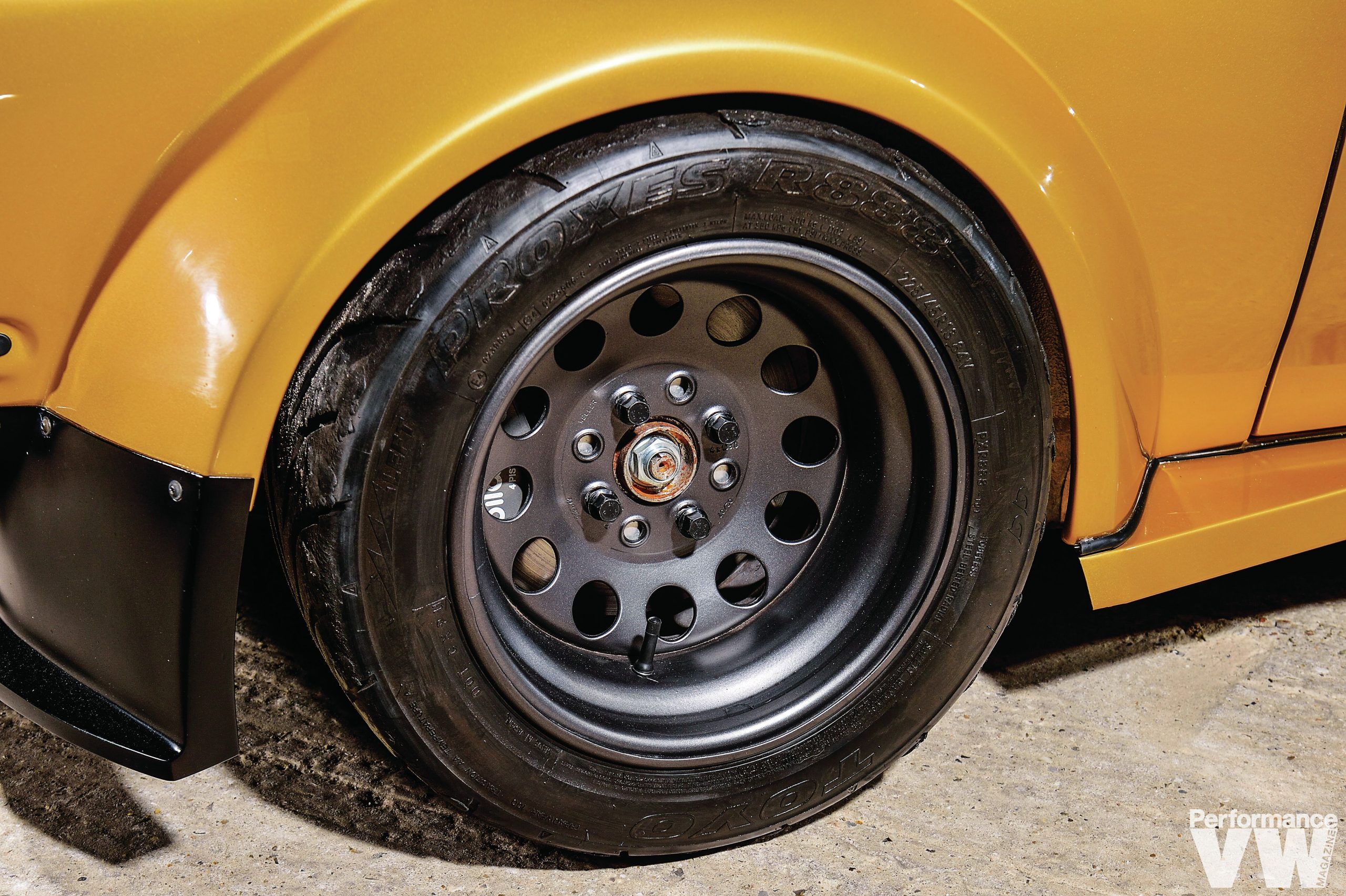
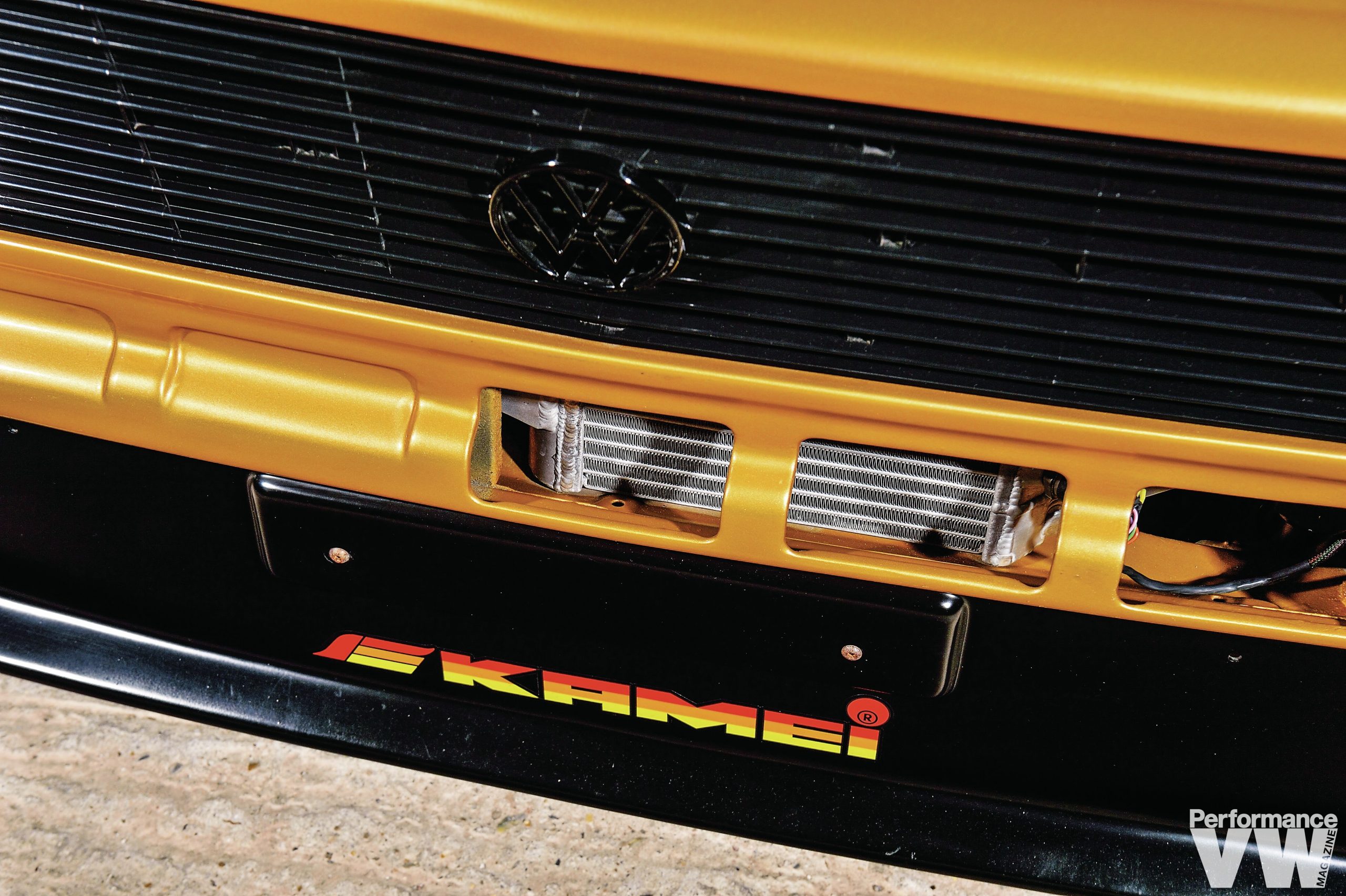
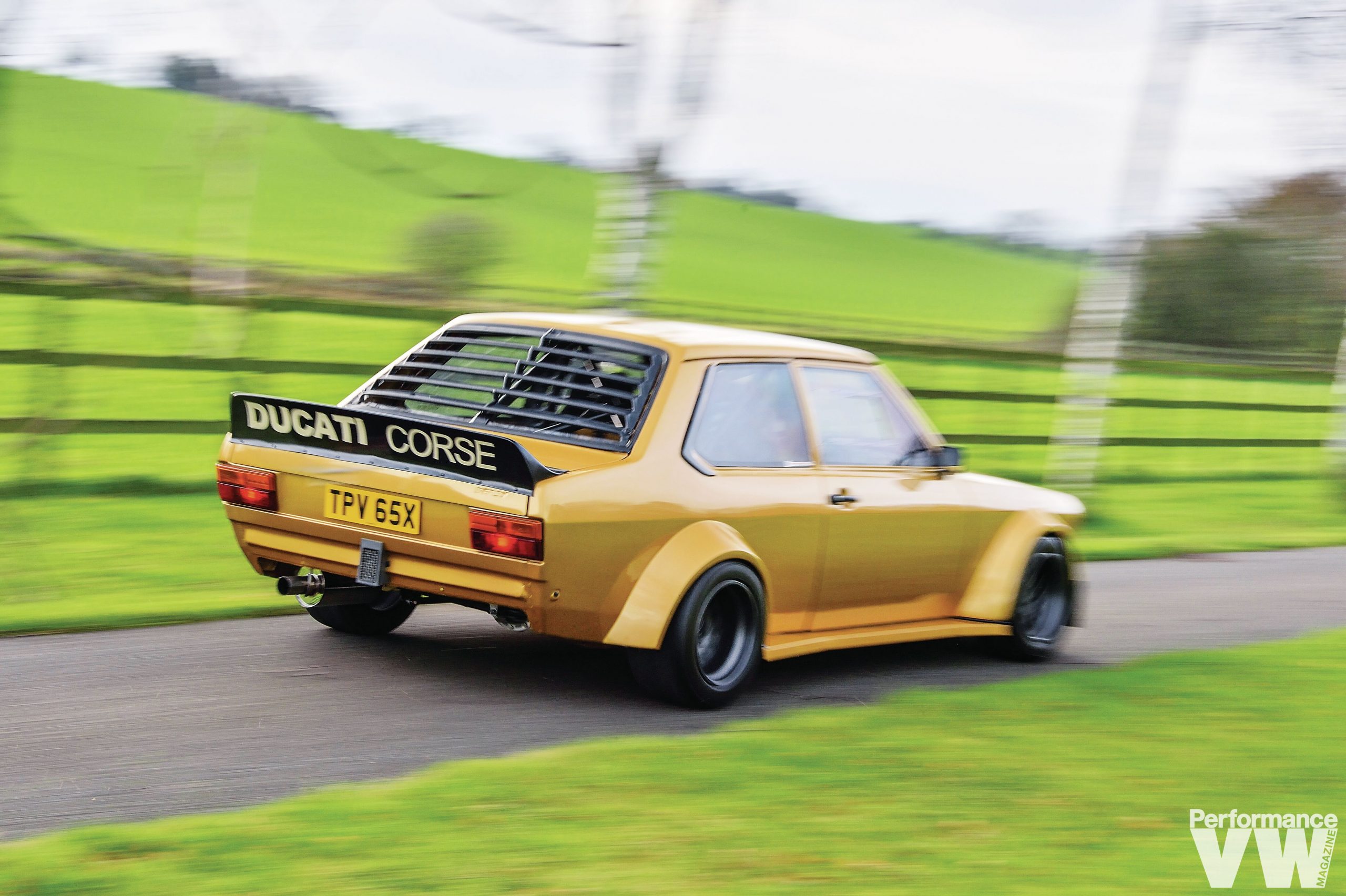
The motorsport influences have snowballed in that time. In its latest guise, the Derby has an extra 100mm of arch wrapped around the staggered 13×8 and 13×9-inch Weller dirt track racer steelies and chunky Toyo R888 track tyres, while the front Kamei valance has been adapted to meet them. Dave’s custom front hubs were designed around a set of Wilwood four-pot calipers, while the rear brakes are as you’d find on a Cosworth. With a classic three-box silhouette, de-bumpered and accented with a ducktail spoiler, the Derby wouldn’t look out of place in a line-up of 1970s race saloons.
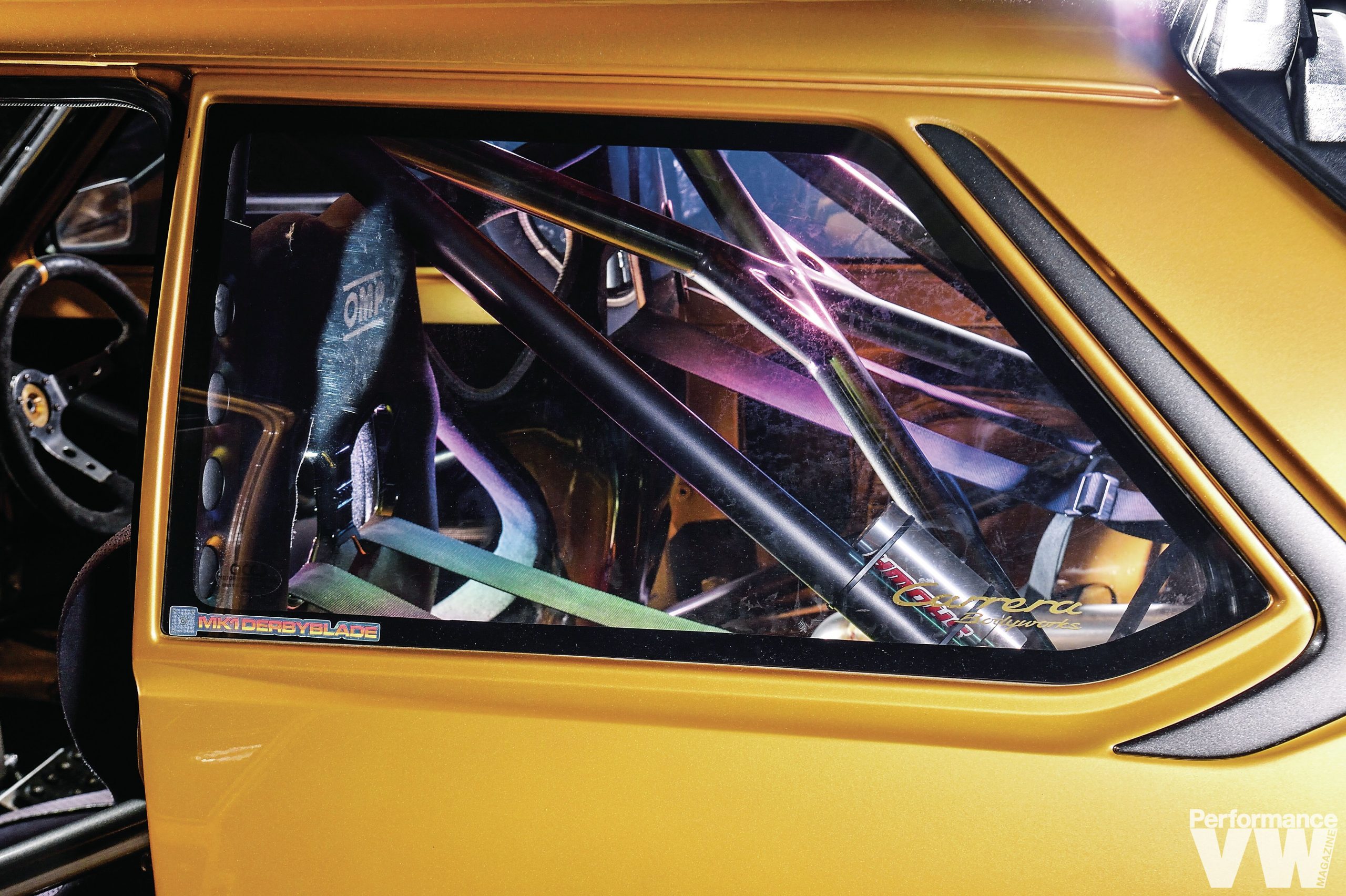
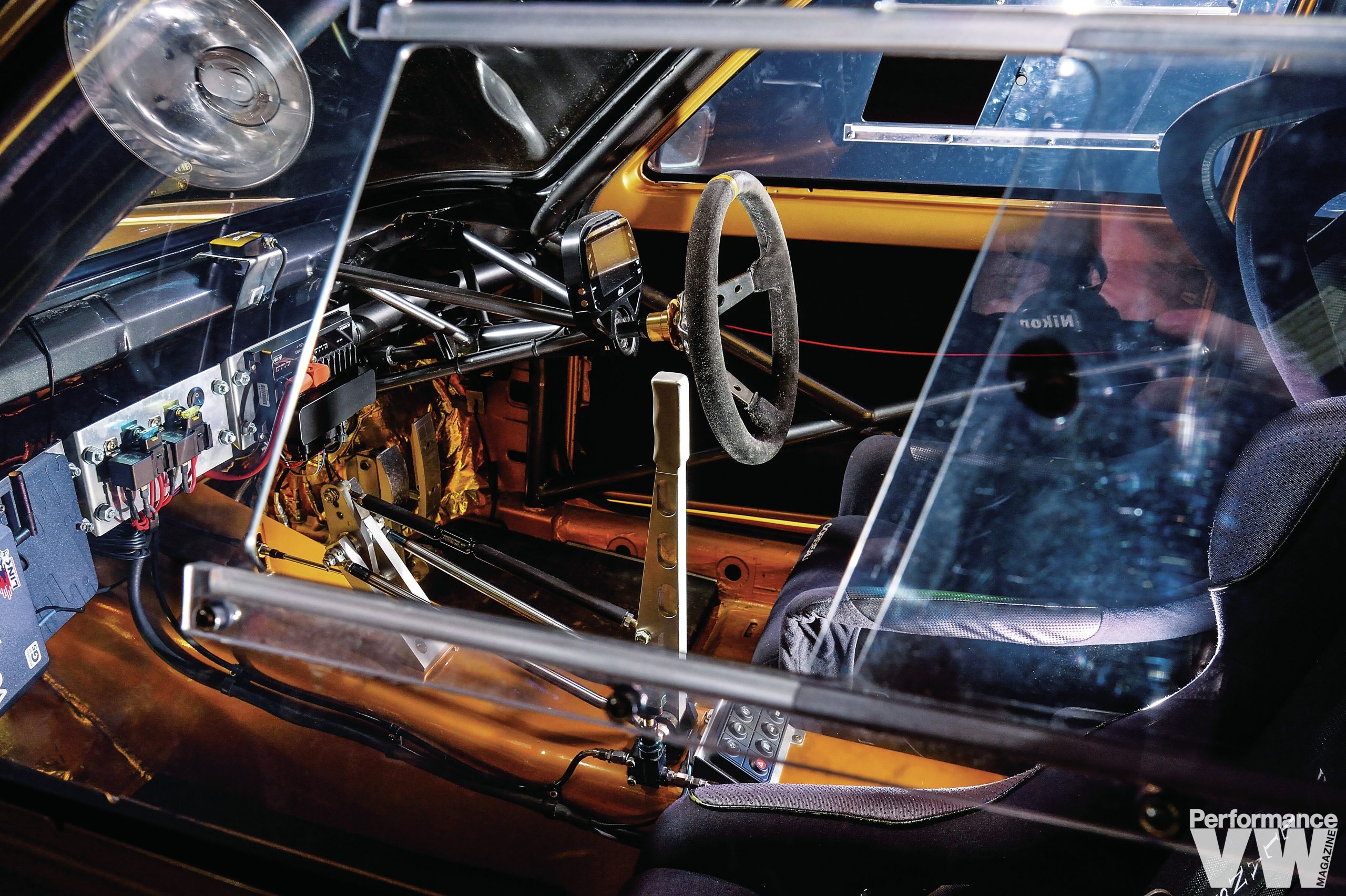
It has the details ticked, too. The louvres were a lucky accident – a friend had bought them for his Mk1 Polo but they didn’t fit – while the embossed tailgate badge took several trial runs to get right. It’s only when you spot the fuel filler cap sunk into the bootlid that you realise the original flap behind the driver’s door has gone, and you’d be forgiven for not noticing the lack of front quarterlights either. They’ve been replaced with flush-fit polycarbonate windows – a single piece in the doors, just like the rears. All that was left at this point was finding the right colour to tie it together.
“It’s always been gold, and I wanted to keep that old school, retro racer look,” says Dave. “The original colour was Sand Metallic, which is a champagne gold, but it wasn’t that vibrant. Then I was flicking through some colour charts at a mate’s paint shop, and BMW Ceylon Gold stood out, so we did it in that. Initially I couldn’t stand it, I thought it looked awful, but it’s grown on me and I can’t imagine it in any other colour now.”
The shell is braced by a roll cage, with a Formula 1 style pushrod suspension using Honda CBR600 bike shocks
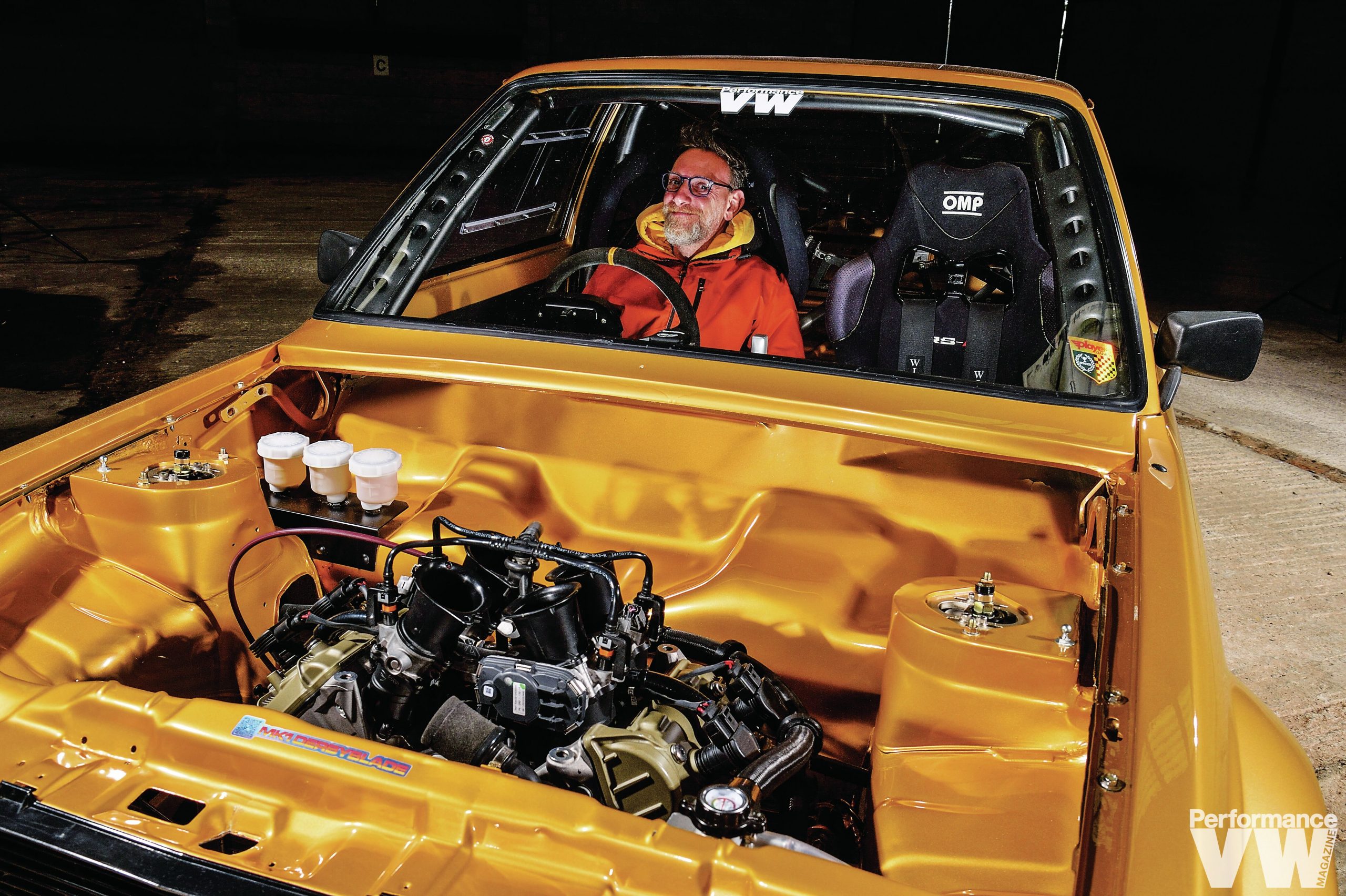
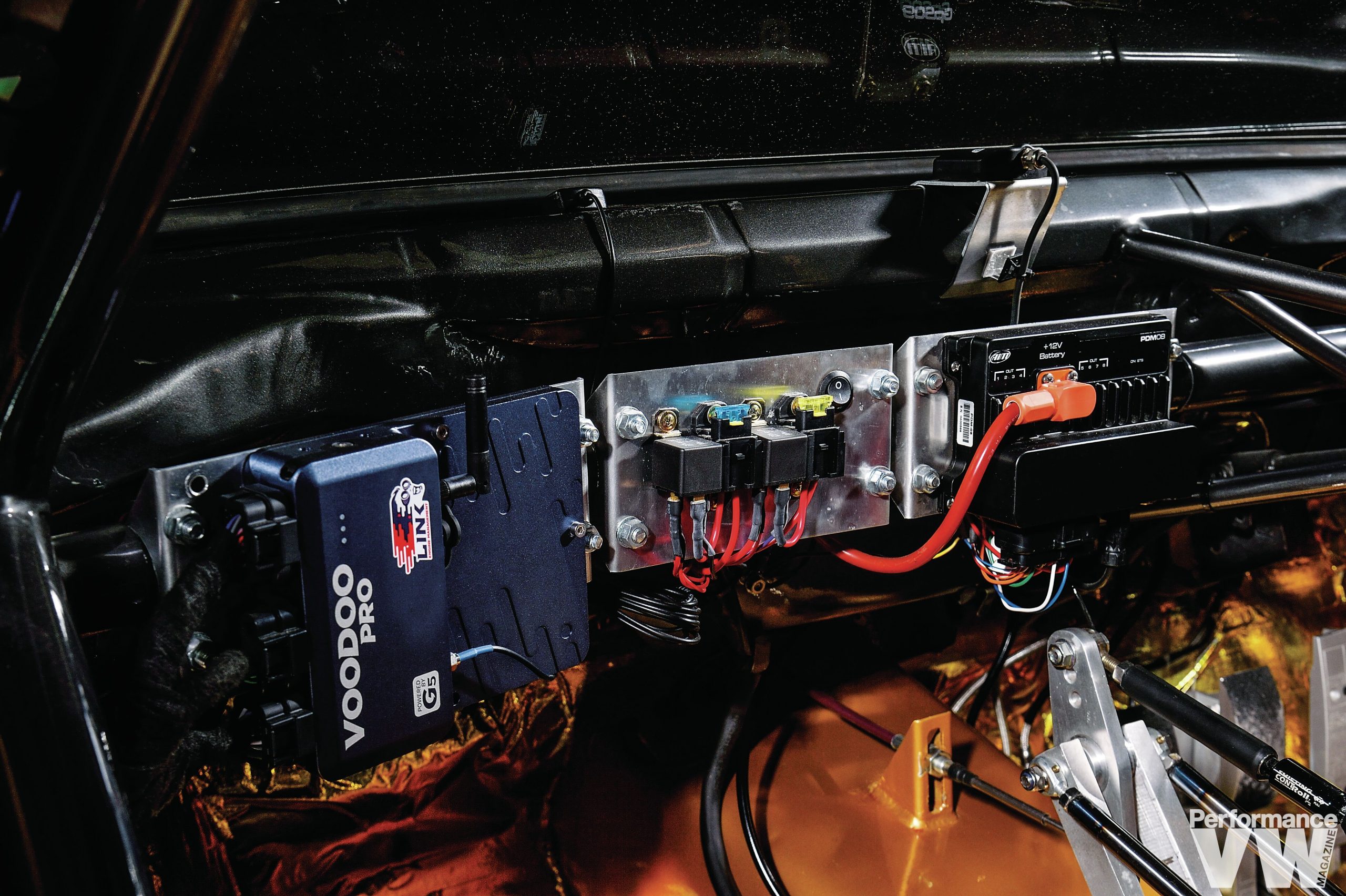
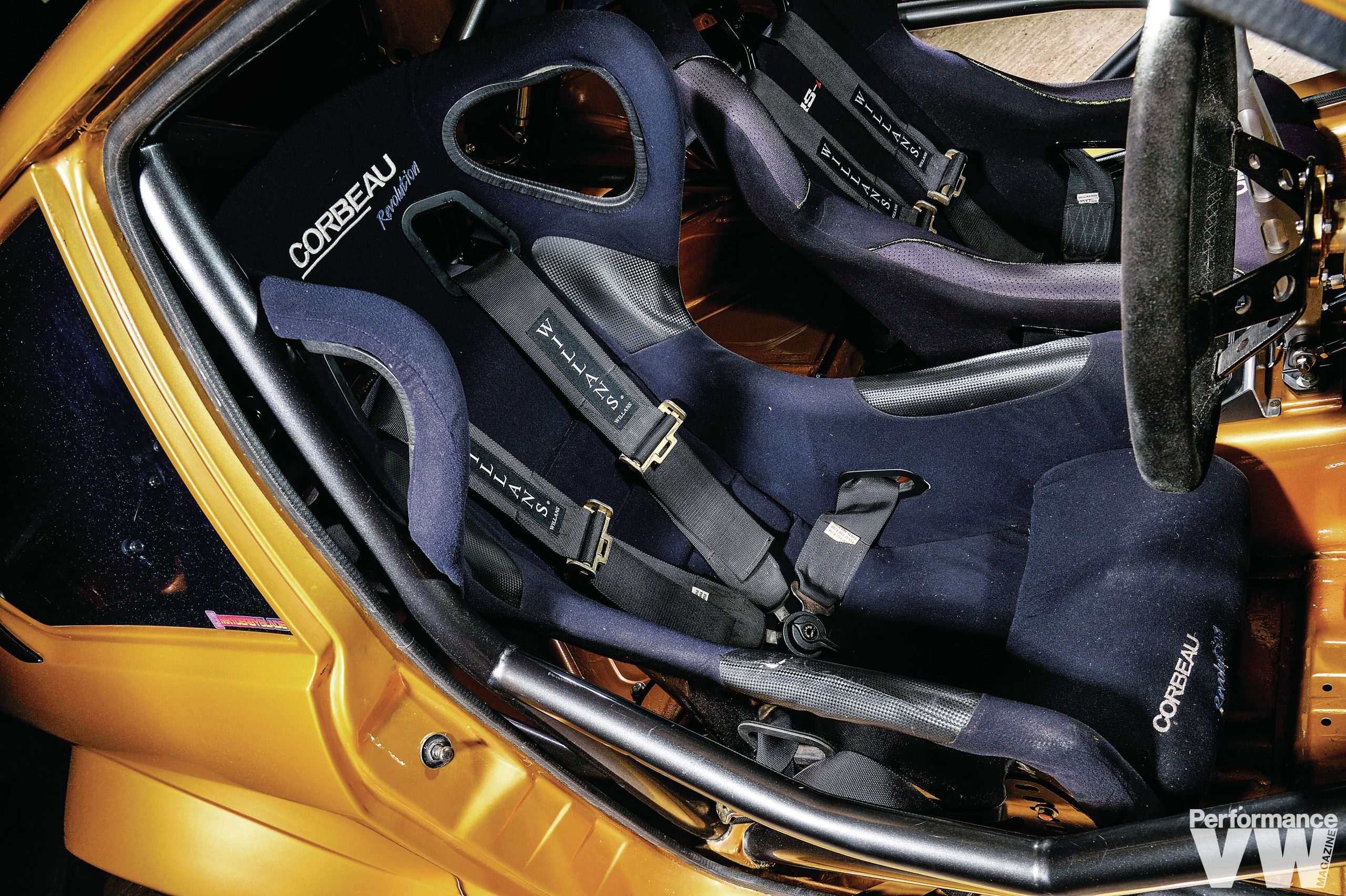
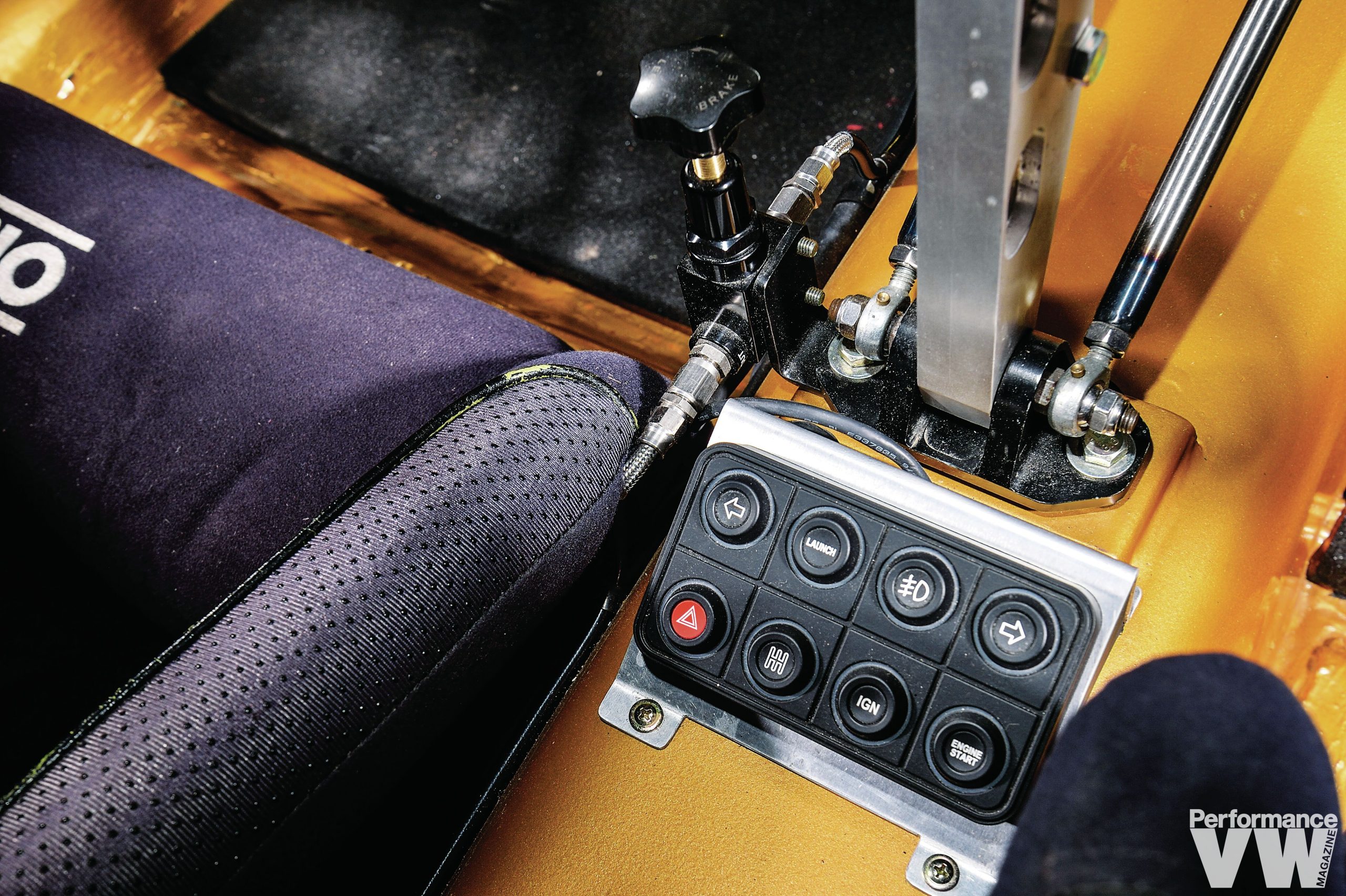
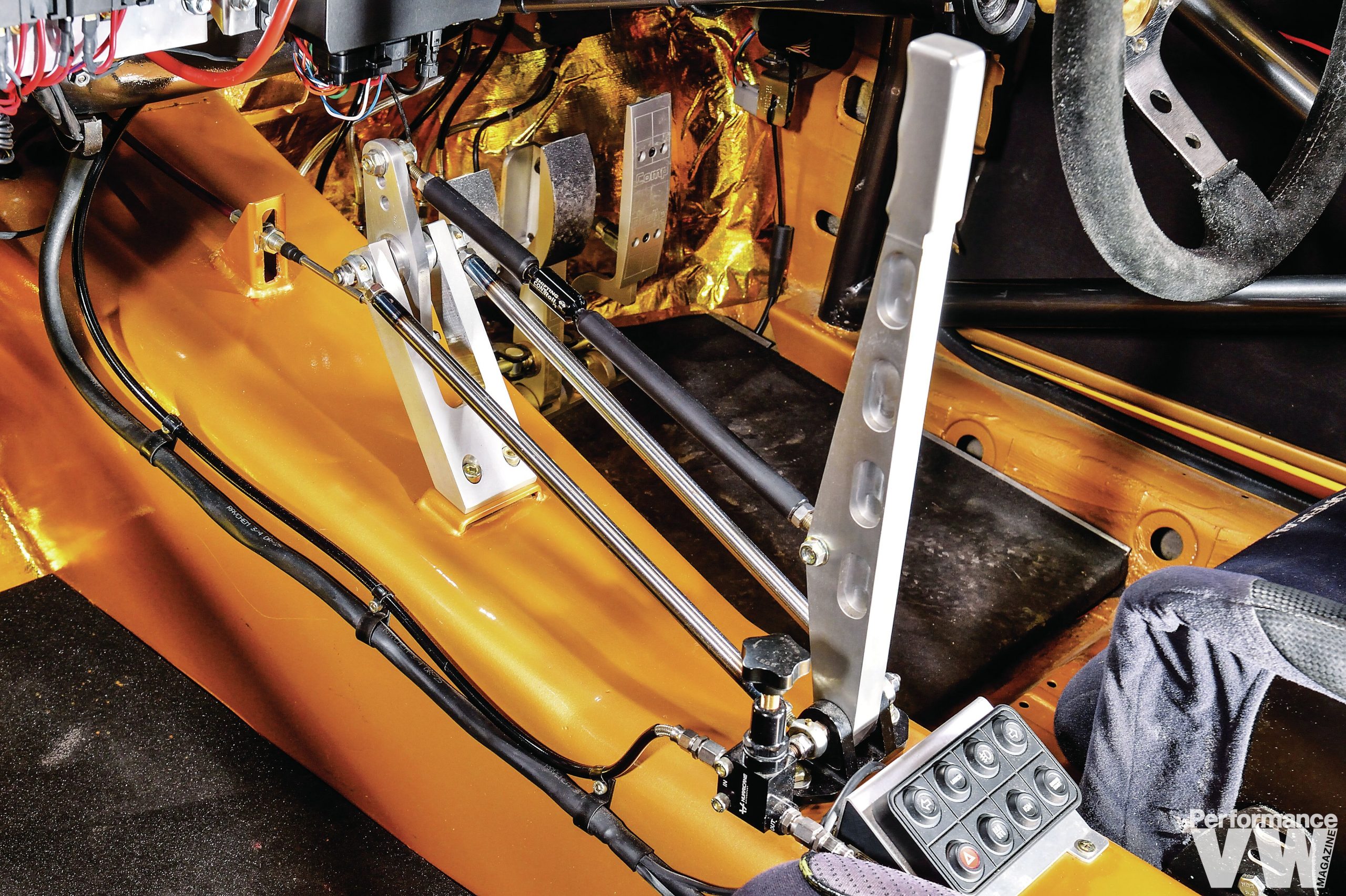
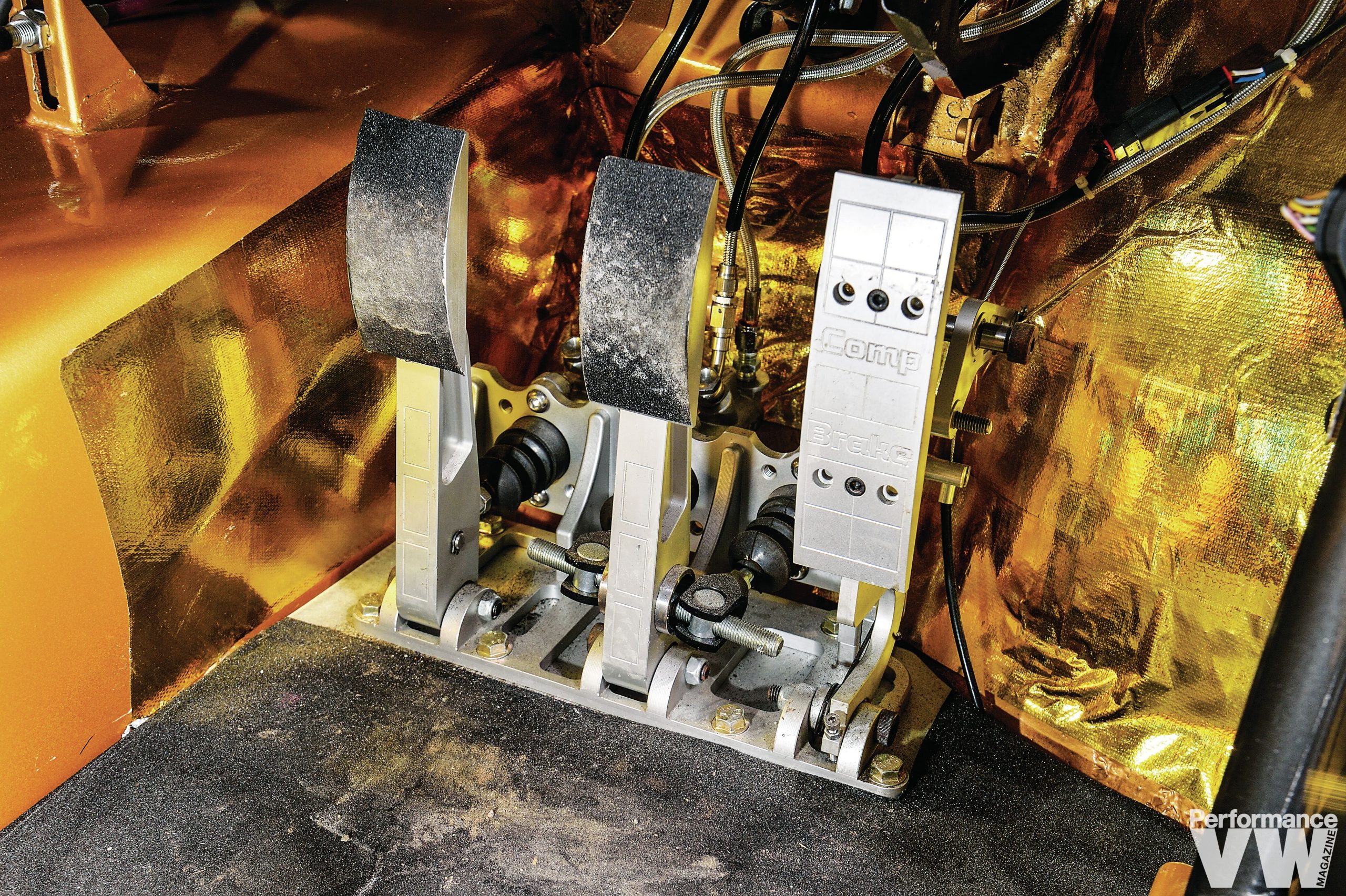
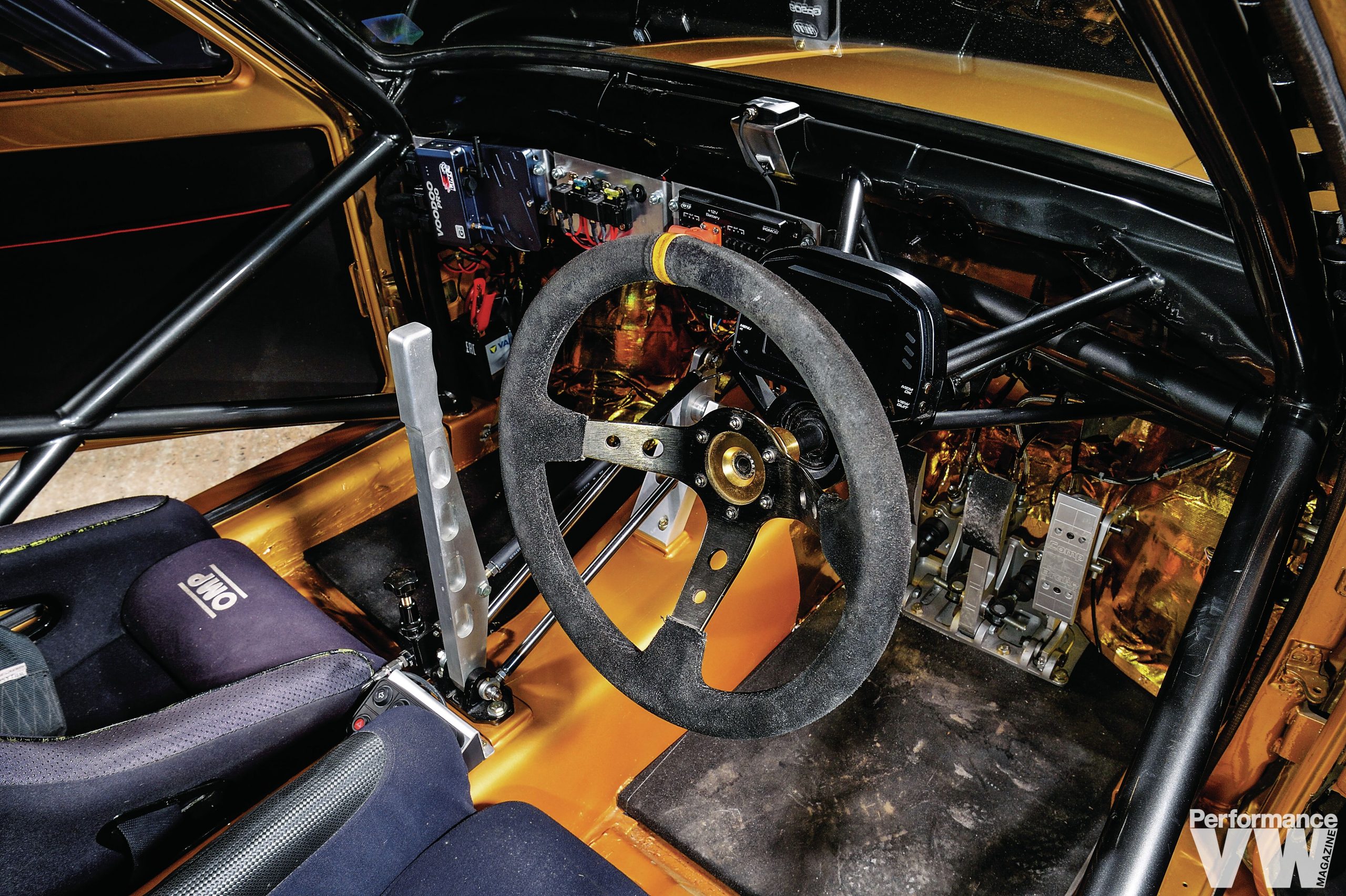
That’s probably just as well, because there’s no escaping the colour inside. Everything behind the B-pillar is functional – suspension, roll cage and fuel tank – and that’s continued in the front. The important hardware, including the ECU, relays and power distribution module (PDM), are bolted against the firewall, while the AIM instruments are mounted on the heavily braced steering column. A dished steering wheel, billet gear shifter and the pedal box and PDM switchgear are all positioned within easy reach while harnessed into the driver’s seat.
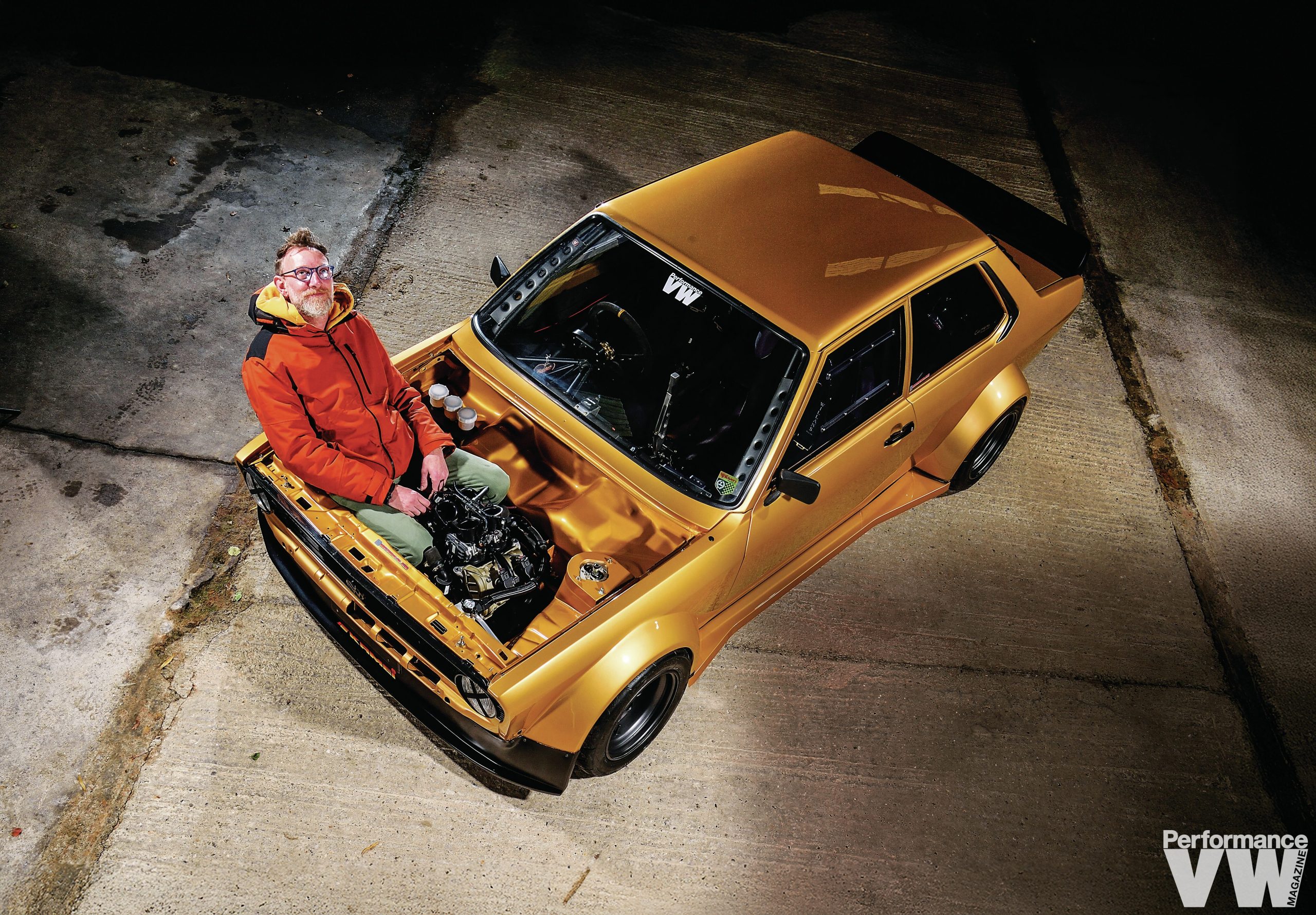
Then, as the Derby edged closer to turning a wheel, the project took an unexpected turn. “I was turbocharging the Fireblade engine, but I fancied something different,” Dave continues. “The original plan was an Aprilia V4, but they look horrible, then eBay suggested other listings and I saw this cheap Multistrada engine for sale. It seemed too good to be true – just over a year old, 1,000 miles on it and going for £1,700 – so I bought it thinking it was probably a scam. Luckily it wasn’t, but getting it to work has been financially ruinous.”
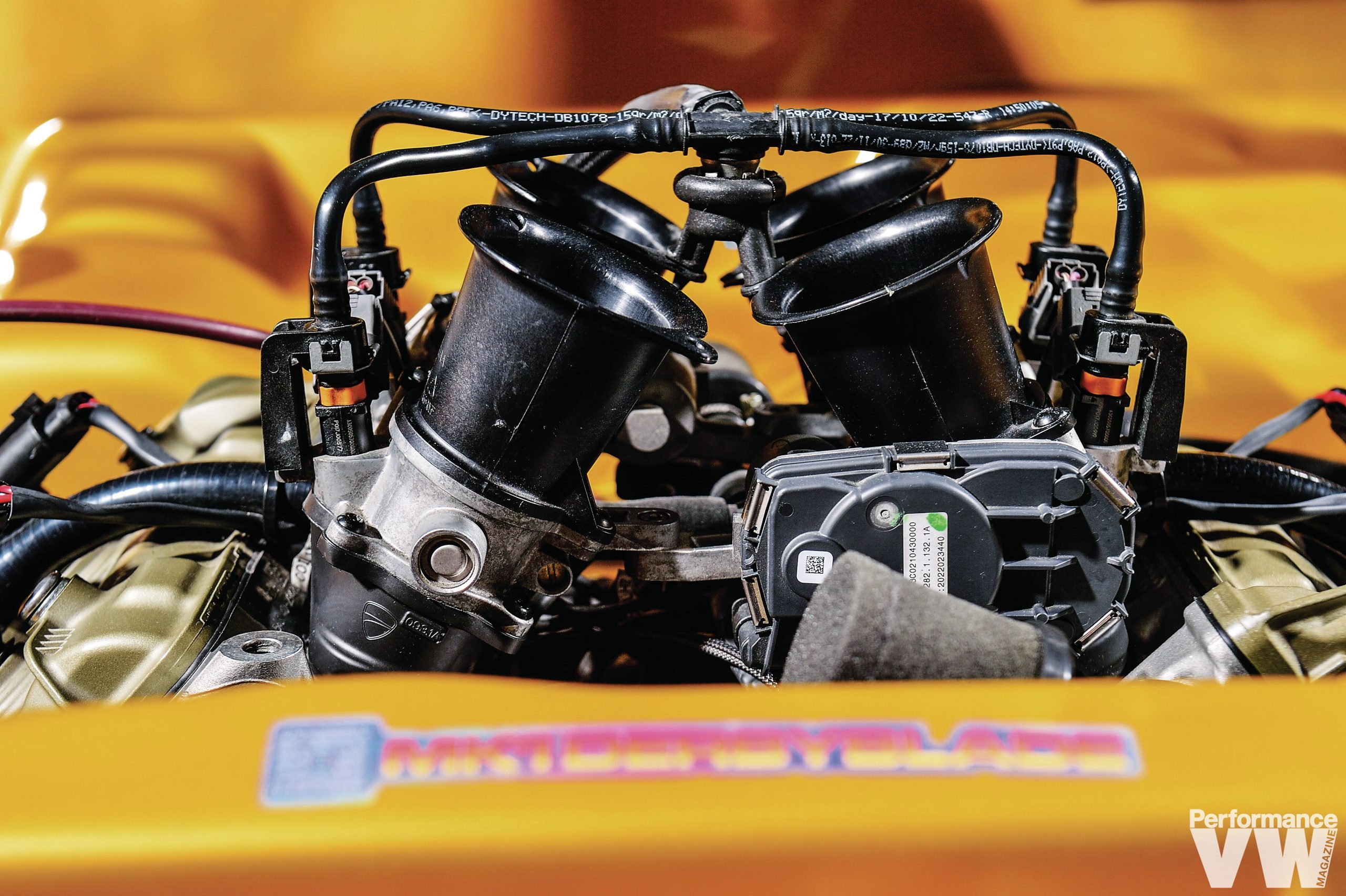
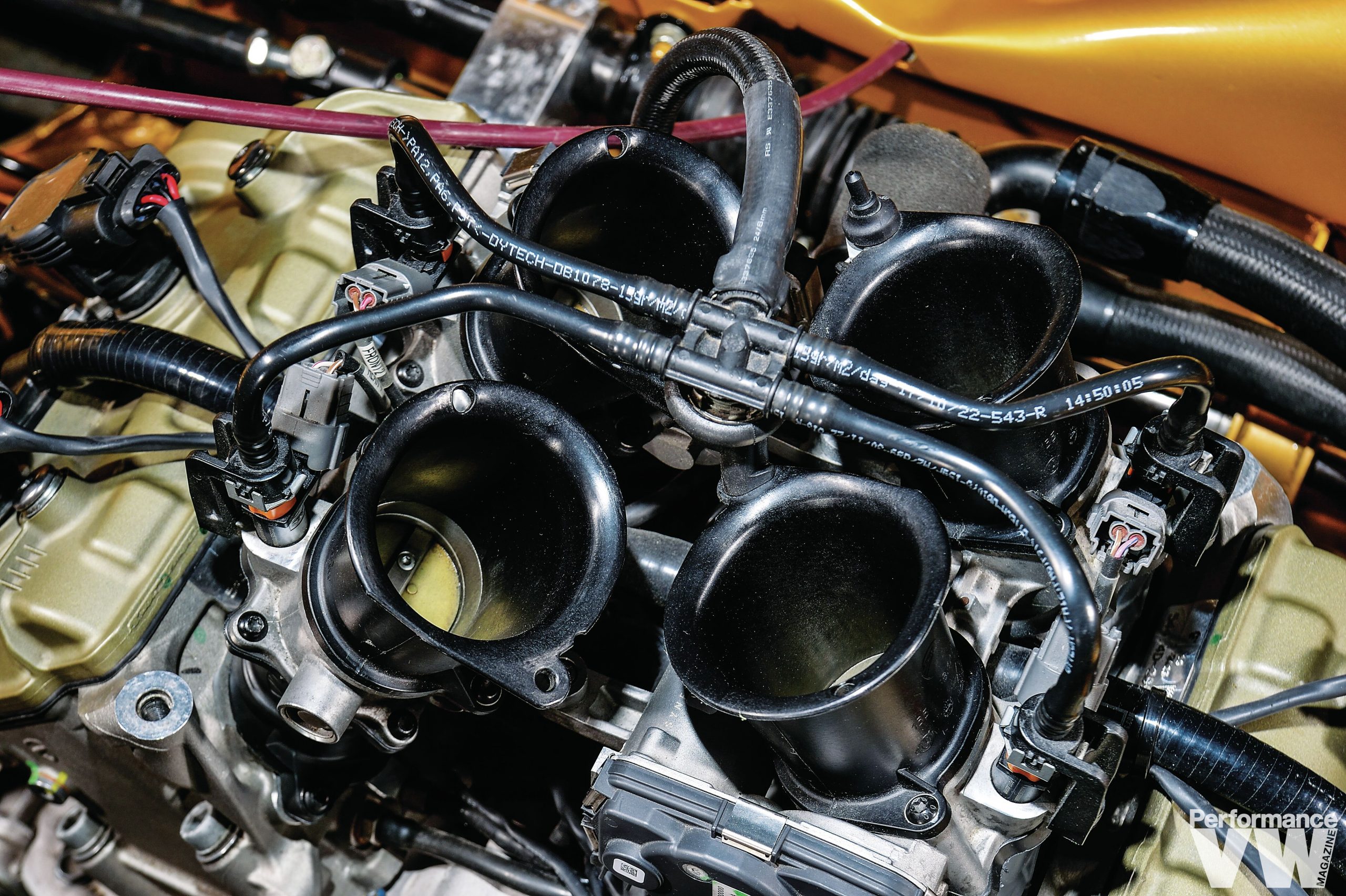
The Ducati swap – a 170hp 1,158cc V4 complete with a six-speed sequential gearbox – hasn’t required any major surgery, but there’s technological leaps between late-90s bikes and their modern counterparts and Dave’s had no ECU, which presented some brand-specific headaches too. It took a £3,000 ECU to manage Ducati’s unusual firing order.
“The Fireblade engine was as simple as just connect the positive and negative and it runs. With this, I had the ECU and PDM to set up, and getting the engine running was a real challenge. I’m pretty good with wiring but I’m not very computer literate, so installing a CAN bus is a minefield that needed many hours of scratching my head to figure out. It’s crazy to think of a Derby with a CAN bus, these cars barely had a cigarette lighter, but that technology is great when you know how to use it.”
It probably didn’t help that there was a looming deadline. In January 2025, Dave secured a place at the Tuningworld Bodensee show in Germany, setting a four-month deadline to get the slow-burn project over the line – and we’re not talking about fitting tyres and bleeding brakes. The Derby went from a rolling shell to moving under its own power, for the first time in 15 years, in the space of weeks and it set the stall for what turned out to be a busy year. It had an outing at Players Classic in the UK weeks later, before winning a spot at L’oe Show in Pottstown, Pennsylvania at the end of the summer.
“Taking it to the port was a bit like dropping your pet at the vets and not knowing if it was going to survive. But it’s totally normal for the staff there, they were done within five minutes and completely unfazed,” laughs Dave.
“Driving around America was unbelievable, it felt like we were breaking the law, but the whole town is really well set up for the show, and they’re familiar with the traffic that comes in for the event. It got a really positive reaction and loads of questions because almost nobody had heard of a Derby, let alone one with a bike engine. Everybody appreciates modified cars over there, whereas there’s a bit of a stigma in Europe.”
The trouble is, a newly emptied to-do list has offered some headspace for a stablemate. With the gold car’s transatlantic crossing looming closer, Dave picked up a second Derby for £400 and plans have snowballed. An extra 25 years of wet British weather had taken their toll on the bodyshell and, having already binned too much of the factory metal to build a sleeper, the result might make the Ducati-Derby look tame.
“It’s an extreme version of the gold one… I couldn’t go backwards, could I?” Dave smiles. “I’ve cut everything out so it’s just a bodyshell, and I’ll make my own chassis for a Maserati 4.7-litre V8 – basically a Ferrari engine – and rear-mounted gearbox.
“It’s too rotten to be a wolf in sheep’s clothing, so I’ve done some AI renders of it with Group 5 arches and a massive whale tail spoiler. That’s the plan, I just need to learn how to make fibreglass panels. I’ve never done that before, it’s all part of the fun. Should keep me happy for another couple of years.”
And, in the meantime, there’s still work to do on the mould-breaker. The reward for Dave’s wiring nightmares is an even feistier 170hp at 10,750rpm – an assault on the senses in what’s effectively a 725kg track car. It’s no small accolade finding a formula that can be picked out from the masses with only a handful of words. But doing it twice? Well, that’s anything but a shade of grey.
DUB DETAILS
|
ENGINE |
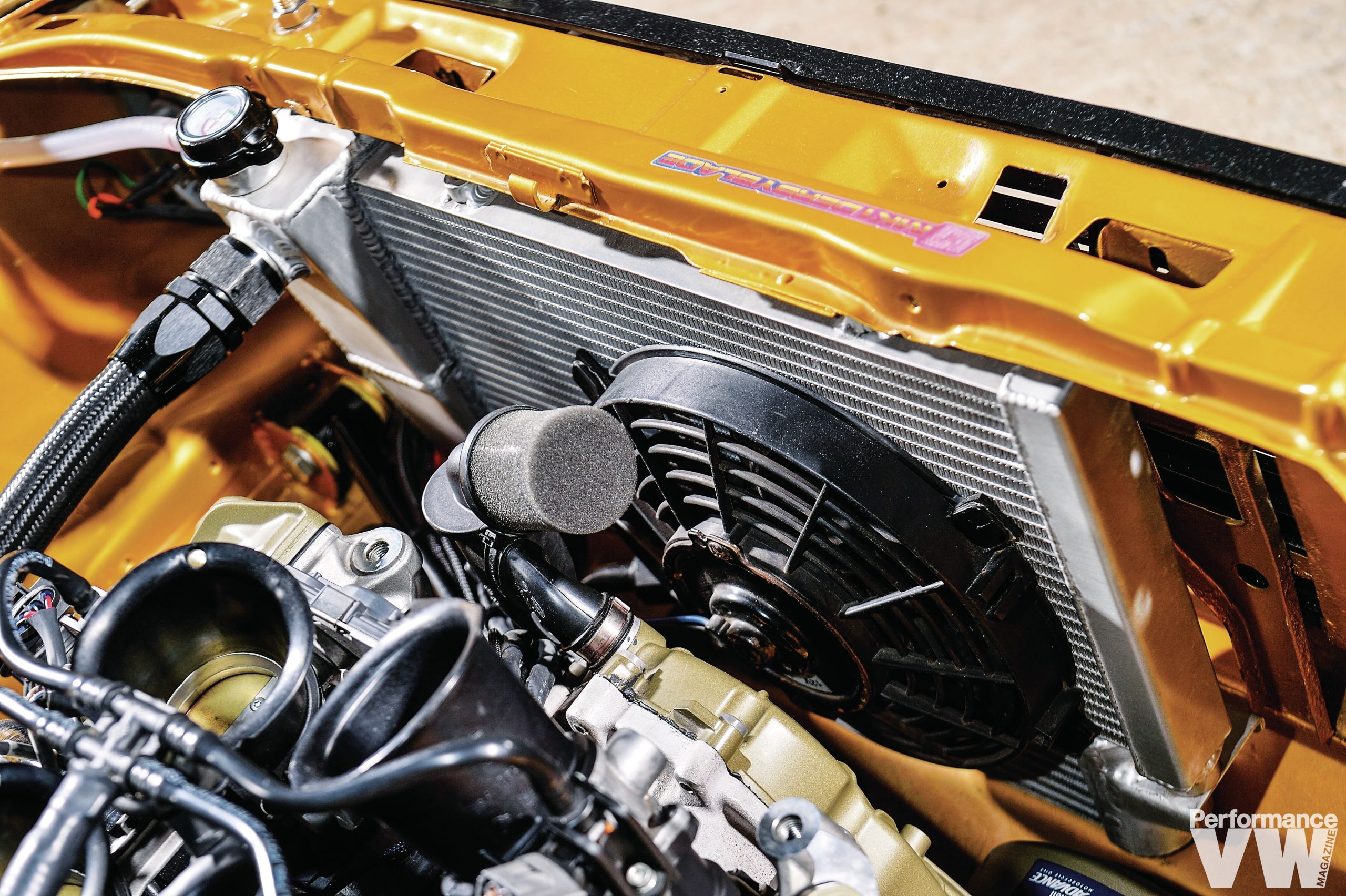
1,158cc, V4, petrol and six-speed sequential transmission from 2023 Ducati Multistrada, custom exhaust system, Link Voodoo Pro ECU, AIM PDM power management, 8 button key pad and dash, custom made billet gear shifter, Custom prop shaft, Ford Escort Mk2 Atlas axle, smoothed engine bay, aluminium radiator with slimline fan, AEM fuel cell |
|---|---|
|
CHASSIS |
8×13 and 9×13” Weller steel wheels with 225/45 Toyo R888 tyres, BC Racing front coilovers for Mk1 Golf with adjustable top mounts, MINI front hubs and wheel bearings, custom rose jointed lower arms, Wilwood four-pot front calipers and TAROX discs on custom bells (front) Ford Cosworth rear calipers (rear) custom floorpan for rear axle, four-link trailing arms with Watts linkage and pushrod rear suspension, Honda CBR600 rear shocks and springs |
|
EXTERIOR |
Modified Mk1 Polo Berg Cup arches, modified Kamei front valance to suit arches, custom made side skirts, custom tinted polycarbonate windows, rear window louvers, ducktail rear spoiler with Ducati Corse branding, F1-style rain light, two-colour rear lights, Derby embossed into the bootlid |
|
INTERIOR |
Fully stripped, custom relay and ECU panel, Custom roll cage, Comp Brake billet pedal box, Corbeau Revolution driver’s seat, Willans harnesses, Suede steering wheel, custom panels for ECU, PDM and relays, AIM MSX display |
|
SHOUT |
Jez @ Carrera Bodyworks, Lloyd, Brett and Dave for the hours of help |