VORSPRUNG DURCH LUNATIK
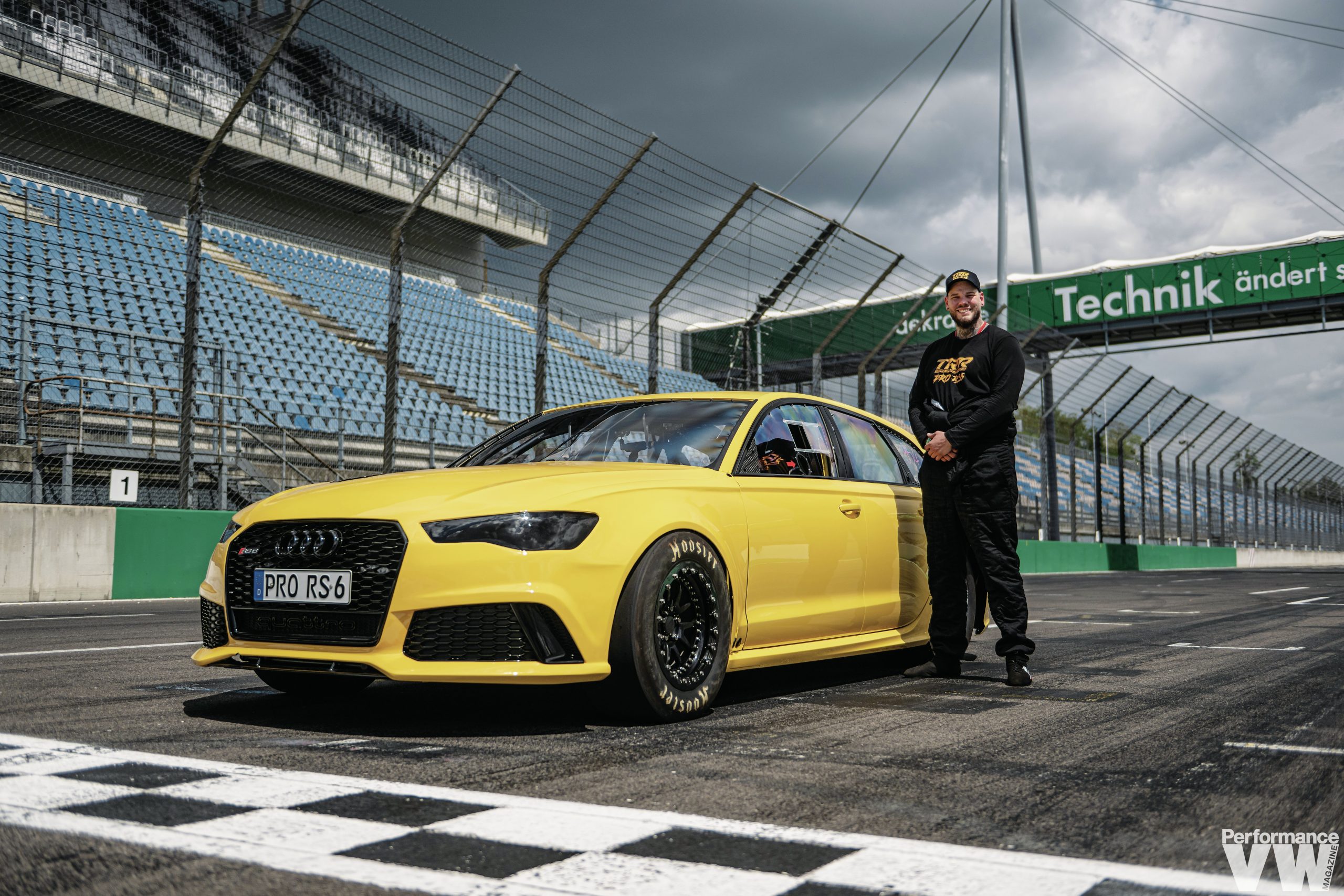
It isn’t often that you’ll find an RS6 badge massively understating a car’s power – but TRR’s 3000hp Pro Mod dragster isn’t your typical Audi estate.
Words: Alex Grant | Photos: André Neudert
As all-rounders go, you’d need to dig deep into a deck of Top Trumps cards to find something that’ll outrank an RS-badged Audi wagon. The incongruous blend of supercar performance and family-moving practicality felt like an extreme evolution of the hot hatch when the RS2 launched in the early 1990s, and the RS6 punched that concept into a new dimension. But while bellowing V-configuration engines, Autobahn-storming horsepower and quattro all-wheel drive all gave Audi’s executive estate car an eyebrow-raising dose of excess, this one makes the factory editions seem a little soft.
“Everyone loves a wagon, but nobody has done anything like this before,” laughs Oliver Hubajn, as a tangled knot of mechanical mayhem tink-tinks itself back down to ambient temperatures behind him. “We’re aiming to be in the sixes on the quarter mile in 2026, and although there’s no power target, we’re getting about 3,100hp depending on the dyno. It sounds insane, and that giant turbo gets a lot of attention, but nobody believes me when I tell them how much horsepower it’s making.”
Performance excess is a big part of Oliver’s lifestyle, but the results of his handiwork aren’t normally unleashed on land. His talent for dragster engineering has developed in the hours left between travelling the world servicing megayachts, and it’s rooted in a hobby rather than his professional background. You’re looking at the latest chapter in a story that began with turbo’d VR6-swapped Mk2 Golfs in his early 20s and evolved through a lot of broken parts and learning the hard way as he learned where the limits were. But it also owes a lot to his social circle.
“Daniel, who owns this car and TeamRuehleRacing (TRR) is a good friend of mine,” he explains. “I had a workshop with friends, where we’d build cars together. Another friend had a street legal 800hp R30 Turbo Mk2 Golf, but he lost interest and sold it to Daniel. When it broke, he asked if I could repair it and rebuild it as a drag car, and that’s how the connection started. I ended up living in his guest house, building it in his workshop, and the friendship grew from there.”
The Golf evolved quickly once Germany’s strict roadworthiness tests ceased to be a limiting factor, peaking at around 1,400hp and putting down 8.6-second quarter mile times before the underlying hardware became a bottleneck. Quick sprints were overshadowed by expensive mechanical failures at most events, including a trip from Hamburg (where the team is based) to Santa Pod in the UK where it barely left the trailer. Curing this would mean a complete change of direction.
“The Golf wasn’t repairable at the track, so we were burning through money and only getting a couple of runs before it was broken,” he recalls. “After we’d broken it at Santa Pod we were getting drunk and decided to build a full tubular car with a Pro Mod rear end, because you can’t break those with the power we were making. Originally it was going to be a Mk2, but Daniel had an RS6 as a daily driver, and that’s where the idea came from.”
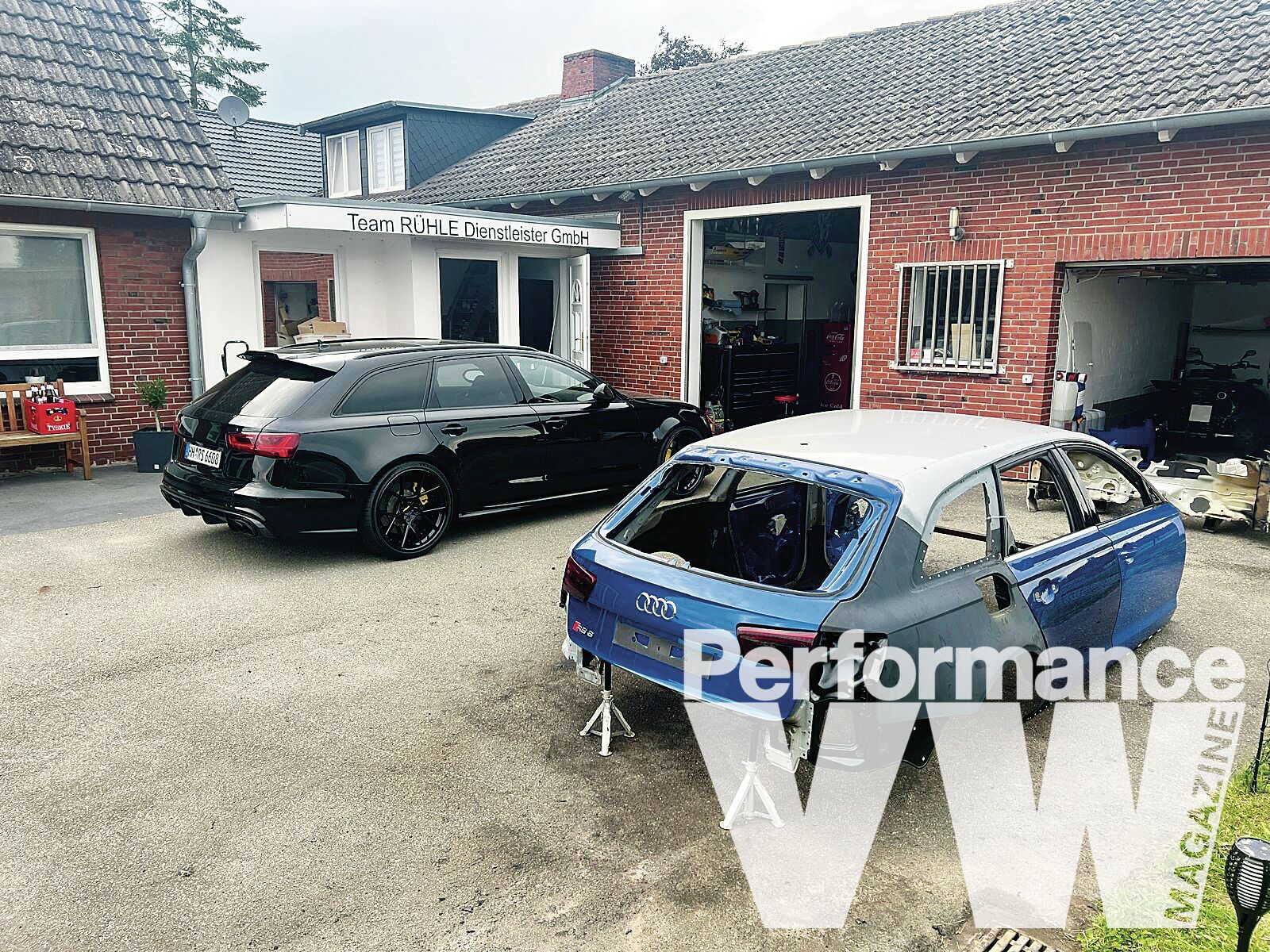
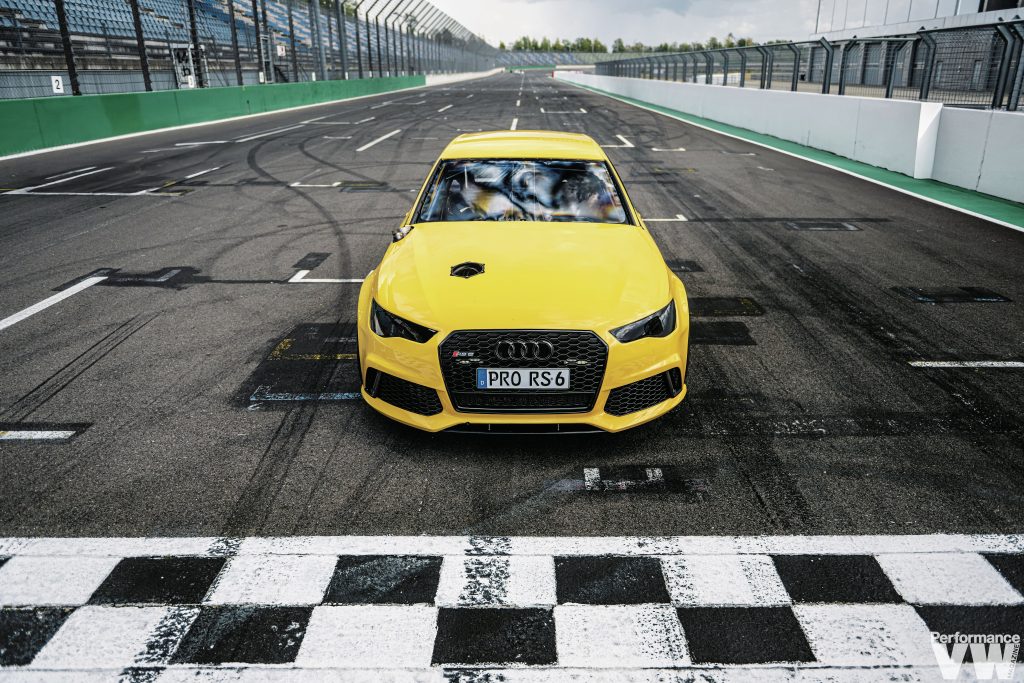
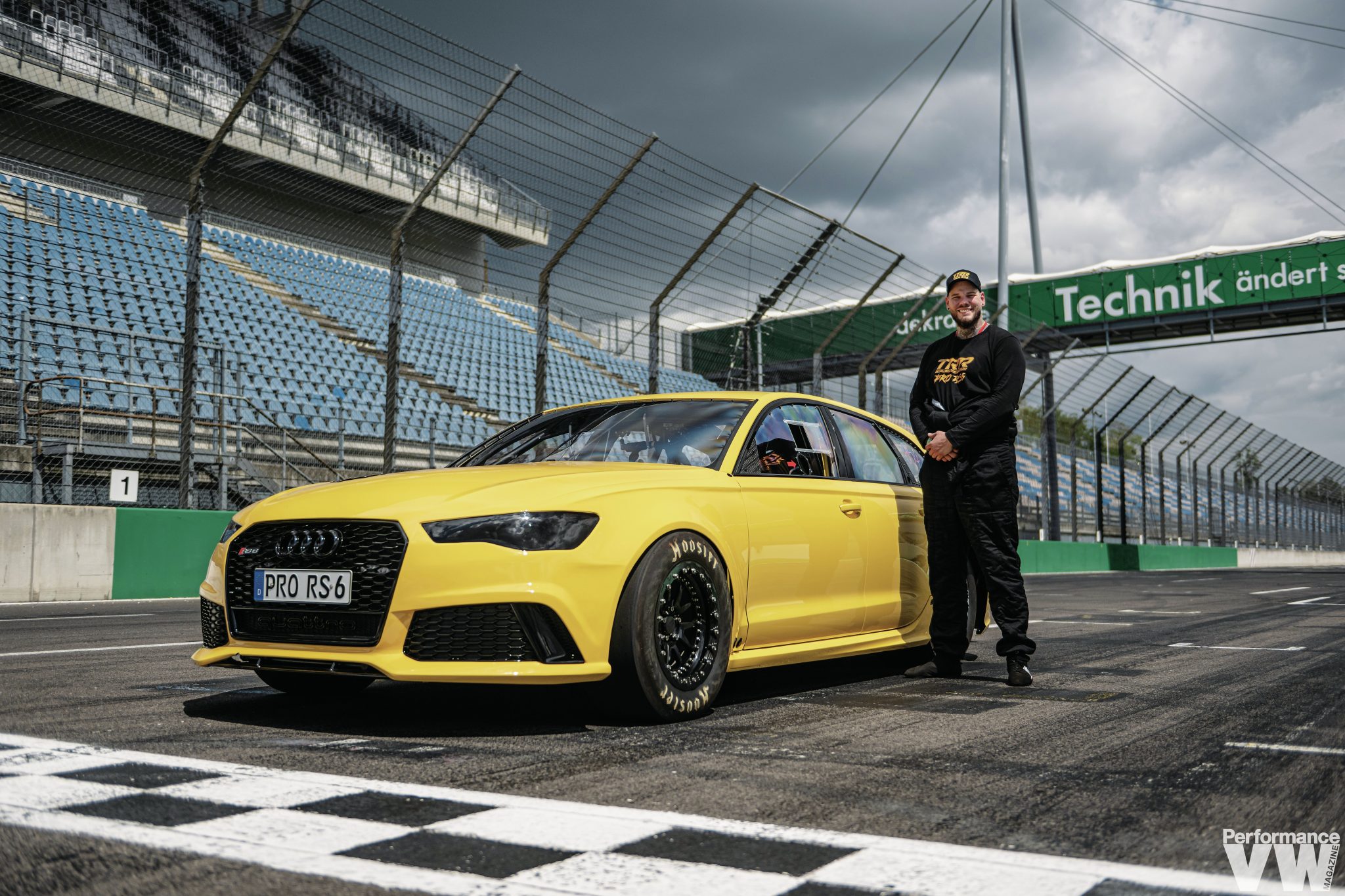
Despite appearances, there isn’t much RS6 here. Genuine shells are expensive, but Oliver found a bare A6 Avant bodyshell, with papers, for €1,000 and Daniel turned up with it on a trailer shortly afterwards. It’s a sizeable but mostly visual element, retrofitted with a set of RS6 rear wings – a functional upgrade given the wider wheels – then braced before the entire floorpan and bulkhead was cut out. In its place is a full tubular chassis with a four-link rear end, certified at Pro Mod spec, which offered a lot more freedom to go ten-tenths with the rest of the mechanical parts.
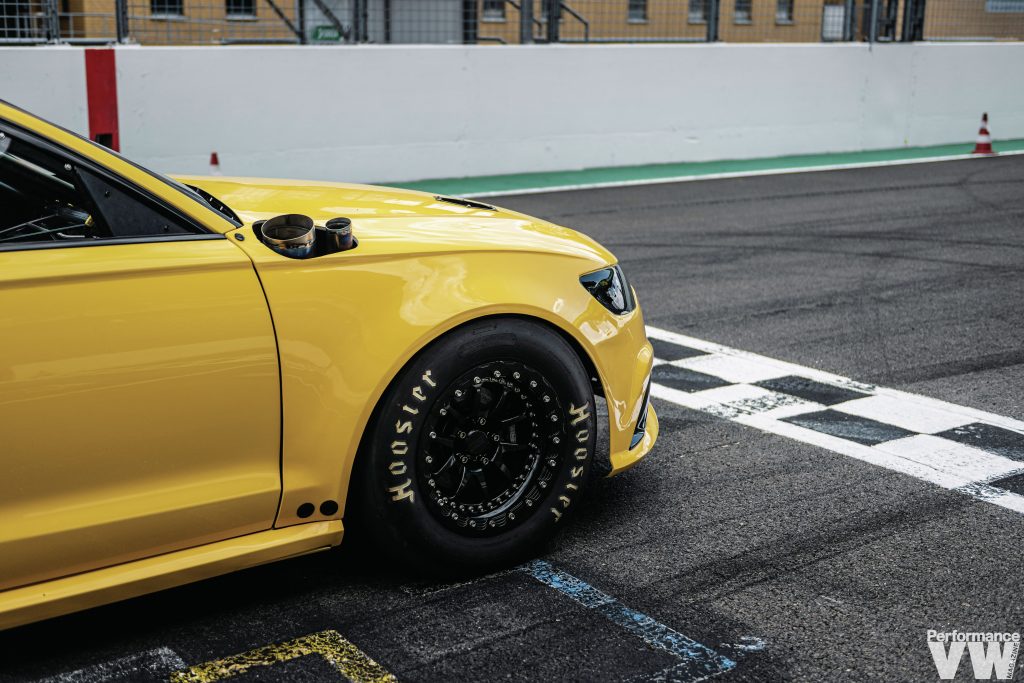
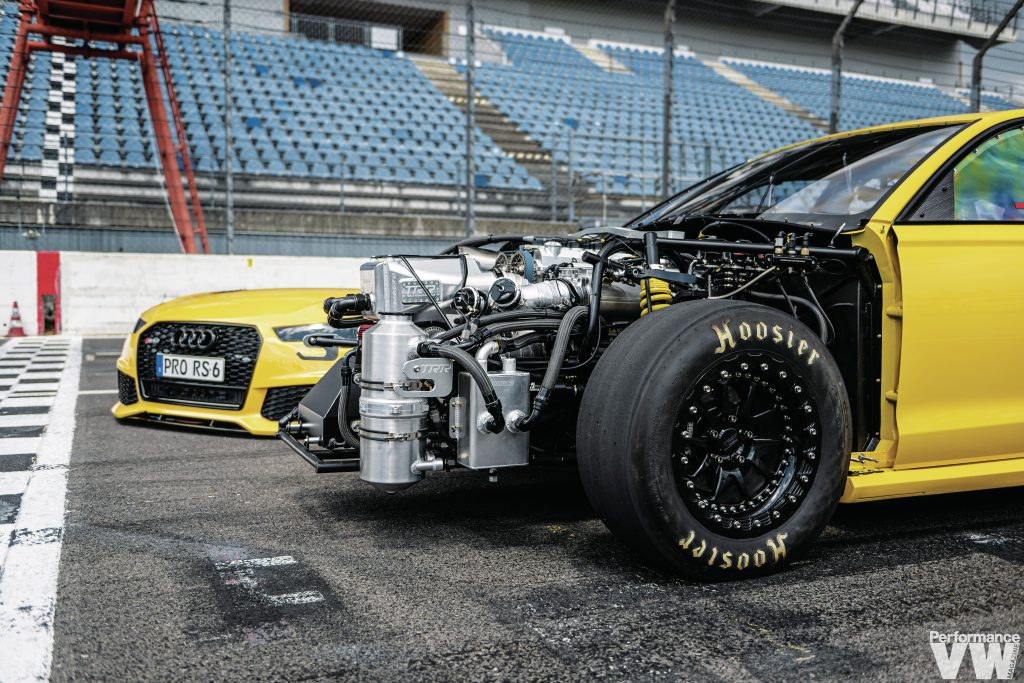
However, there are some carry-overs. At least, in concept. The Audi puts power to all four wheels, like an RS6 would, but that’s where the similarities end. Most of the front axle (including the diff, coilovers, wishbones and hubs) was lifted from an R35 Nissan GT-R, now linked to a billet R34 transfer case and TH400 transmission – a heavy-duty General Motors design widely used in drag racing – and a custom prop and driveshafts. On boost, it’s squatting onto a nine-inch Strange Engineering rear end, which Oliver says does most of the work getting it off the starting line.
“We wanted to keep the all-wheel drive because it’s an Audi, but you also need it in Germany because most of the tracks aren’t prepped for drag racing like Santa Pod,” he explains. “There’s a clutch inside the transfer case that only transfers 1000Nm of torque to the front wheels, so it’s never 50/50 front to rear, it’s more like 30/70.”
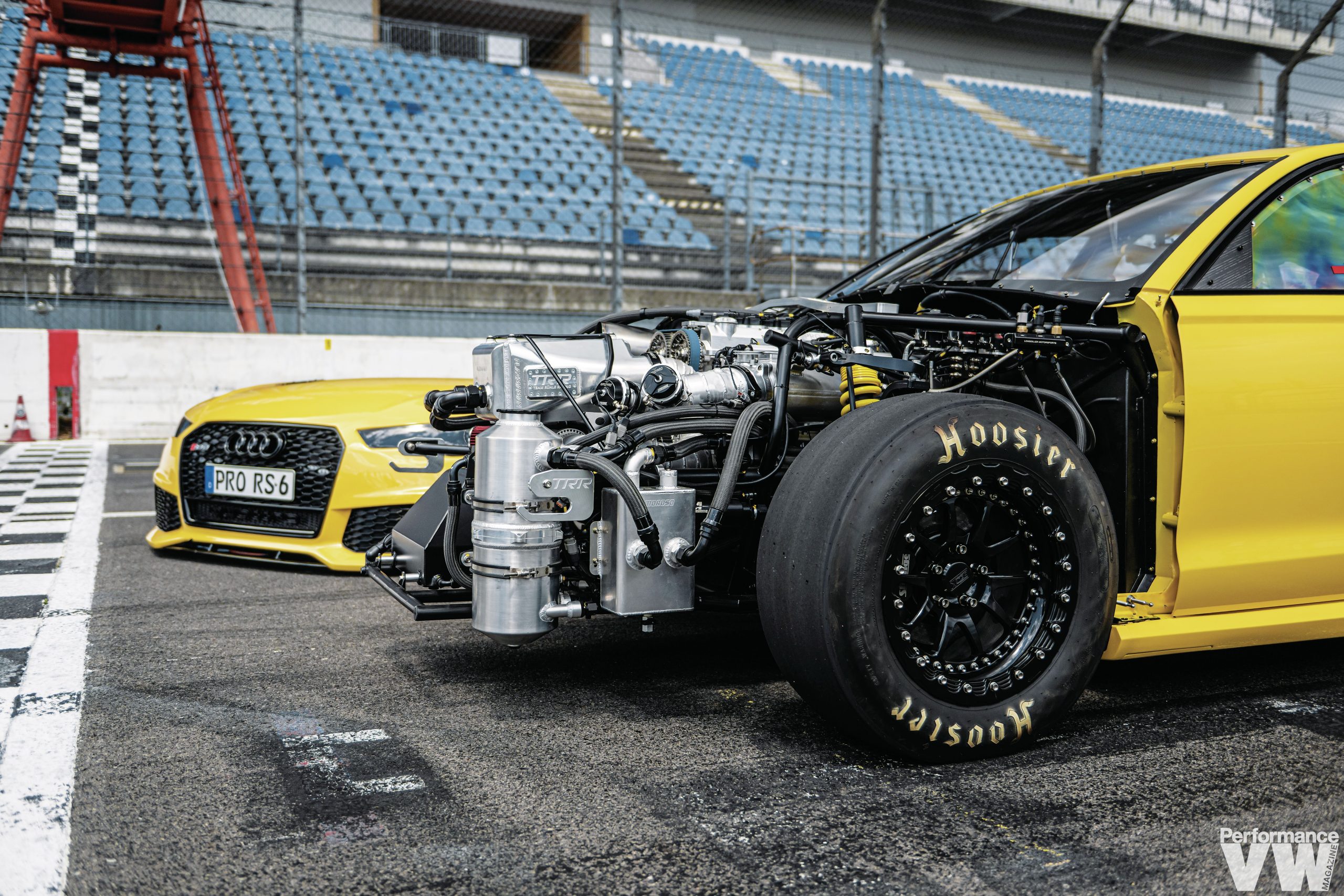
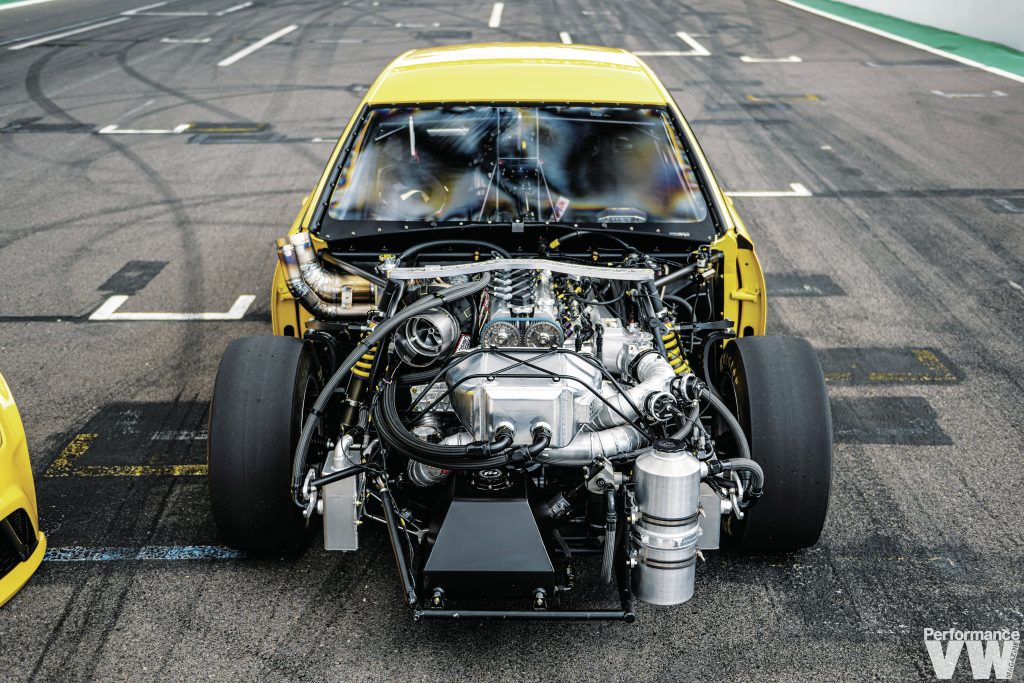
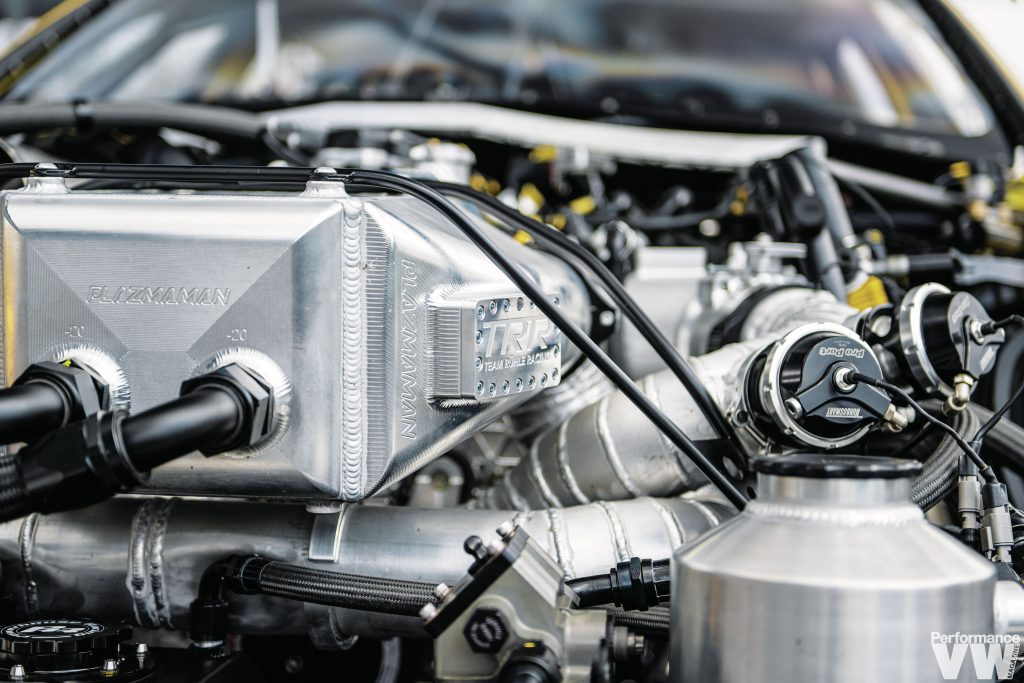
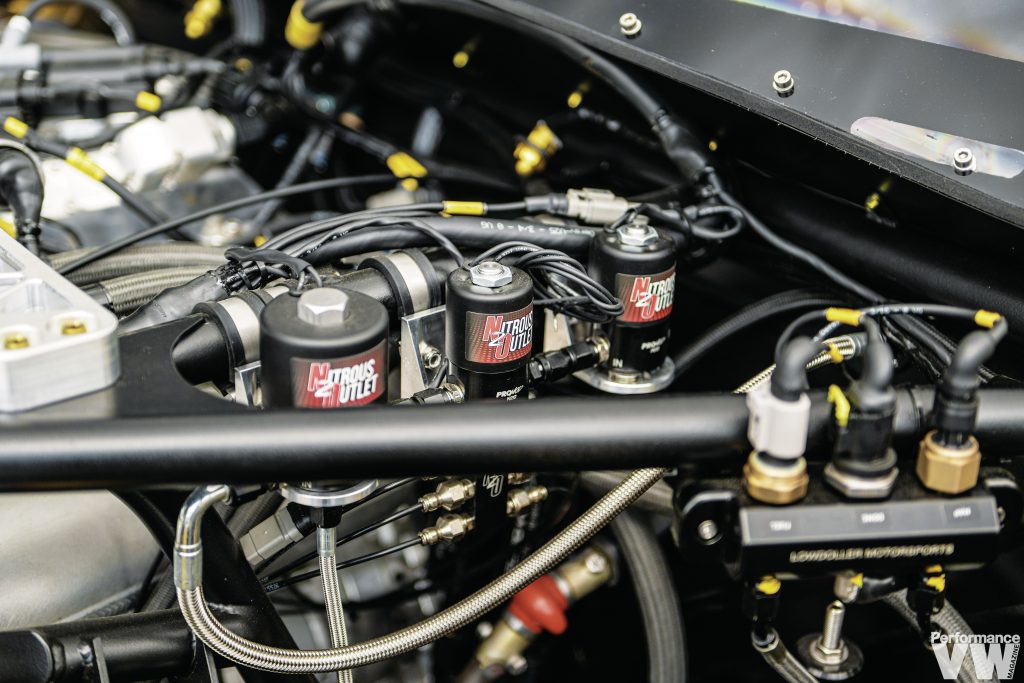
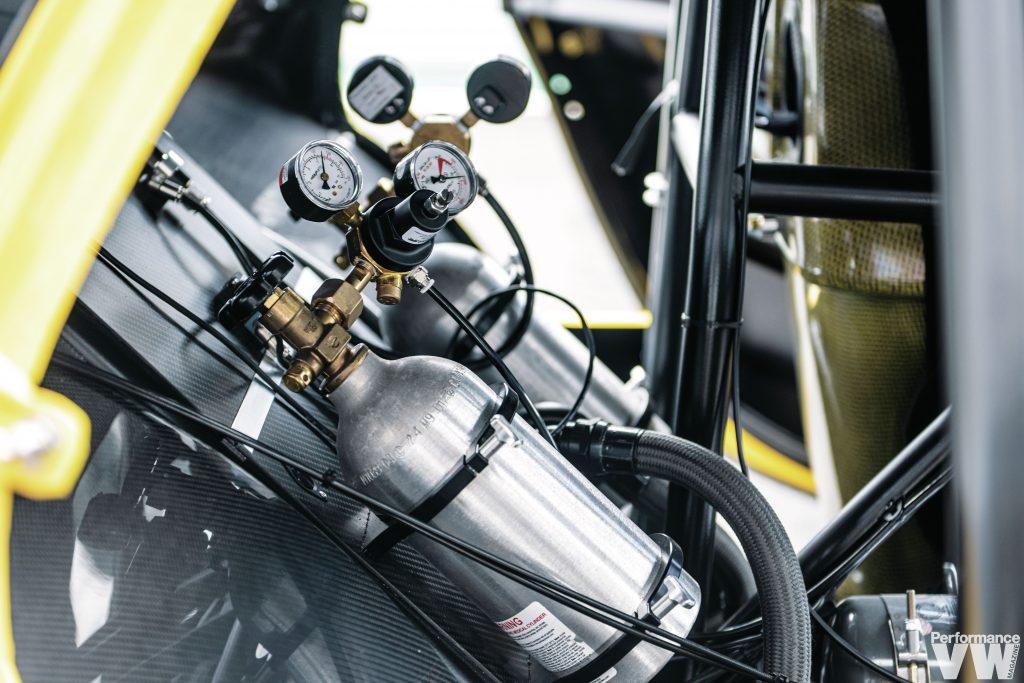
No quattro system has ever worked this hard. Guided by Ryan Sammut, the Canadian owner of the world’s fastest and quickest accelerating Supra, the source of the Audi’s ferocious power output is the Toyota’s legendary 2JZ inline six turbo. In this case, it’s comprehensively overhauled for quarter-mile sprints, stroked to 3.2 litres with a billet block deprived of cooling channels for extra strength. The car is never running long enough to need a traditional coolant system. Few Supras flow quite this much air either. The 98mm Precision Turbo is a Pro Mod spec unit, spooled by a nitrous fogger system to make up for the 2JZ’s relative lack of cubic capacity and requiring 18 injectors to serve up enough methanol. A custom dry sump system helps tuck the all-wheel drive system – something Toyota made do without – under the block.
“A 2JZ can take well over 3000hp without any issues, if you treat them right and they’re tuned properly. It’s a really easy engine to work with, all of the information we needed was online, and the main factor was the price. A V8 would have cost twice as much because you need two turbochargers and twice as many injectors,” Oliver continues. “However, a car like this is very specialist in Europe, especially in Germany, so getting everything together without any experience building a dragster like this was a real challenge. It’s not like in the US, where you can go to one website and buy a whole drag car in parts. Nothing is standard, it’s all custom made for big horsepower, but that’s been a lot of fun.”
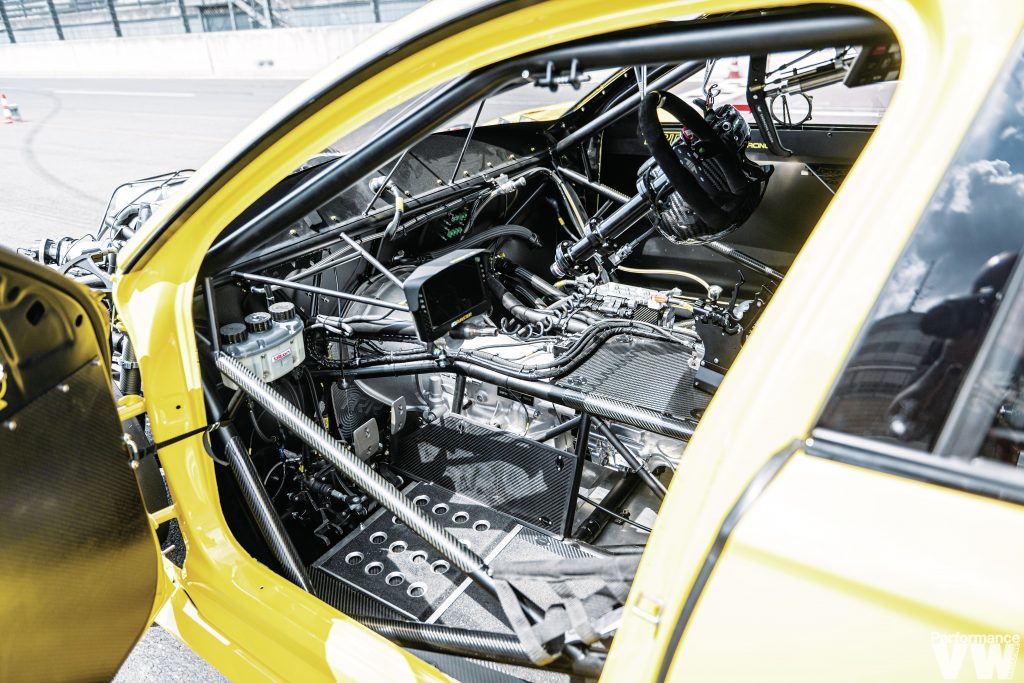
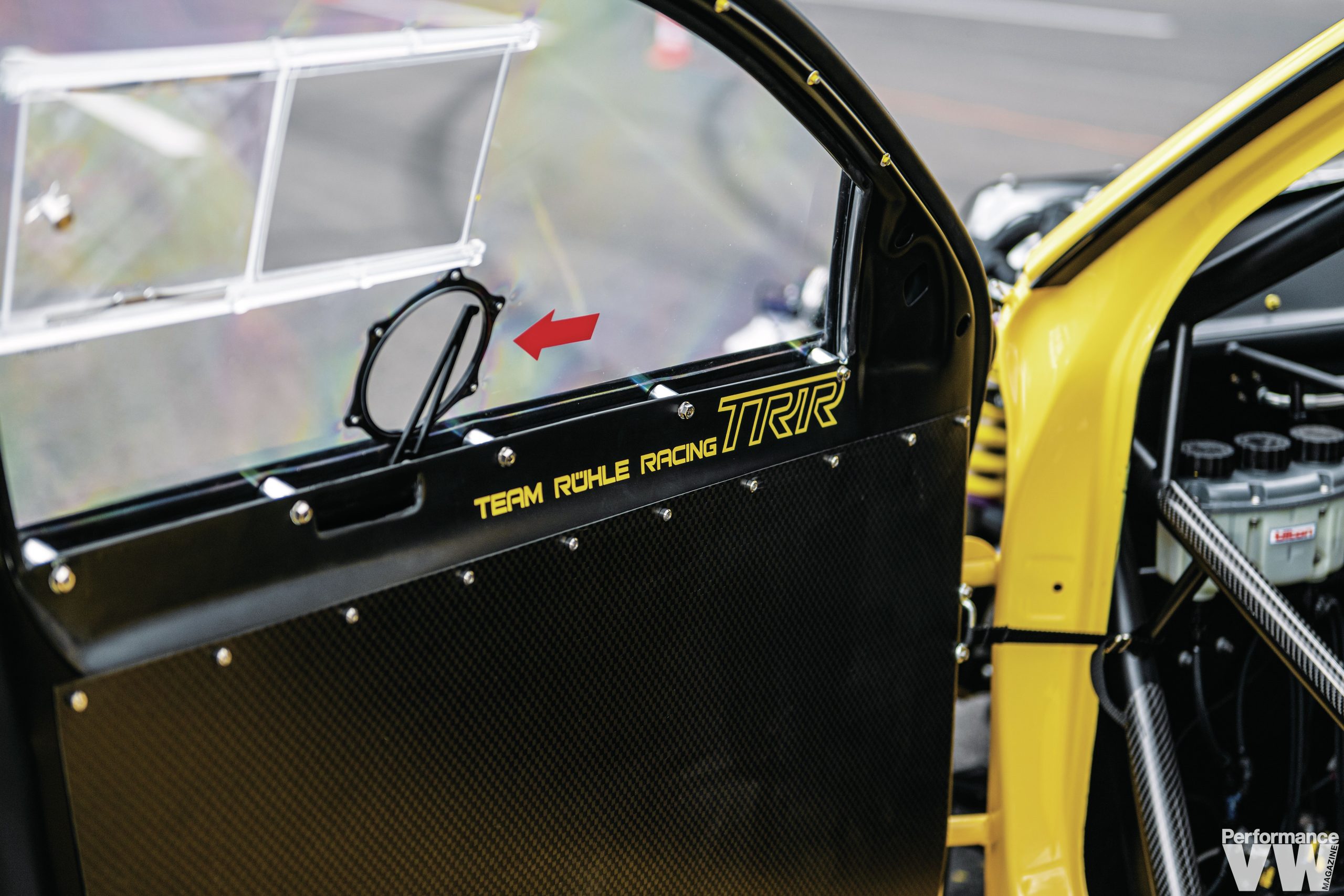
And yet, with the noisier parts switched off, the execution is so flawless you could easily mistake this (at a glance) for a hopped-up RS6 instead of a scratch-built dragster. Weight is the enemy even with four-figure horsepower on tap, so every gram of redundant metal has been stripped out. The doors are little more than the exterior skin with polycarbonate windows instead of glass, and open to reveal a custom floorpan with beadlines pressed into the sheet metal and huge tubbed inner arches where the boot would once have been. The only genuine RS6 parts are the grilles.
“I didn’t want it to look like an RS6 with a plastic front. We couldn’t find someone who could build a clamshell out of carbon fibre, so I screwed an entire front end together on a rig and closed the panel gaps to make a mould, then a friend made it out of fibreglass for us. It weighs around 50kg, but that is quite heavy,” he says. “We still have a lot of possibilities to save weight, as the car is too heavy at the moment. It weighs 1,300kg, and our target is 1,200kg. That’s what the frame is rated for. If we can get down to that then we can legally use it on more events.”
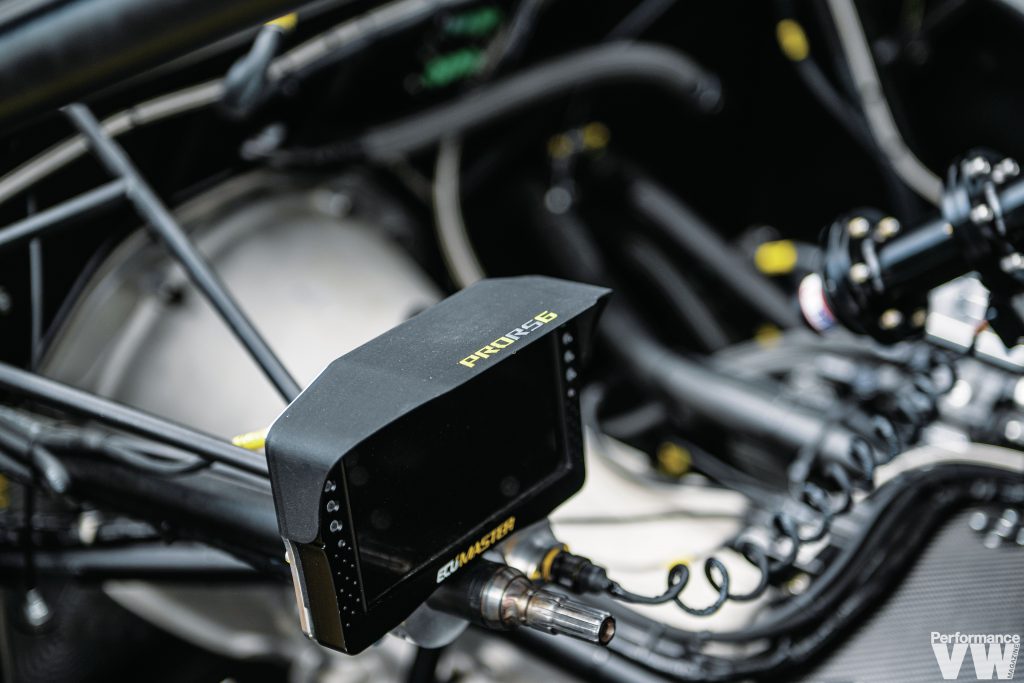
Sensibly, none of the visual fine-tuning happened until Oliver was sure everything was working properly. The Audi was built and dyno tuned as a bare frame and, sat within that skeletal structure with only the single RaceTech bucket seat, ECUmaster display and ratchet shifter around him, he recalls almost deafening himself as the 2JZ reached its 10,000rpm crescendo with no ear plugs for protection. All that remained was a meticulous tear-down and final re-assembly into the shell. The body was painted OE Imola Yellow, and slots over a staggered set of drag slicks wide enough that you’d need to crouch to really understand how far they intrude into the estate’s footprint. Behind them is a full carbon fibre brake kit from Strange Engineering – engineered to withstand fast temperature changes and minimise the rotational weight. It’s one of the few parts that’s smaller than an RS6 would have had from the factory, but Audi never got as far as needing a parachute or wheelie bar.
Unfortunately, this level of care didn’t protect them from some teething problems. “The torque converter was too tight, so we couldn’t spool the turbocharger up as much as we’d have liked. We figured out a way to get it running, but we only got two test runs before an injector failed and melted a piston. But you’ll break engines if you’re drag racing, it’s normal,” he recalls.
“However, in terms of handling, the car was amazing. It drove super straight, it was really stable, and I got through first, second and third gear before I was at 250-260km/h (155-162mph) without really noticing and I could have taken my hands off the wheel because it was so straight. It’s totally different from everything else I’ve driven, the performance is insane.”
The unplanned downtime offered another opportunity to fine tune everything under the clamshell. Audi is known for mounting engines in front of the front axle and, because that isn’t the case here, there was plenty of space for ancillaries behind the grille. By the time it re-emerged, Oliver had re-routed the boost pipework and tucked the dry sump, intercooler, fuel cell and oil tank in the Audi’s nose. And the melted piston nudged the shift from two to three sets of injectors, which in turn required a new inlet manifold.
“It’s taken three years and 3000 hours of work to get here, but getting into the sixes will still take time. Cars like this are never 100% finished and there will always be things we need to improve. We need to see how the car handles, then we’ll turn up the power or change something and come back again,” Oliver says, smiling.
“Comparing logs with our friend from Canada, we should be about 2300hp at the wheels, but we’ll map it at the track and put it on the dyno at the end of the year to see how much power we made on our fastest pass. Let’s see what the new year brings.”
In the meantime, this project has set wheels in motion to go even further. Having had a standing start in the world of drag racing and made an equally unfamiliar step into Pro Mod class hardware, Oliver has picked up an incurable curiosity for building a V8 biturbo dragster. And with the relaxed way he throws around 5000hp power figures for the front-runners, we reckon it’s an itch he’ll end up scratching at some point.
However, TRR can already lay claim to having a card in the metaphorical Top Trumps deck that no amount of deep digging can outrank. Sure, it’s lost a few of those executive class creature comforts and you’d probably get a few complaints from the kids if they spent any time sat among the nitrous tanks in the back, but it’s as incongruous as the RS2 that started the ball rolling over 30 years ago. A blend of full-fat dragster excess, packaged into an executive two-box silhouette, and just as capable of surprising rivals on track as its roadgoing siblings would on the Autobahn. Yet again, it’s punching a familiar concept up into all-new territory – and we’re here for it.
DUB DETAILS
|
ENGINE |
3200cc inline six (2JZ) stroker, Bullet Race Engineering solid billet block without cooling channels, BC Billet crank, billet aluminium rods, custom pistons, TRR custom oil pan, Headgames Motorworks CNC cylinder head, Precision 98mm Promod turbo, 18x 2,600cc ID injectors, Powerhouse Racing fuel cell, Nitrous Outlet single fogger system, Magnus Motorsports dry sump system, Max ECU Pro management, TRR billet valve cover, M&M Transmission TH400 transmission with double dump valves and lockup, Strange Engineering four-link rear end, R34 Nissan Skyline GT-R transfer case, R35 Nissan GT-R front differential, Driveshaft Shop custom propshaft, custom TRR driveshafts |
|---|---|
|
CHASSIS |
Full tubular Promod-spec four-link chassis with certification, R35 Nissan GT-R front axle, R35 GT-R KW coilovers, Tilton pedal box, Strange Engineering carbon fibre drag brake kit, wheelie bar, parachute, 17×10 Belak Industries GT1R V1 beadlock wheels with 28.0/10.0-17 Hoosier drag slicks (front), 15×10 Weld Racing Alpha-1 beadlock wheels with 29.5/13.5-15 M/T drag tyres (rear) |
|
EXTERIOR |
Audi A6 C7 bodyshell with RS6 rear arches, stripped doors, custom fibreglass RS6-style clamshell with genuine grilles, Imola Yellow paint, polycarbonate windows |
|
INTERIOR |
Custom floorpan, Racetech bucket seat with Stroud Safety six-point harness, Momo steering wheel with extended column, ECUMaster dash display, M&M Transmission Safe Neutral Shifter |
|
SHOUTS |
Daniel, and the whole team |