FRENCH’D
With a little over 50 years of inspiration and parts at your disposal, there’s no single way to do a Mk1 Golf right – and Gary French has found a few, all in one car.
Gary French knows his way around early Golfs, but you won’t find many he knows better than this one. As the “GDF” behind GDF Autofab, he’s among the lucky demographic earning a living from something that began as a hobby – in this case, turning a teenage talent for welding into a career restoring and fabricating parts for classic cars. But, as most of that group would recognise, living the dream has a compromise. With every customer project that rolls through the doors, deadlines for your own become a little harder to manage.
“We’ve always had Mk1s kicking about,” he tells us. “They’ve never stopped coming, for everything from repairs to roll cages, to four-wheel drive conversions – either using Syncro rear beams and Haldex running gear for a tin top, or a full TT rear subframe in the Caddy. Advances in turbo technology mean big horsepower is more achievable now, and people want it in older cars, which we’re happy to assist with. But that’s only left time for occasional tinkering with this one – it’s spent 15 years tucked away in the corner of the workshop.”
The slow burn is hardly surprising. GDF Autofab was spun out of Gary’s steelworking business when it expanded into a bigger unit in 2018, and the staple diet of classic Volkswagens runs in tandem with in-demand talent for fabricating larger items – like staircases, balustrades and guardrails. This was also the point when life-long friend Chris Morley joined the team, spearheading a still-growing line-up of specialist products for early Golfs. If you need adjustable rear beam mounts, tubular front crossmembers or billet hubs to run AP Racing brakes and other chassis upgrades, then they’ve got your back.
And it all began with the walk home from school. “My introduction to the Volkswagen world was a silver Mk1 GTI parked at the top of my road,” he continues. “From memory, it had yellow wheels and trims, and I remember waiting until I’d walked past before I crossed the road so I could have a good look. Then my parents bought me a Mk1 Golf GLS for my 18th birthday – it was much faster than the Mk2 Fiesta I had as my first car.”
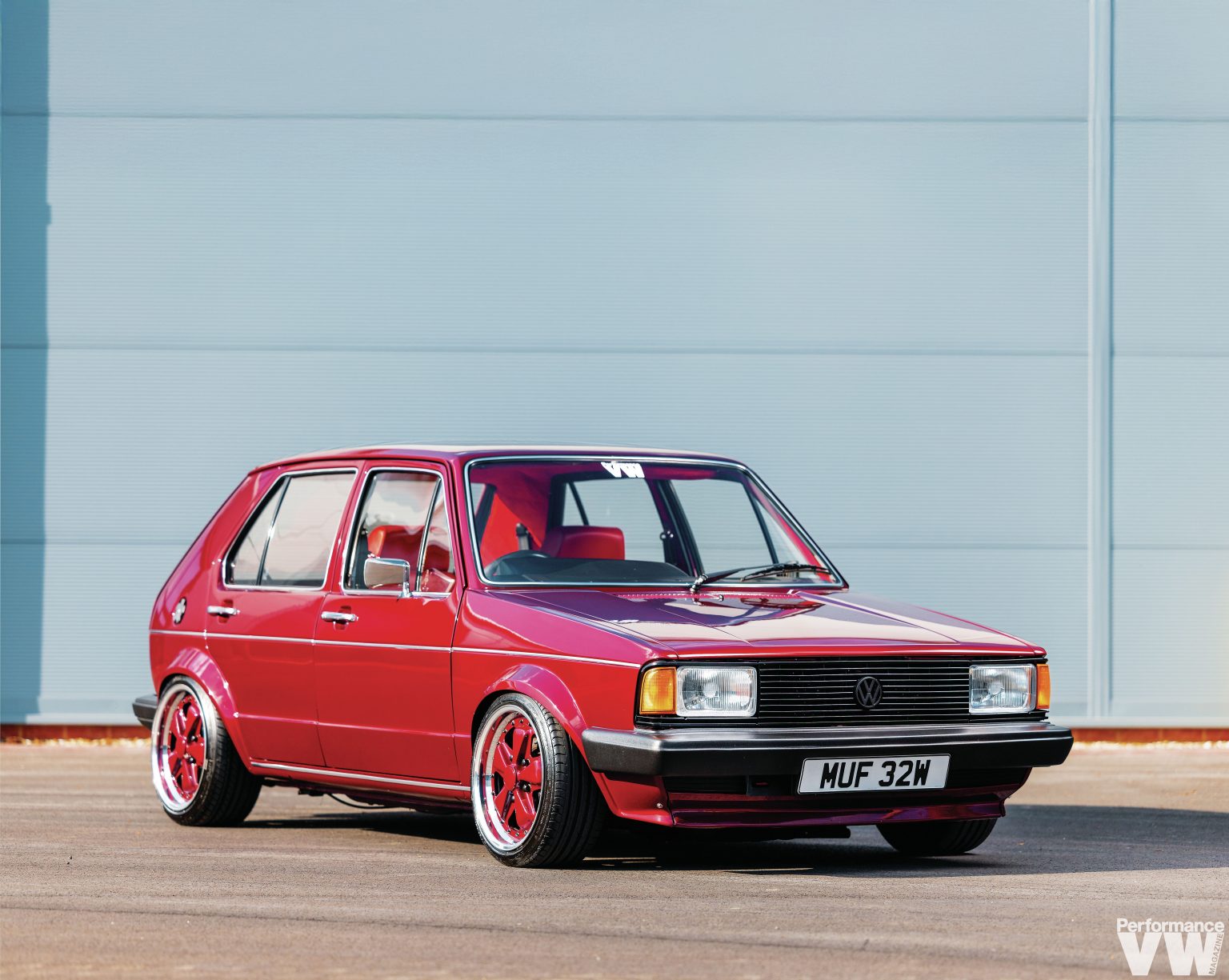
Apparently, it wasn’t fast enough. Within months, the Golf’s factory 1.5-litre engine had shed its original carb and inlet manifold in pursuit of more power, while coilovers had laid the five-door body a little closer to the tarmac over a set of 15” Rial Imola wheels. Fun, by teenage standards, but only for as long as insurance prevented him dropping a 16v engine into the bay. We’ve all been there.
Of course, the upgrade was worth the wait. “I bought myself a 1.8 KR and sent it to Scott Reed at Julian Godfrey Engineering for a rebuild, including high-lift cams and a port matched head for Weber twin-40 carbs. Then I switched those for a set of Jenvey direct-to-head ITBs and Scott helped get them to a reliable – and extremely fun – 180bhp with a noise that got me hooked on 16vs for life.”
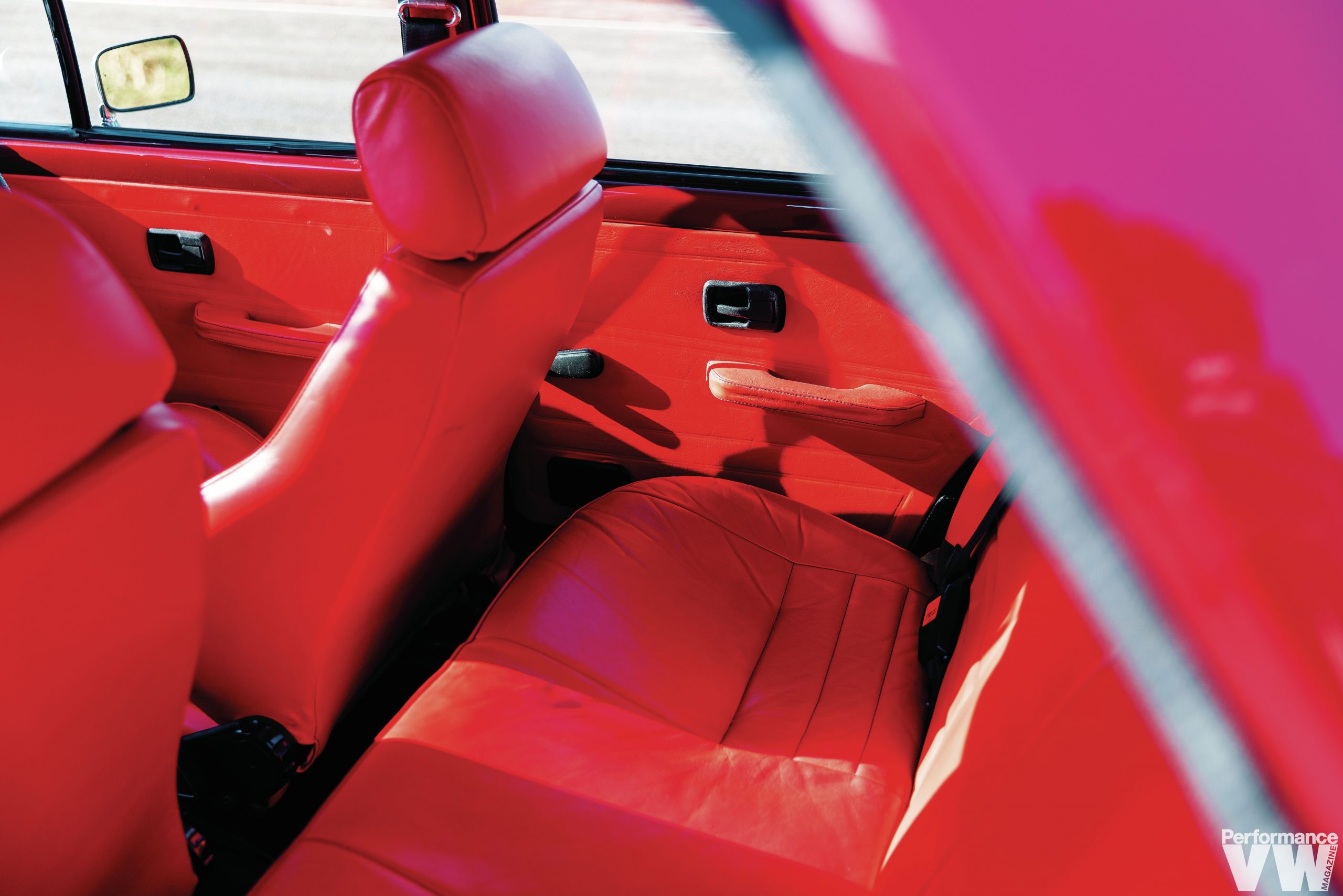
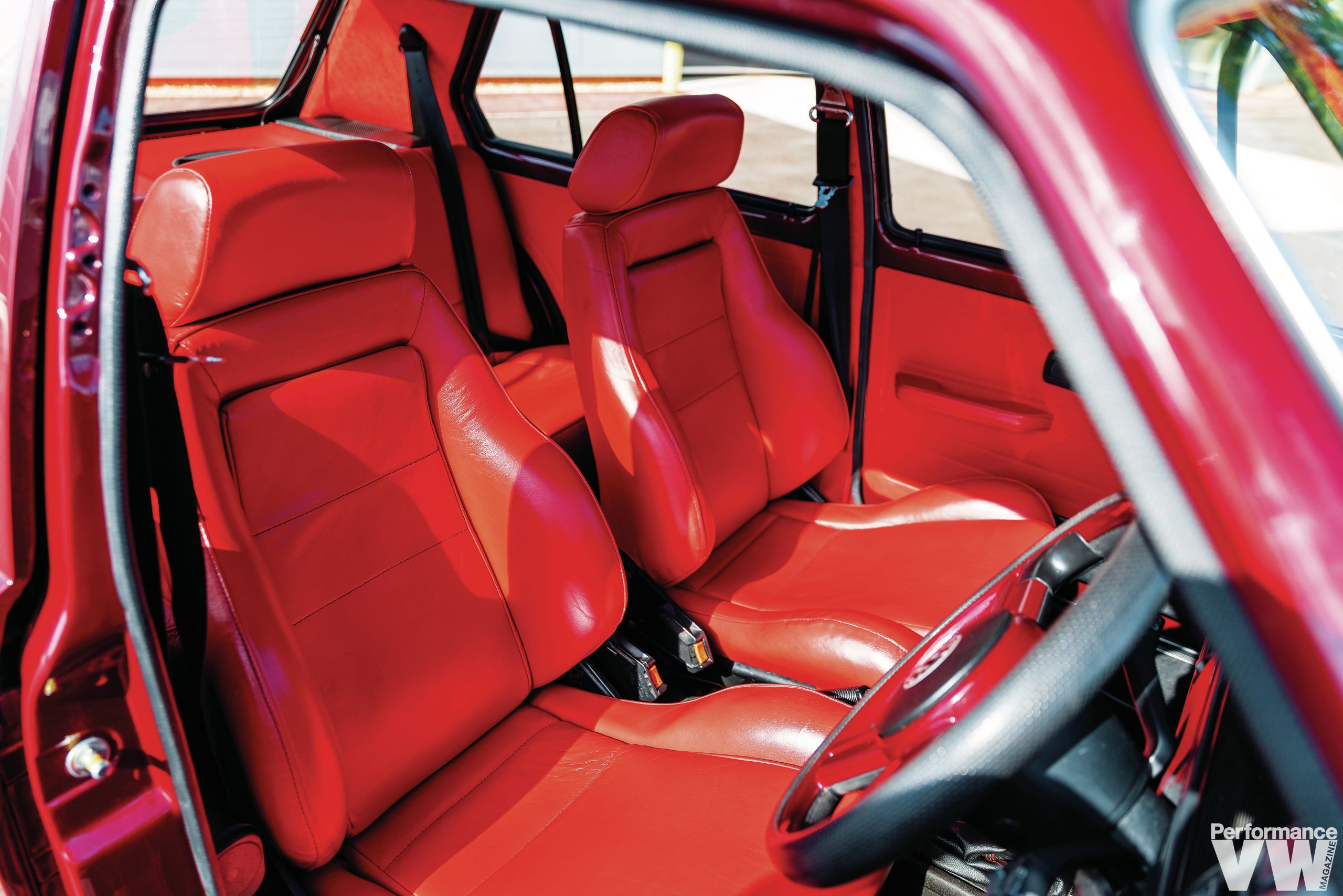
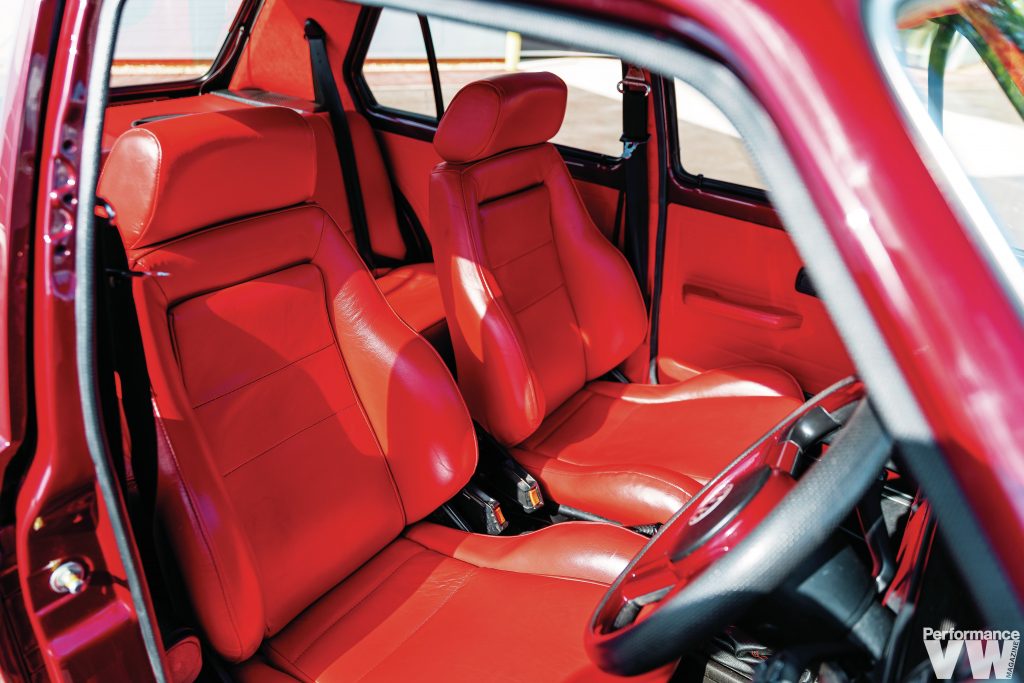
By this point, the Golf had smashed through the glass ceiling of being a teenage project car and the bodywork was evolving at a similar pace. Gary deleted the seams, bumpers and door handles ahead of a cream respray, then made a partial U-turn and returned some of those details when he added brown as a second tone. It’s a sign of long-gone bargains that the electric Mk2 Golf Recaro seats cost just £400 before being trimmed in poppy red leather along with the rest of the interior, and they’re not the only detail he got right first time around.
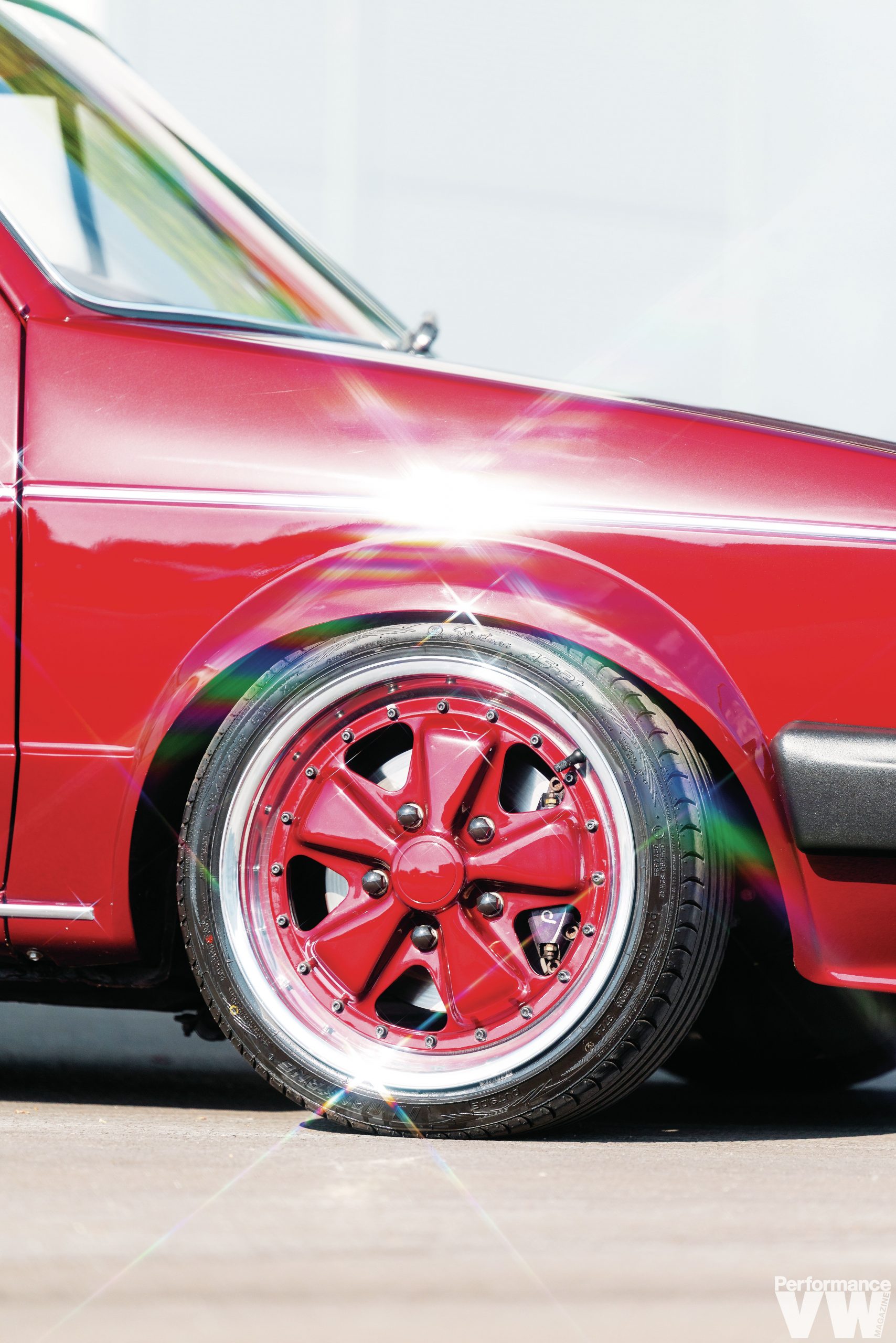
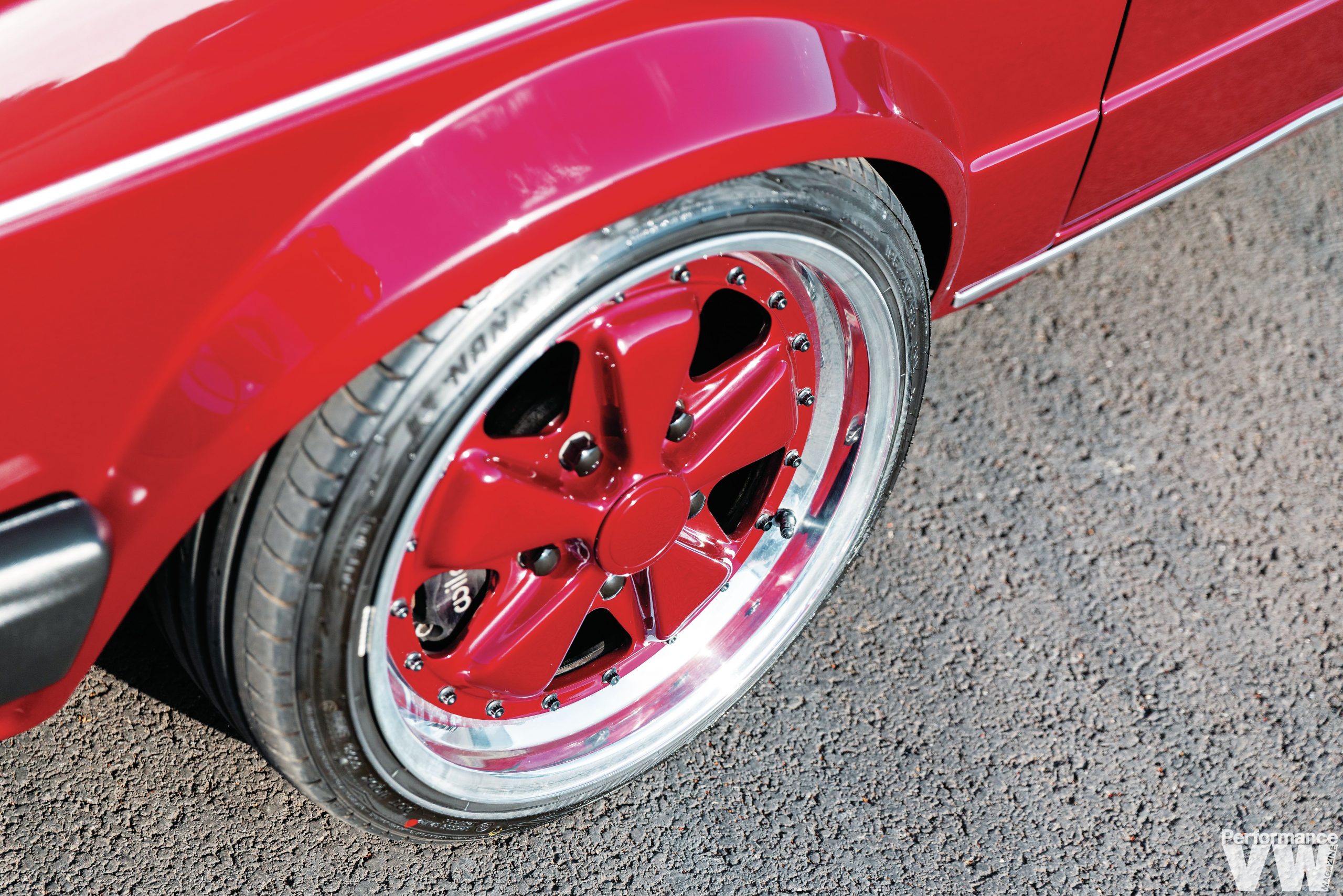
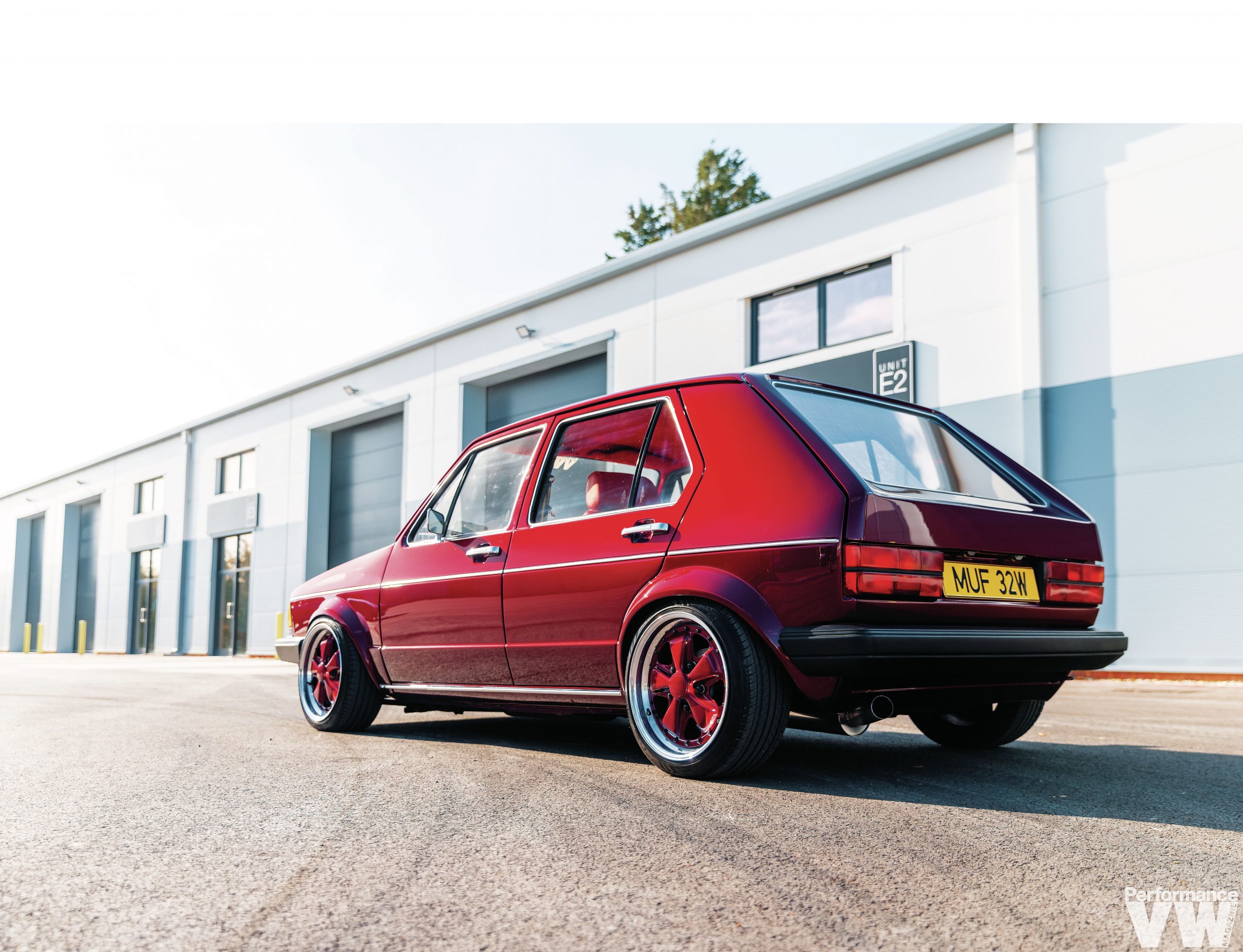
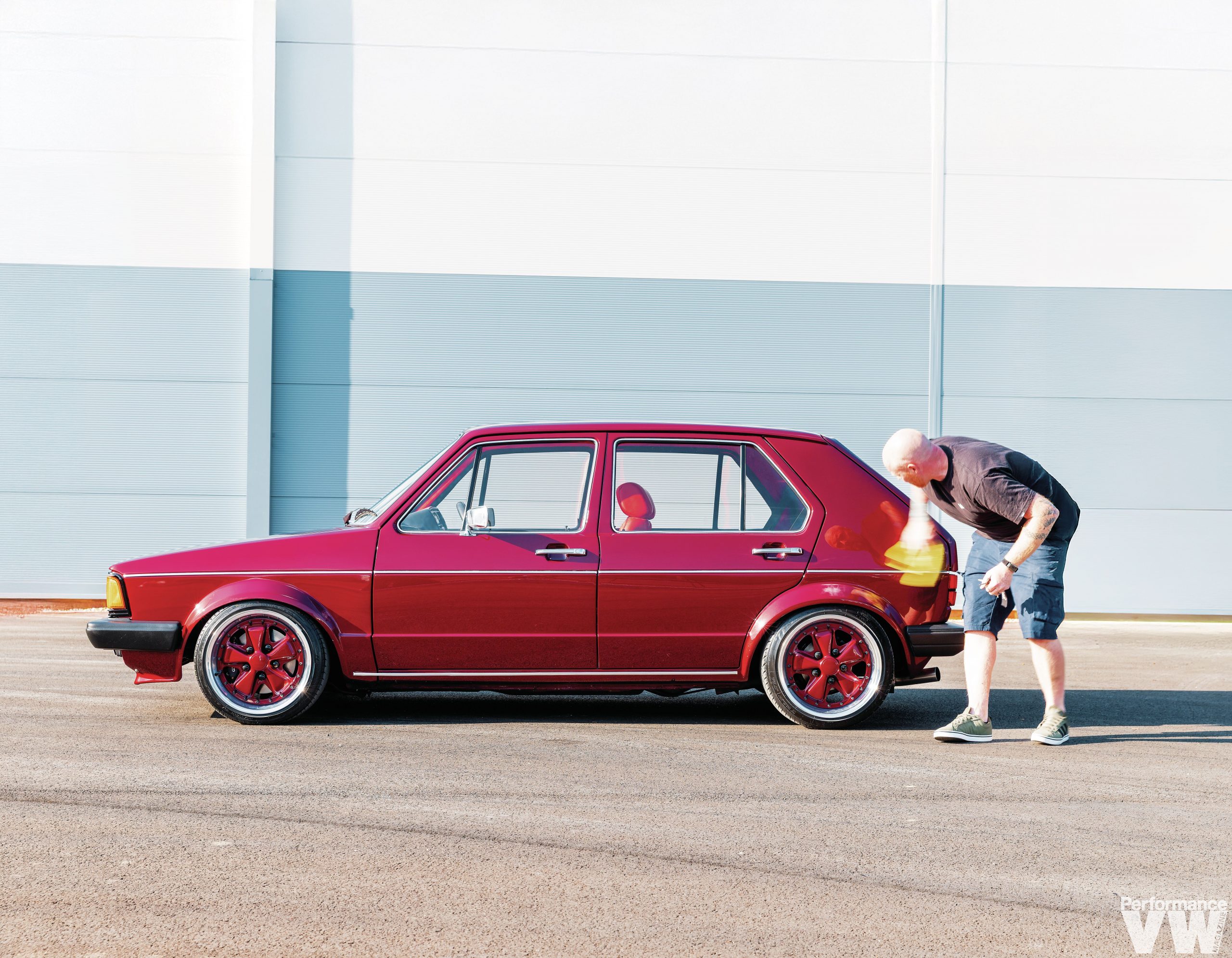
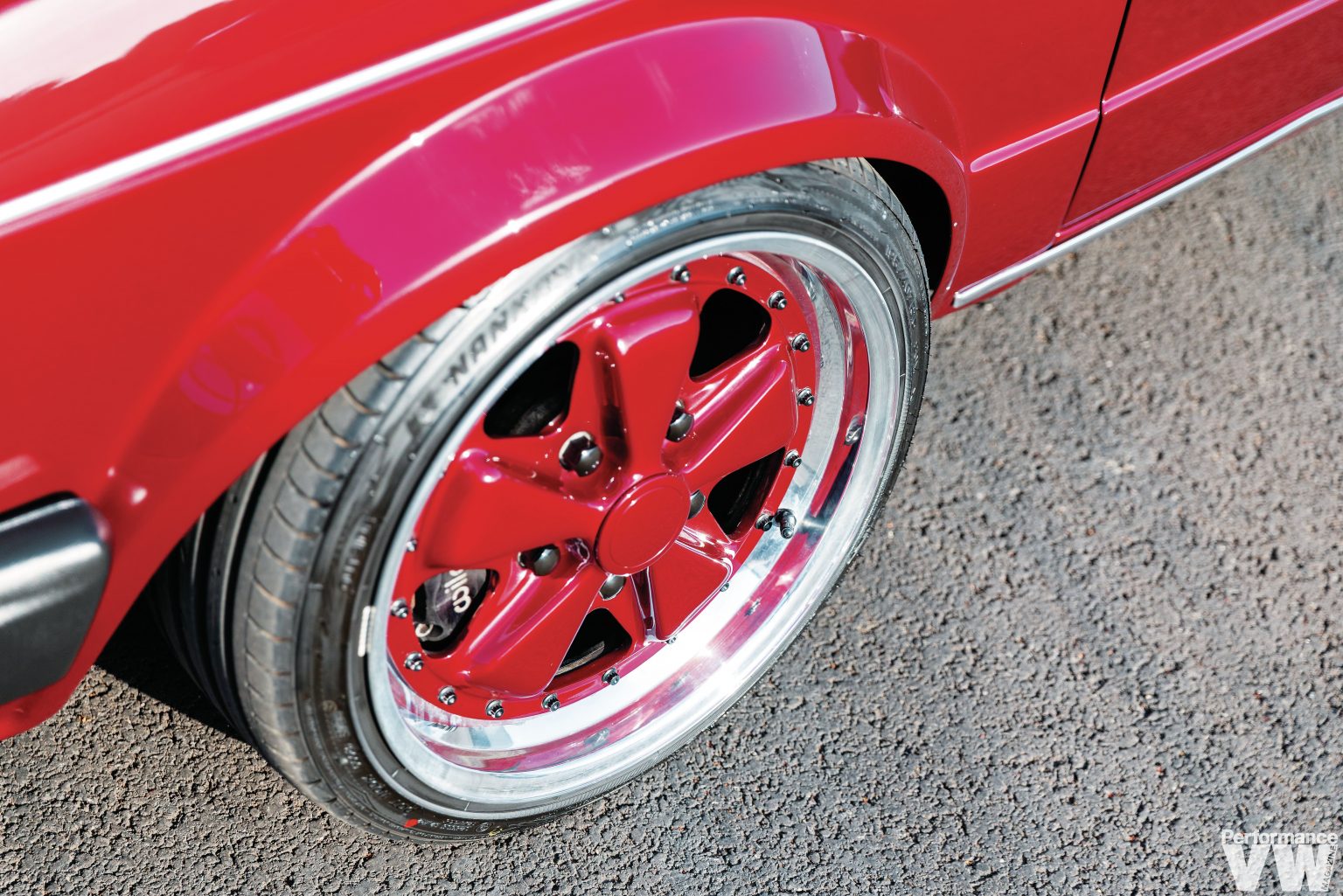
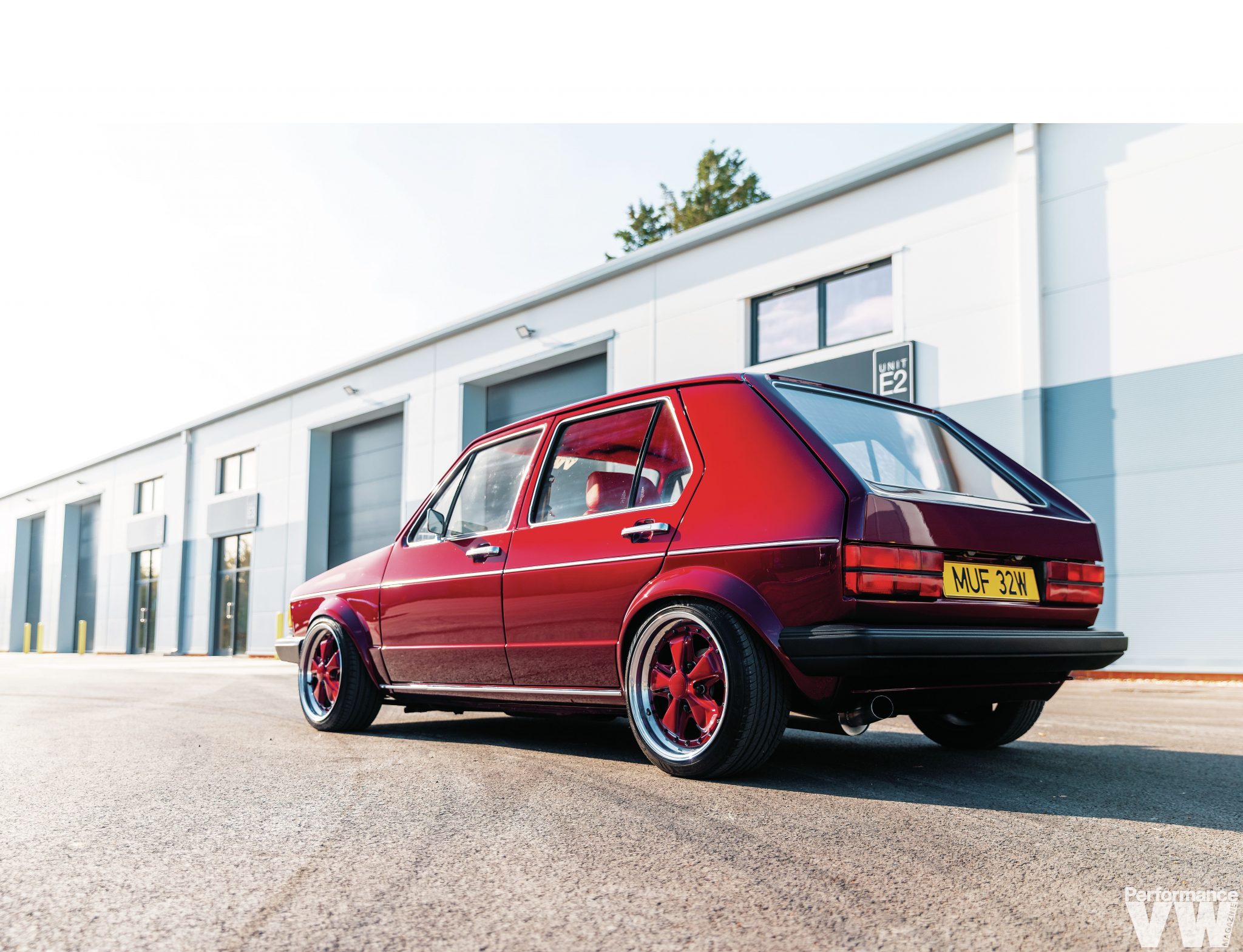
“I bought the wheels in 2006,” he explains, crouching next to arches flared 13mm over a set of staggered multi-piece Fuchs wheels. “They’re genuine Porsche centres, machined out of a set of 16×6 wheels which had been used on a 911 Cup racing car, so they’d already had a bit of life and all of them were bashed and cracked. I had the centres machined out, bought new BBS Motorsport lips and barrels from Germany and built them up with new hardware.”
Other parts weren’t quite so fortunate. The throttle-bodied 16V suffered a theatrical expiry while chasing a motorbike, ejecting a mix of smoke, oil and twisted internals through some new holes in the block. Instead of settling for a rebuild and return to the same spec, Gary seized the opportunity for forced induction, but stayed close to home with 16 valves instead of the more common 20-valve turbo. That thought process materialised as a boosted 2.0-litre ABF from a Mk3, but the project stalled before it ever turned a wheel.
Adulting rarely leaves time to prioritise project cars, and the Golf’s 15-year hibernation was influenced as heavily by life events – a house, wedding and two kids – as it was the fast-growing business where it was living. Convinced it would never see the road again, Gary detached enough to sell the engine before the workshop’s influx of Mk1s nudged him towards a change of heart. The ABF’s new owner, presumably also going through a slow phase with their project, ended up selling it back to him two years after buying it. And the rest, as they say, is history.
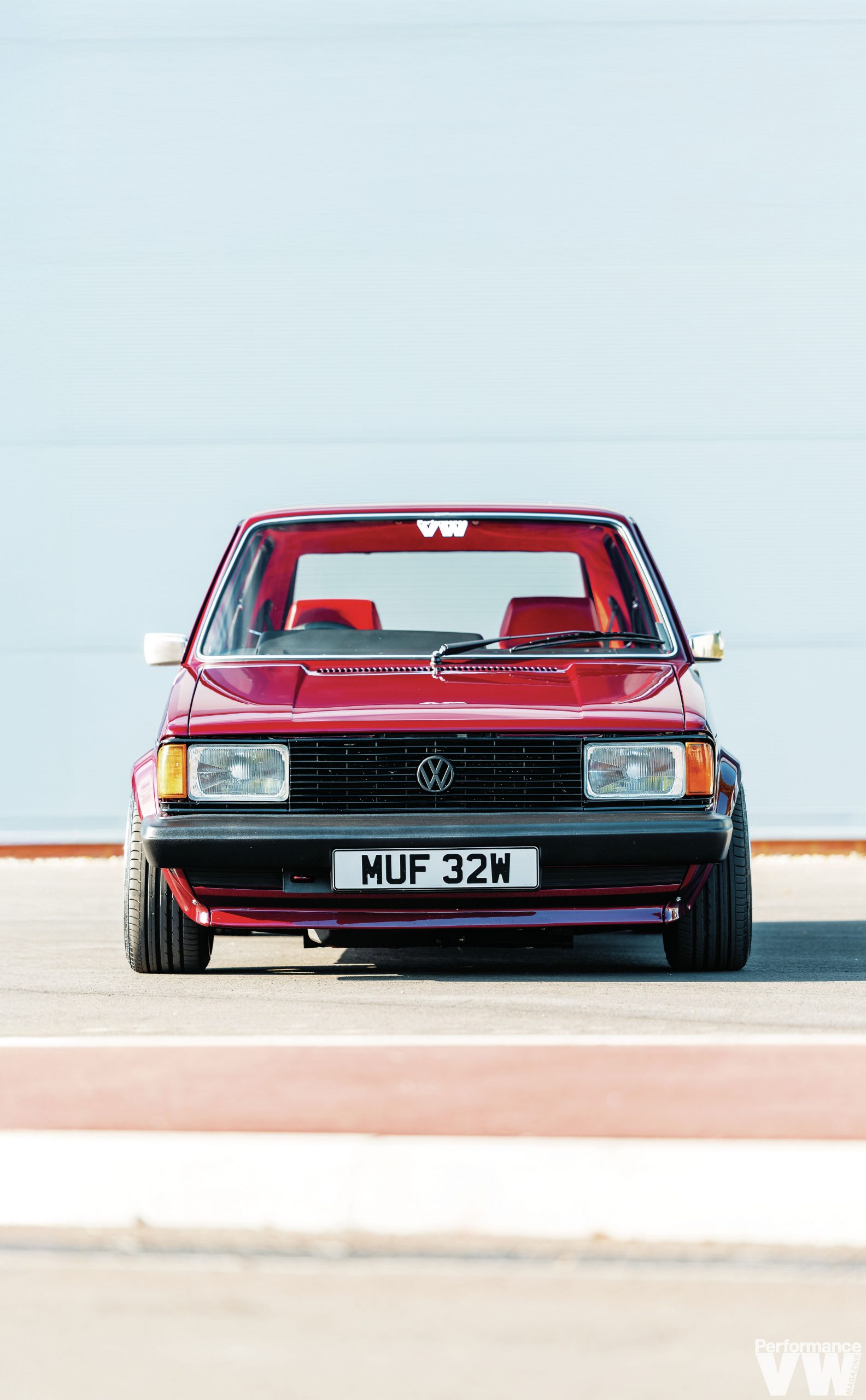
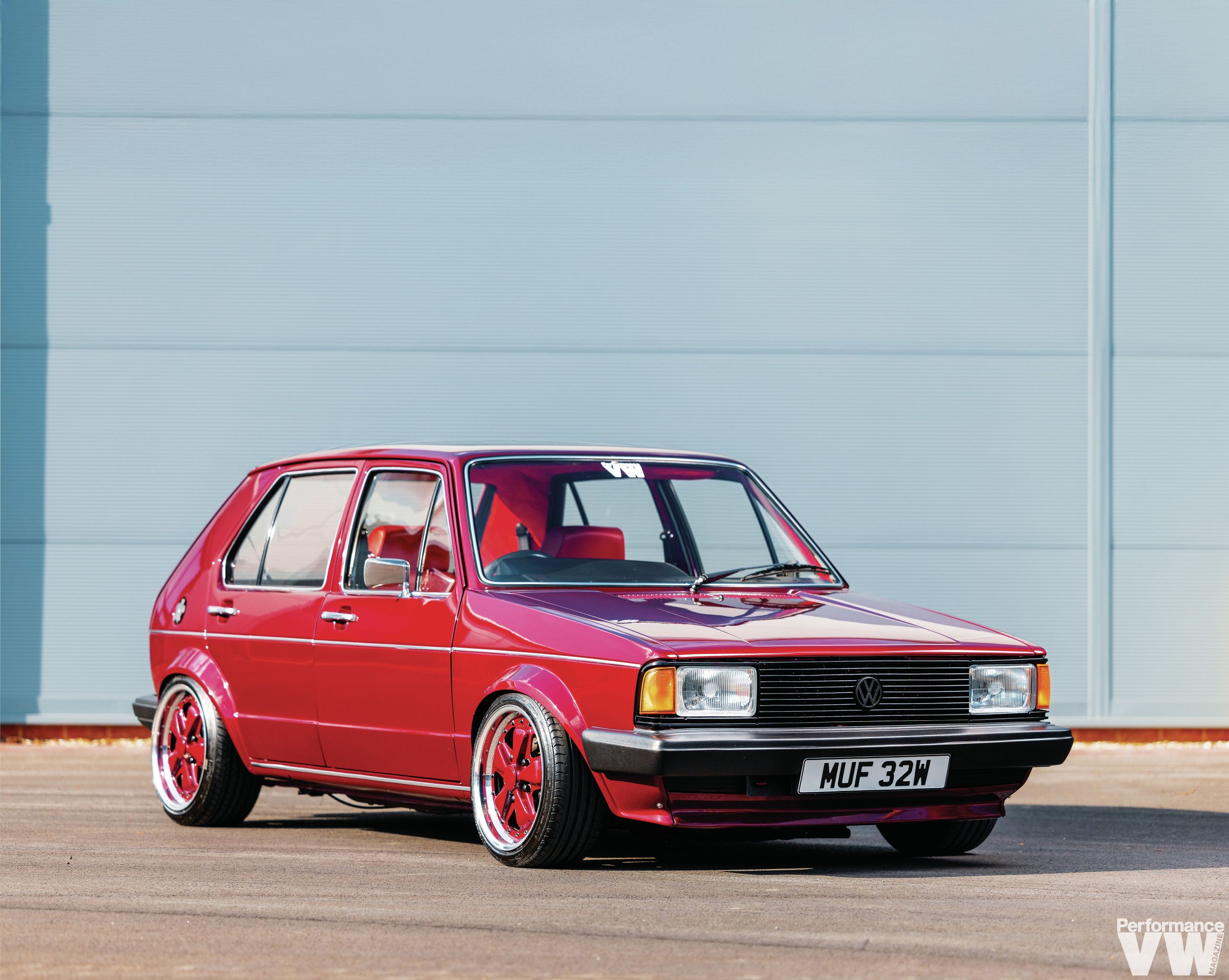
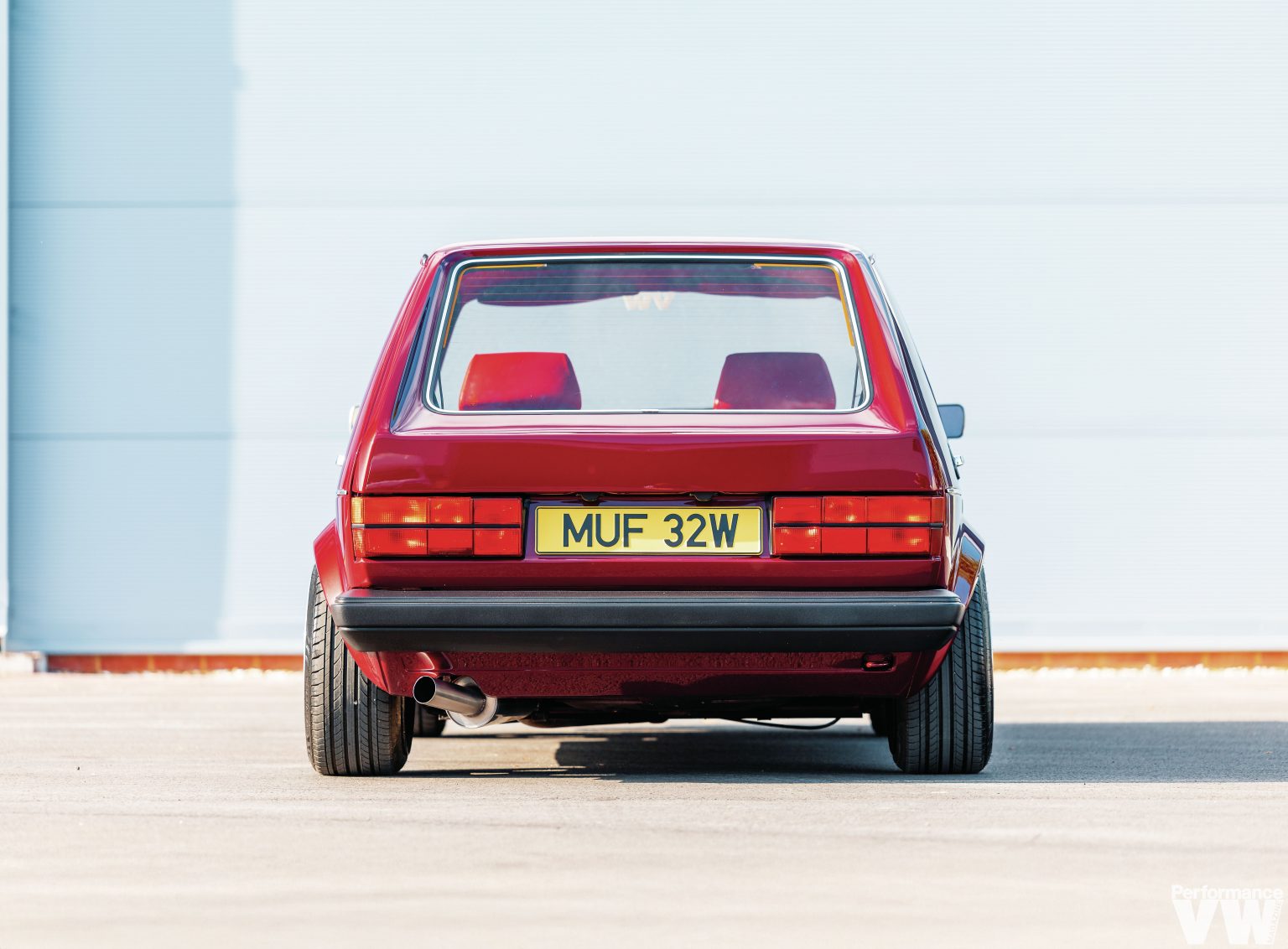
“The car was ready for a new look, so I found a full Jetta front end and stripped the rest of the body for Willoughby’s Bespoke Paint to work on,” he says. “I’d fallen in love with Porsche Arena Red after seeing it on a 964, and it really suits the car – I still smile when the sun is out. Then the wheel centres were taken back to bare metal before being painted to match.”
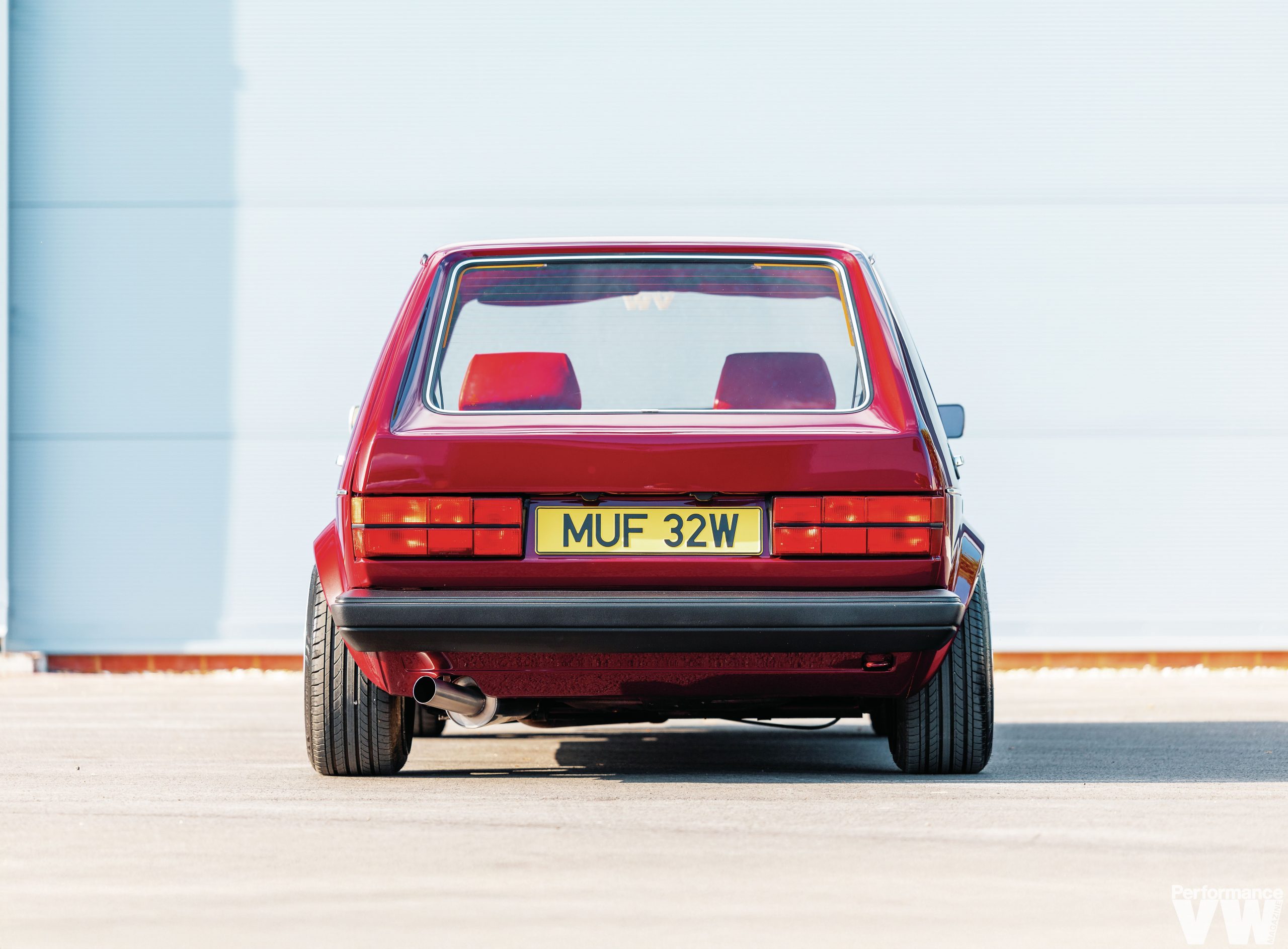
This was as much a future-ready restoration an opportunity to re-imagine the Mk1 all over again. Put your head to the ground, and you’ll find Arena Red paintwork across the entire floorpan, while all of the chrome trim is new and the bumpers have been re-textured and painted in the original black. Restoration was then contrasted against selective deletion of visual clutter – such as removing the locks and badges from the tailgate, fitting a shortened Mk1 Scirocco single wiper conversion, and taking the rear lights back to a single colour. It’s a pitch-perfect blend of custom and classic style.
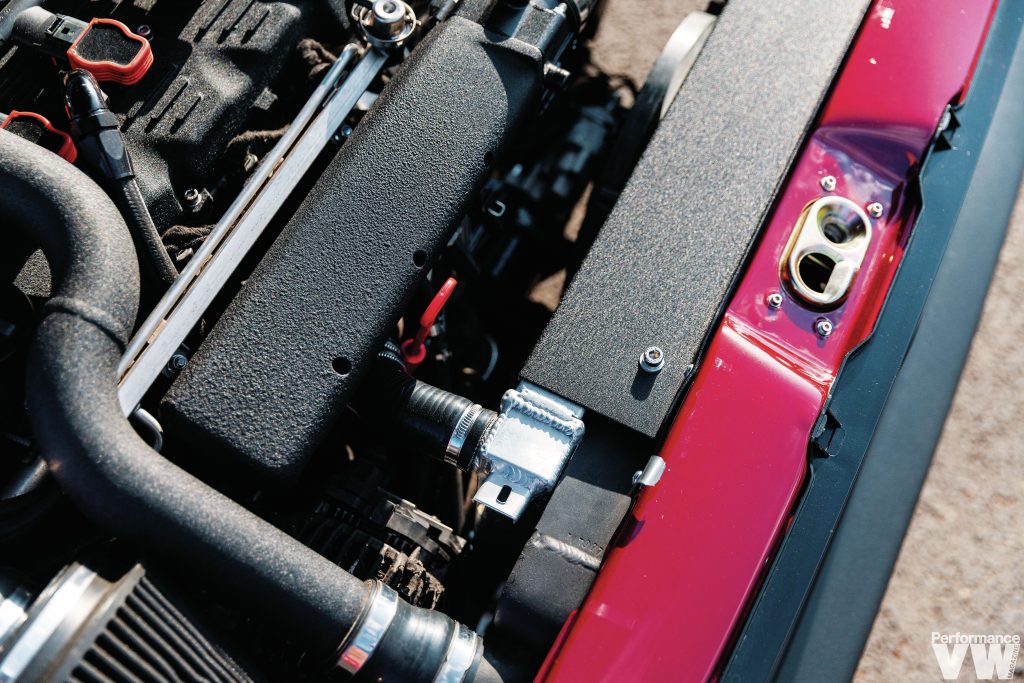
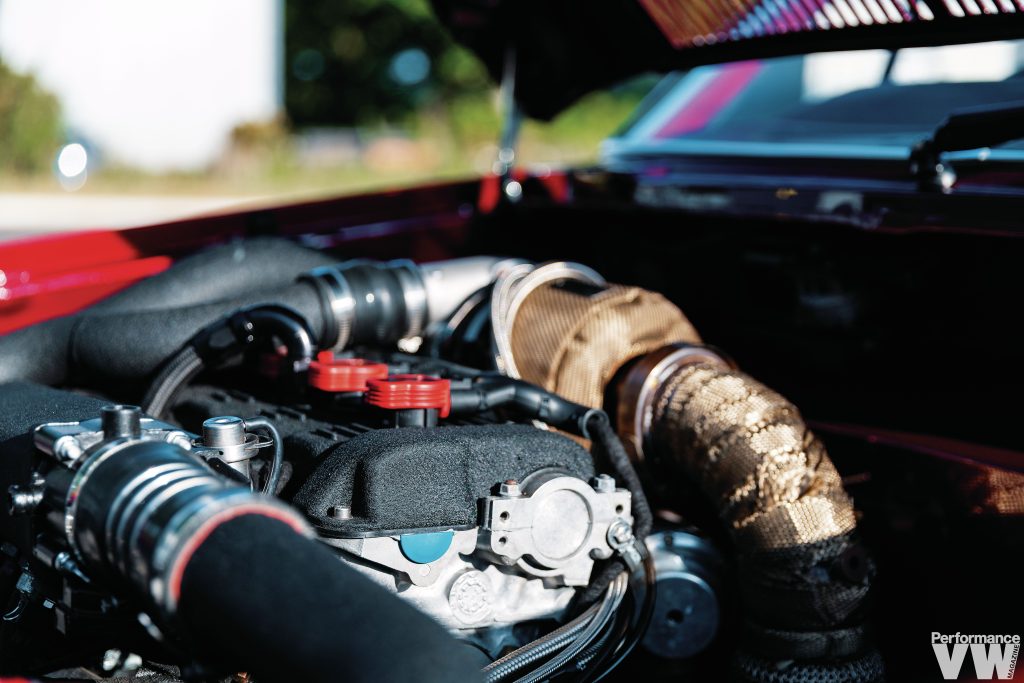
Storage hadn’t been as kind to the engine, which sat idle for ten years before Gary sold it, then spent another two as a garage ornament before being brought back into the fold. Perished seals were a red flag, warranting an inspection by Scott Reed, and the resulting disassembly revealed rusty internals from years of disuse. Having already lost time to one engine failure, it made sense to give the newcomer a thorough clean and replace any tired parts before dropping it back into the freshly shaved bay.
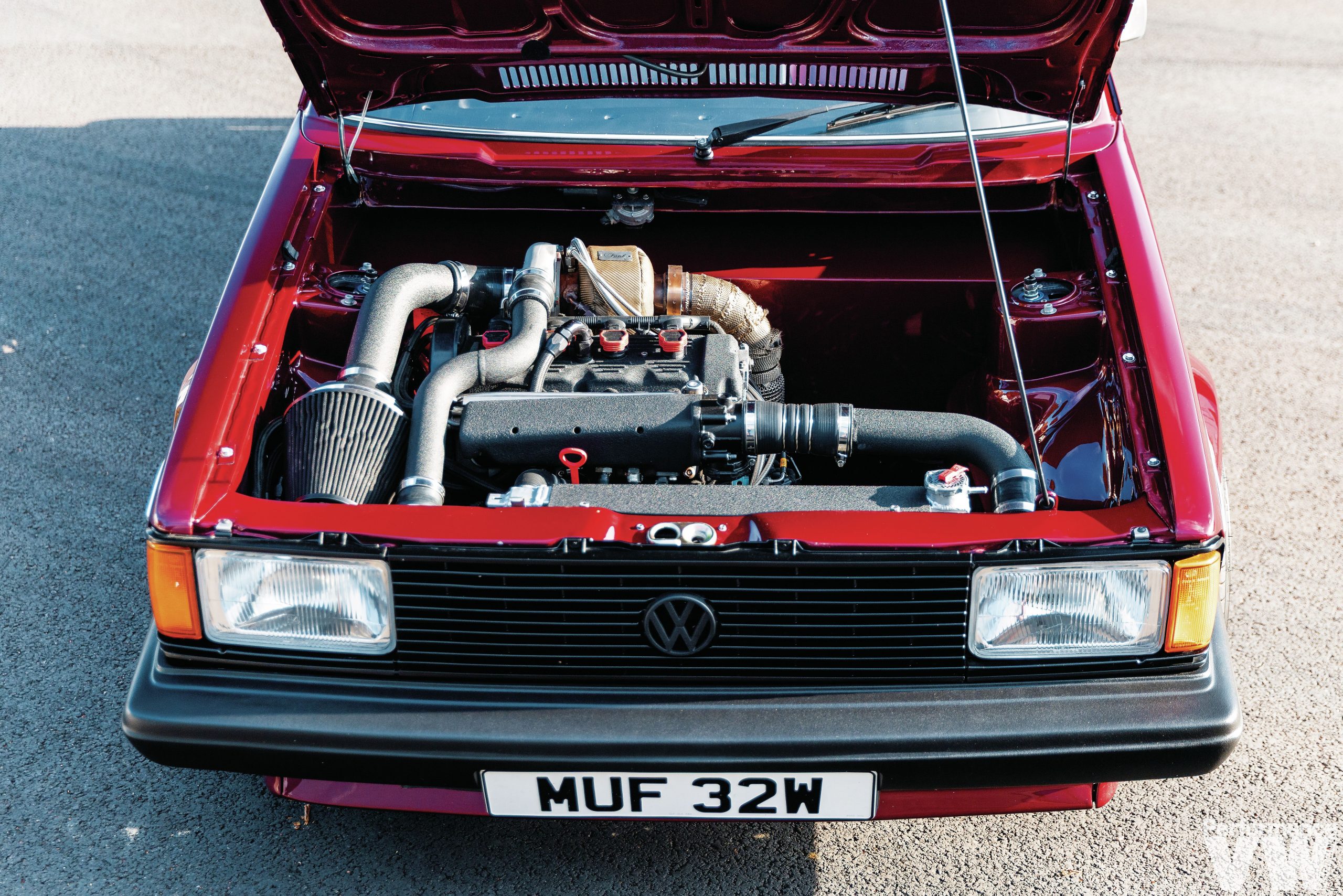
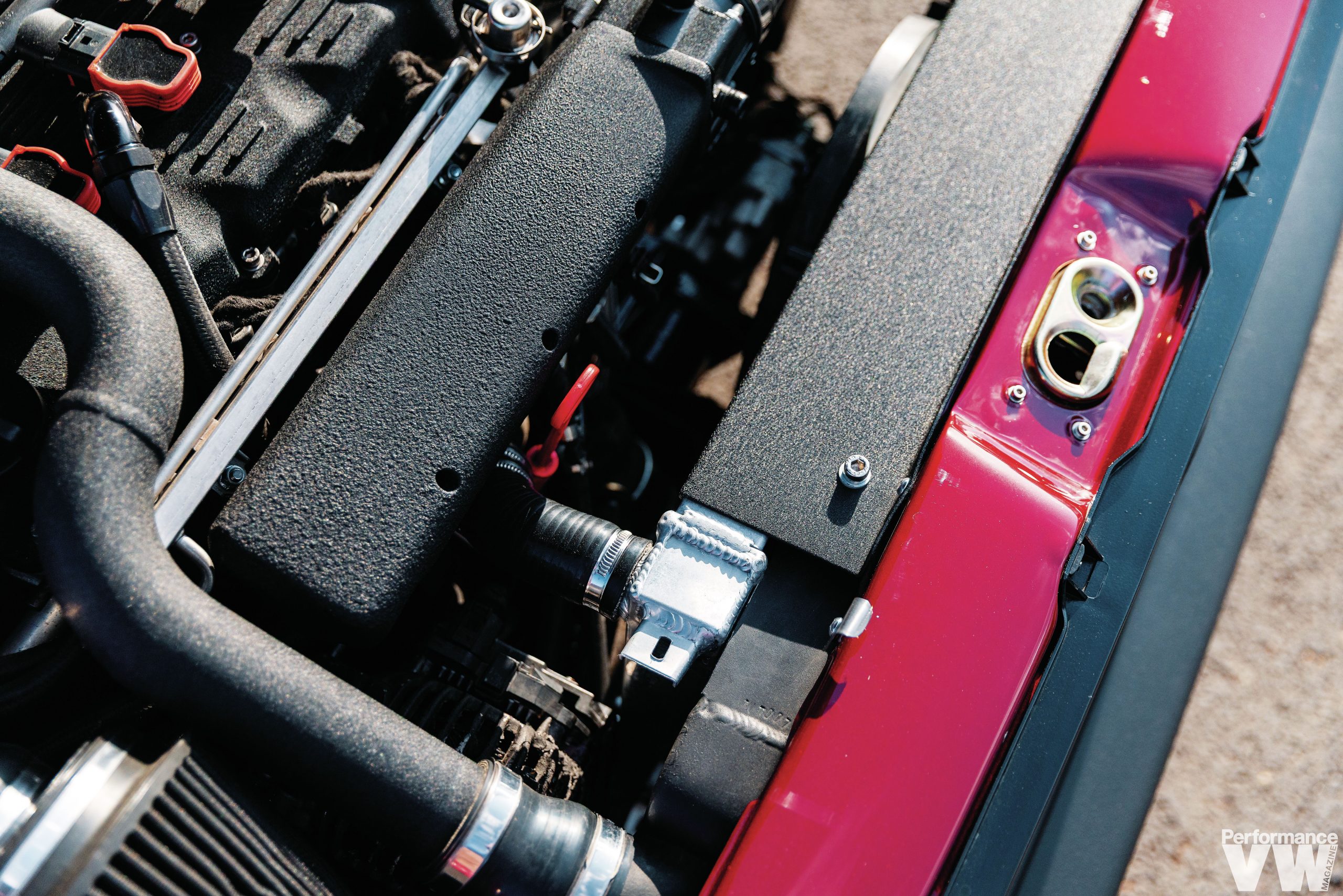
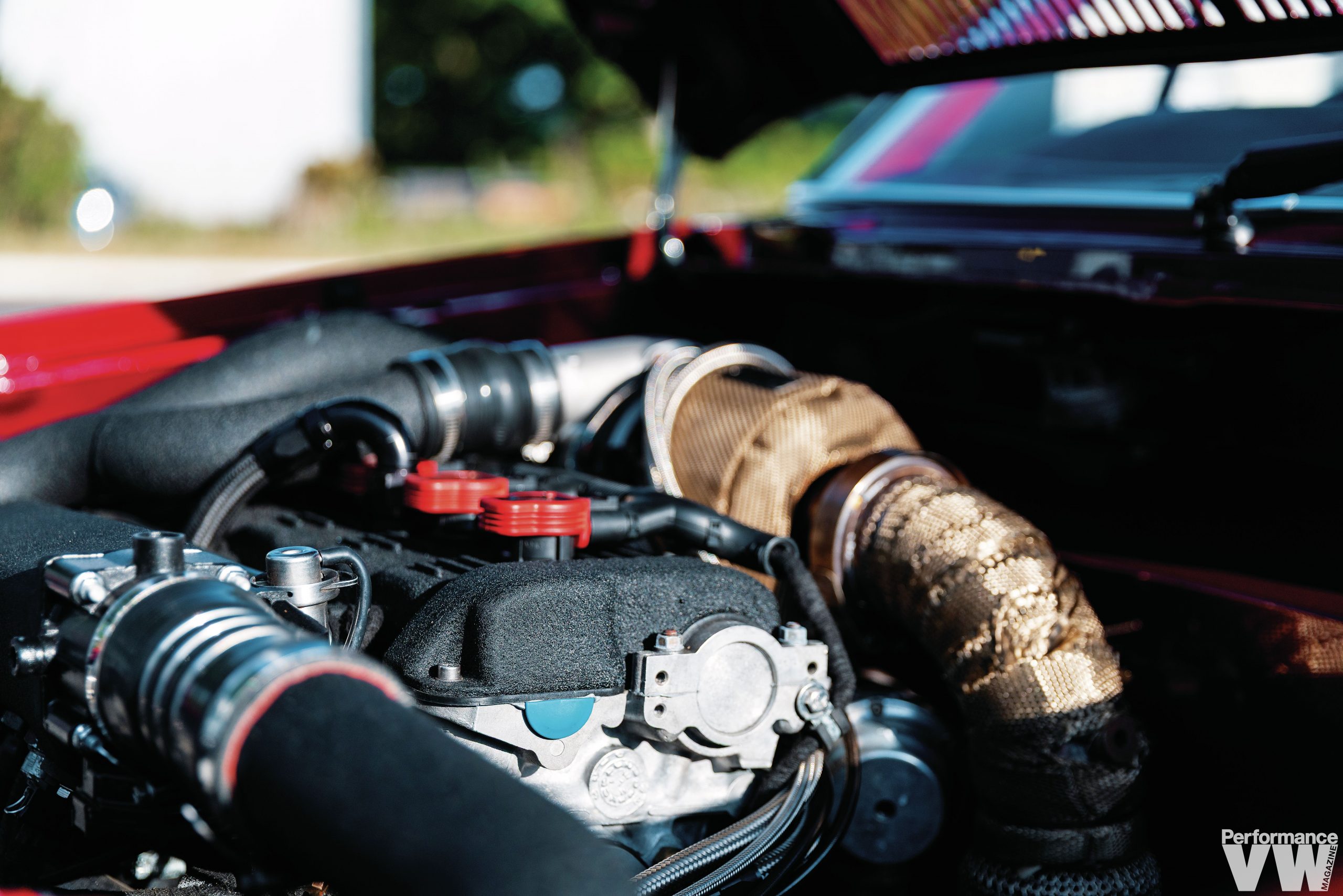
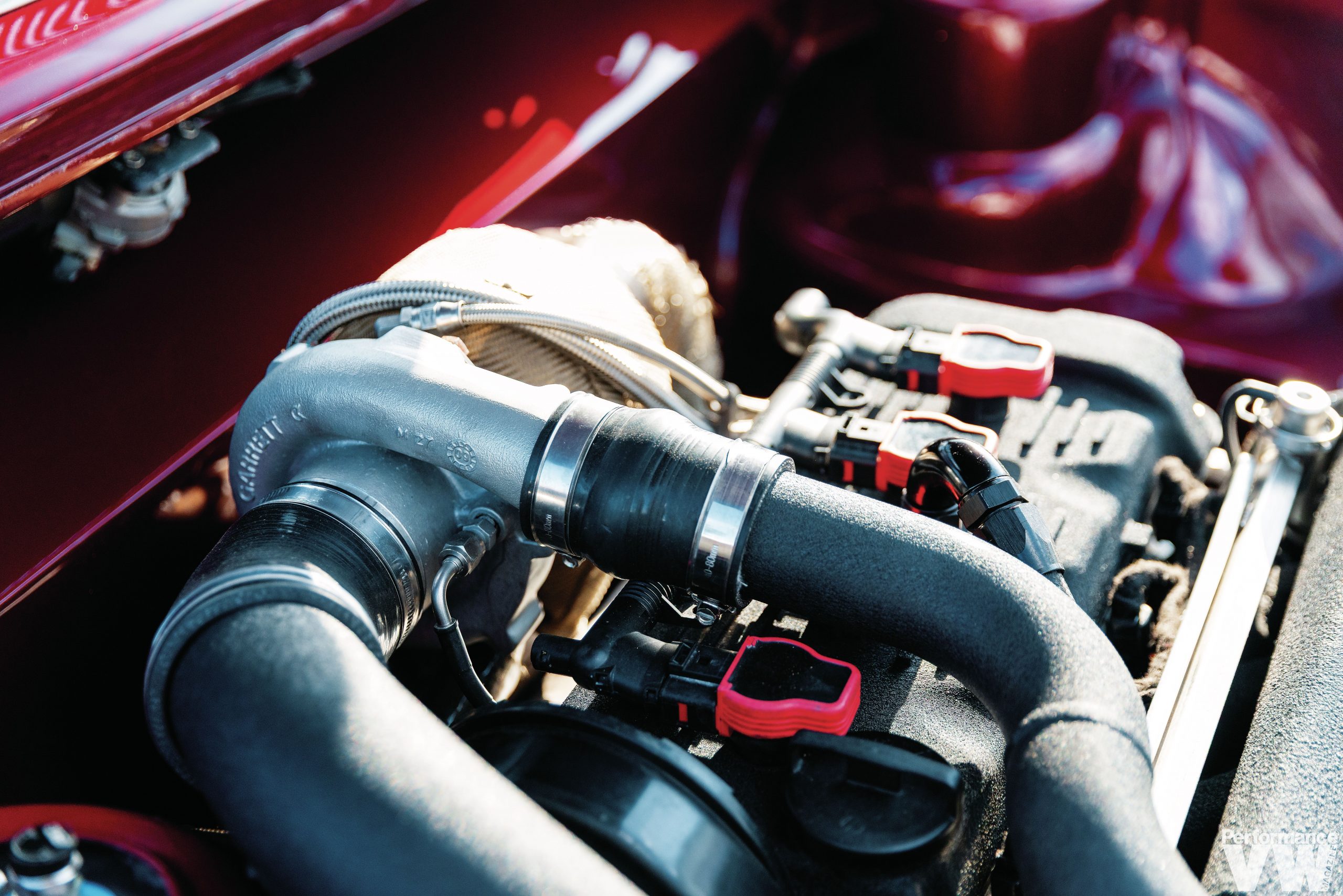
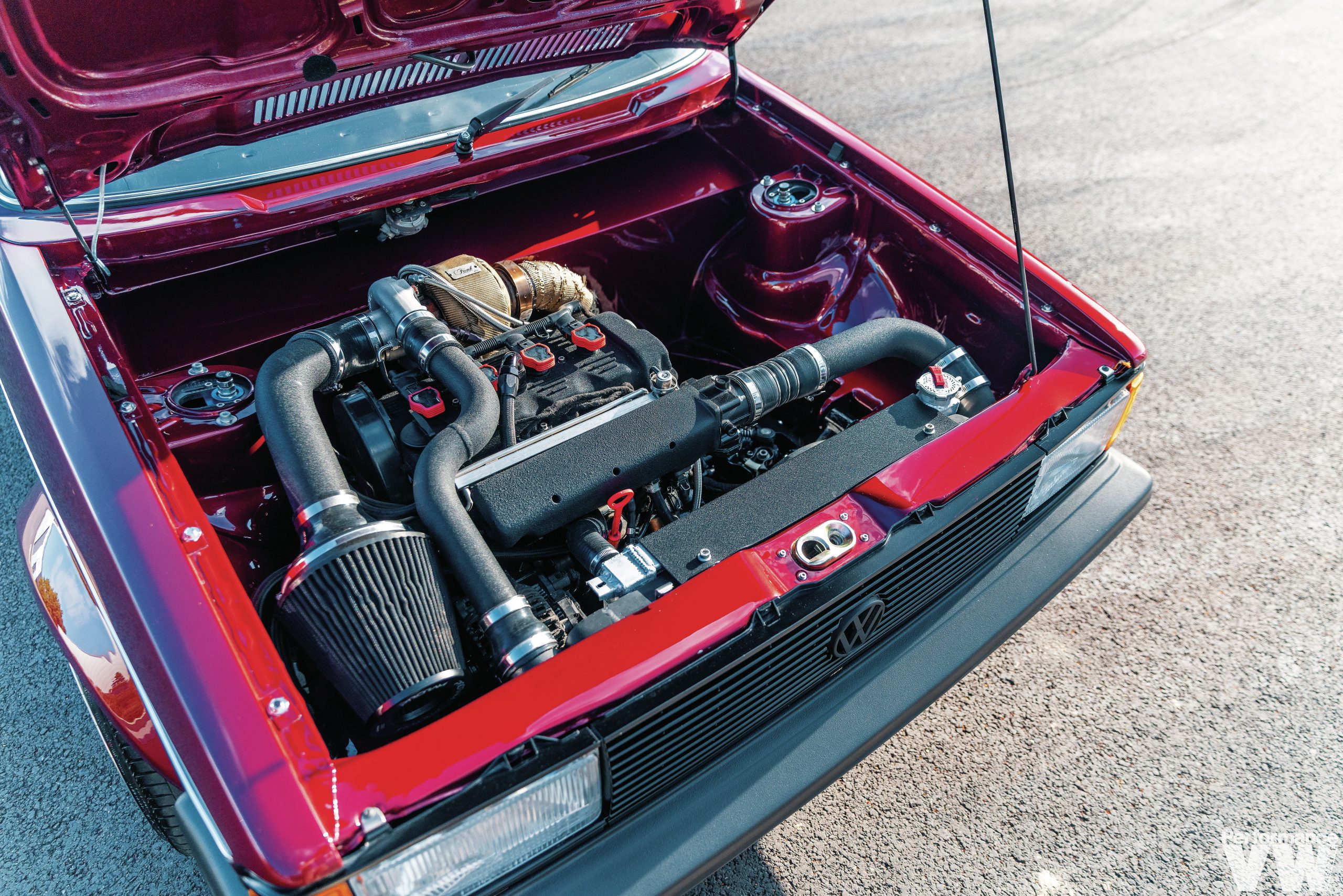
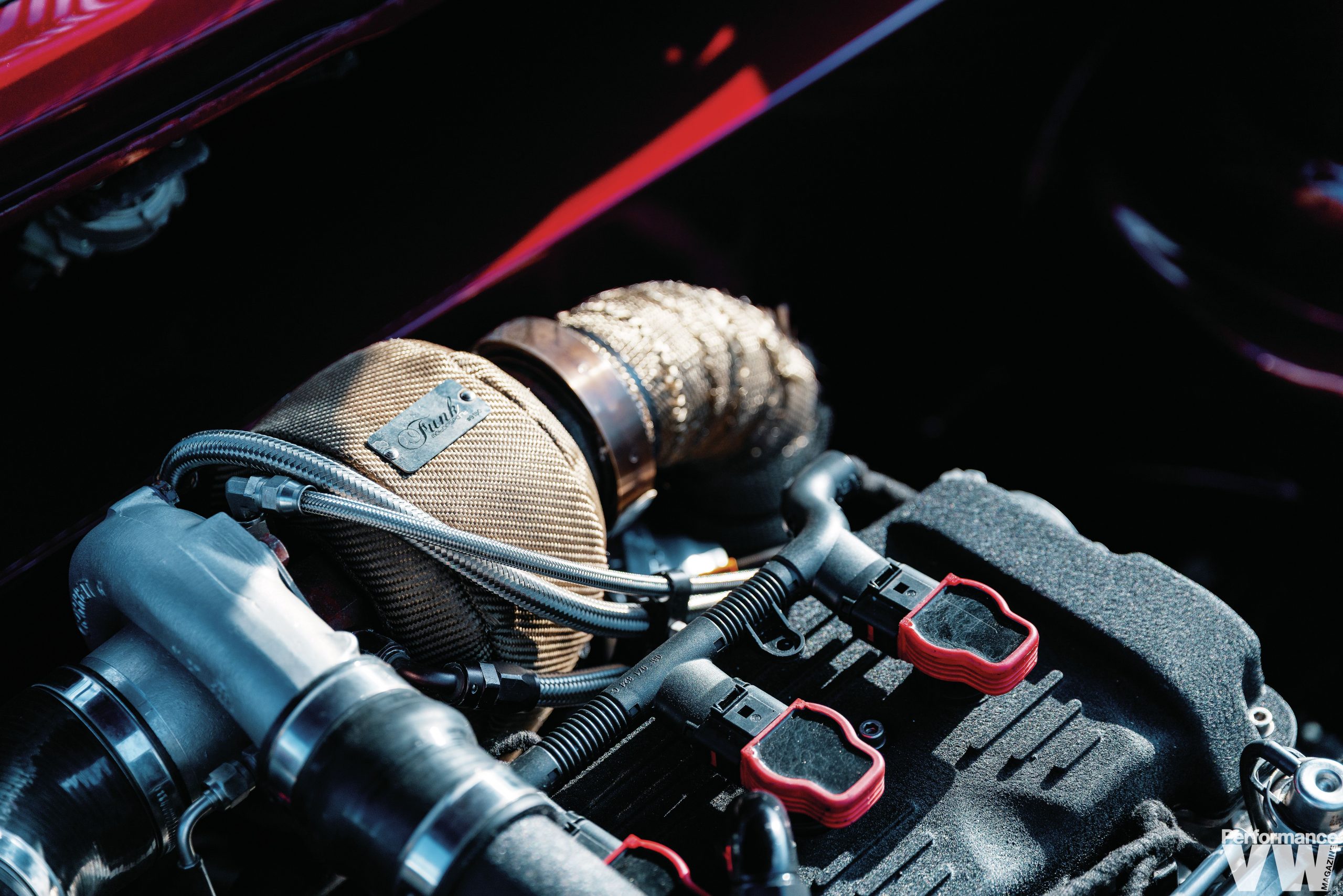
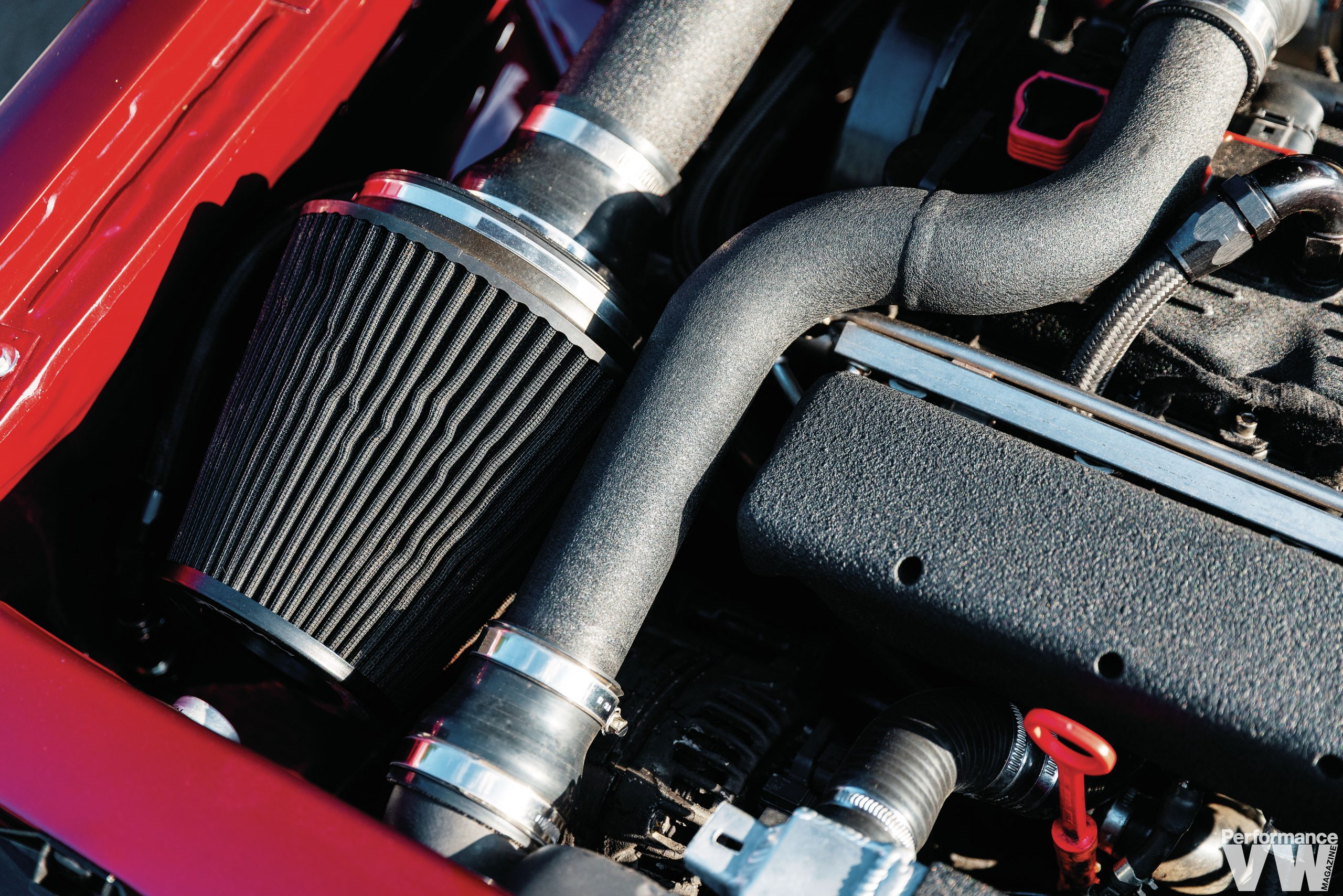
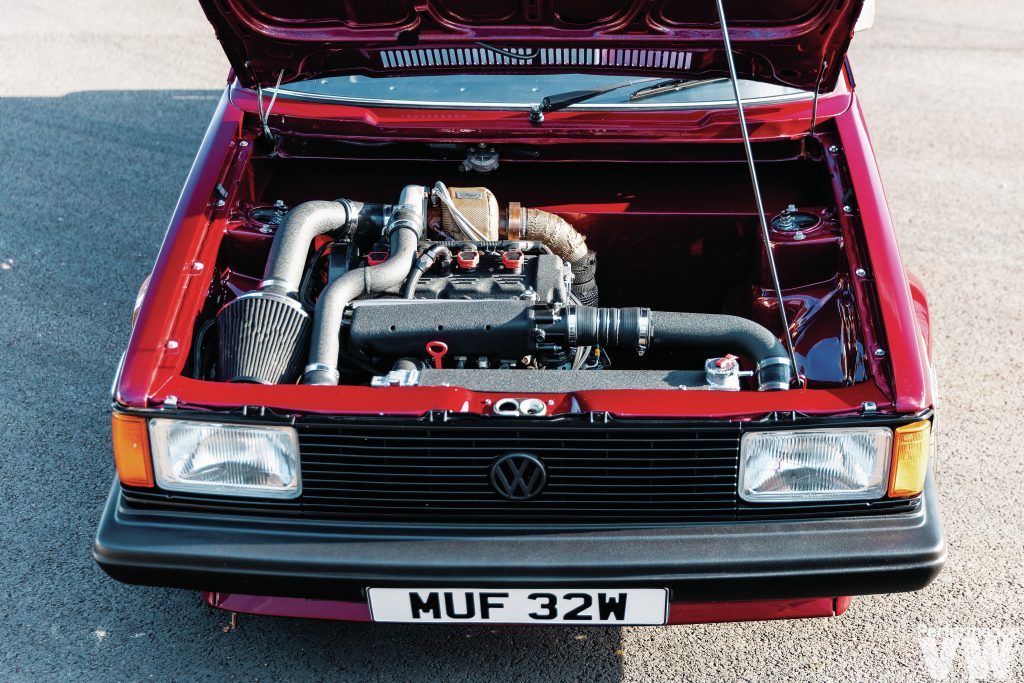
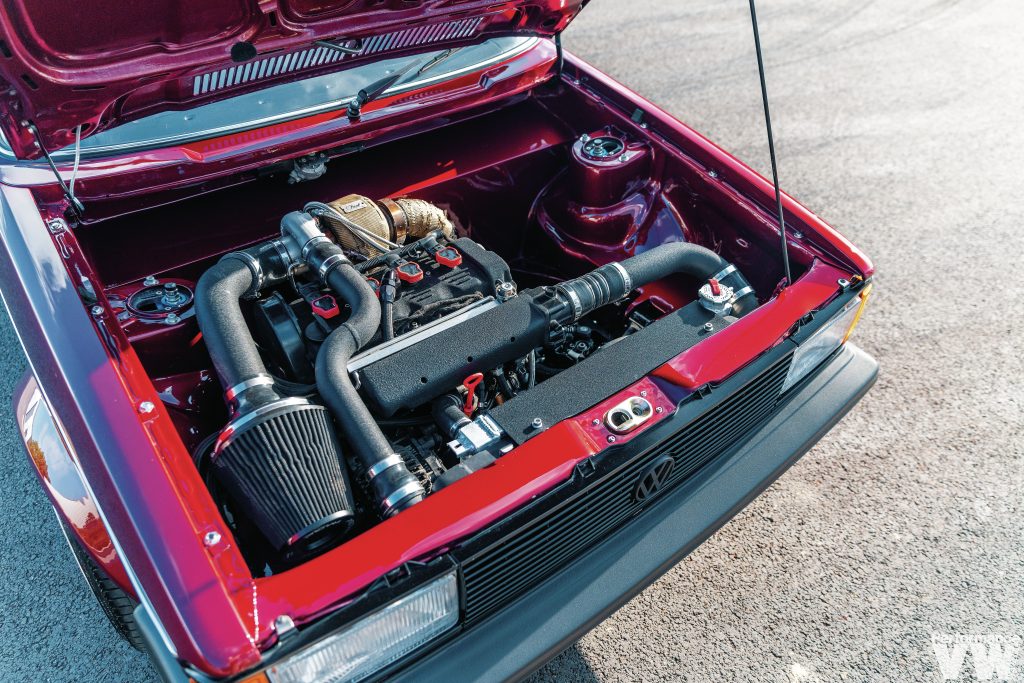
It’s a highlight, even in project packed full of carefully chosen details. There’s no shortage of options if you’re after a quick Mk1, but you won’t find many that look as at home as this. The ABF displaces around 1.9 litres thanks to a 1.8T crank and features forged pistons and Pauter rods better suited to the high-performance, GTX-spec Garrett T28 turbo at the back of the bay. Some selective parts bin raiding completes the spec, including a more modern direct ignition system set into the modified rocker cover, a 1.8T throttle body and the inlet manifold from an Audi RS2, which was adapted for a four-cylinder engine.
“The ABF revs quite lazily by nature,” explains Gary. “Using the 1.8T crank reduces the length of the stroke and helps it rev more easily – it’s technically a 1.9-litre engine – and it also gives me a pickup for the crank sensor.”
As you might expect from someone with a fabrication workshop at his disposal, the presentation is as impressive as the mechanical overhaul. The Golf’s boost hoses and stainless exhaust system were custom made with Chris, and they look almost factory fitted with their textured crackle paint matched to the rocker cover. But the smartest details are less obvious. Its oil breather system and catch can are tucked away inside the chassis leg, the battery and braking system have moved into the cabin, while the custom wiring loom leaves almost nothing on show.
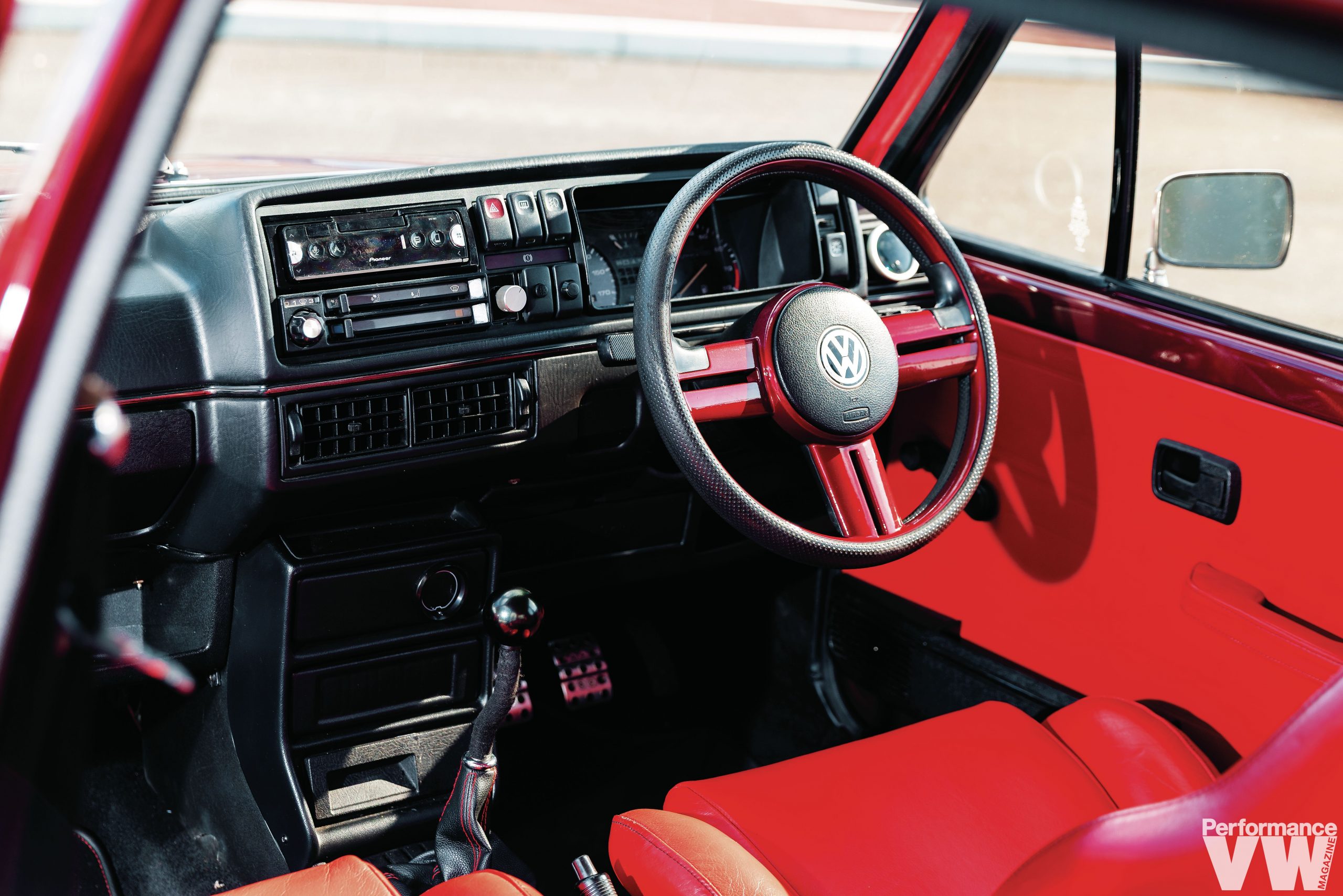
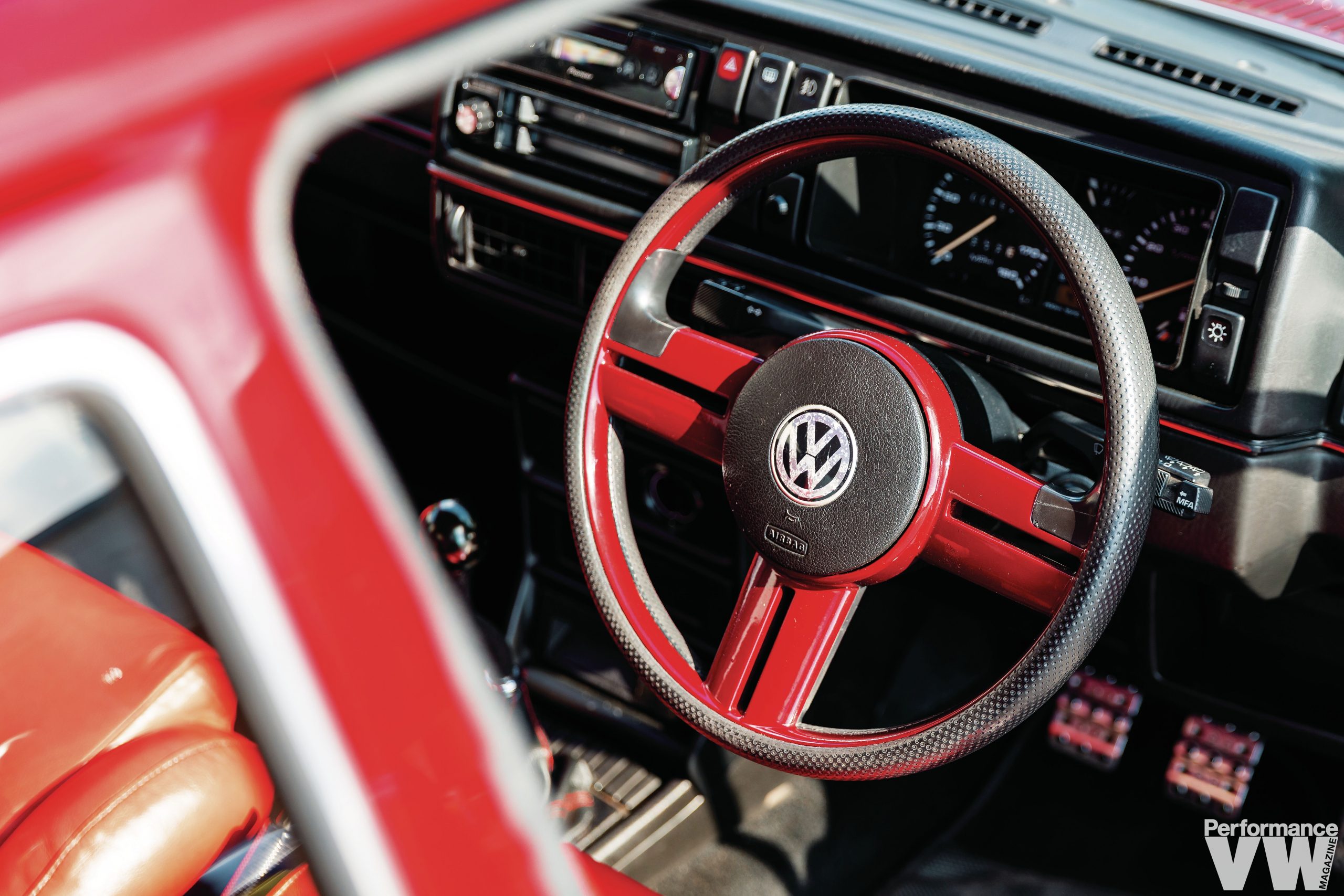
Gary continues: “The Emerald ECU was wired in by Darren Francis at VW Enterprise, and the Mk2 dash conversion was his brainchild too. It fits the space in the interior well once you add a couple of mounts, then everything is connected to the Emerald. Most of it is from a Mk2, including the centre console, clocks, stalks and CE2 fusebox, but the speedo and tacho are using an electronic pulse setup from an E30 3 Series.”
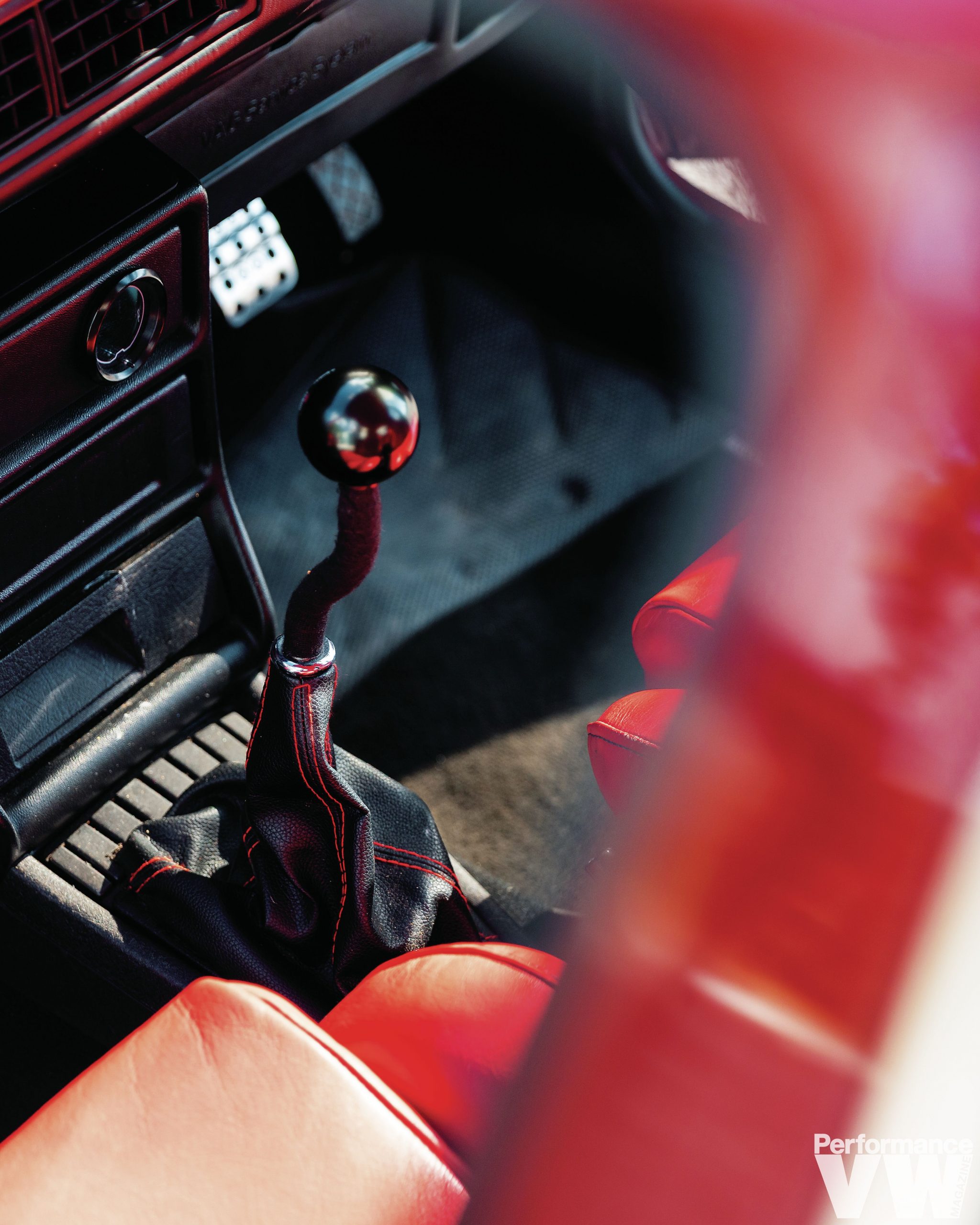
Although there are plenty of Volkswagen part numbers inside, no Mk1 was ever this luxurious in factory spec. The poppy red Recaros still look fresh almost 20 years on, but are now sharing the cabin with the colour-coded, lightweight magnesium steering wheel from a Lupo 3L, and a pedal box with a hydraulic clutch and Mk4 drive-by-wire throttle. Beneath the spherical metal gear knob is a Mk4 shift lever, extended and cranked backwards for easier reach, and linked to a six-speed 02S gearbox.
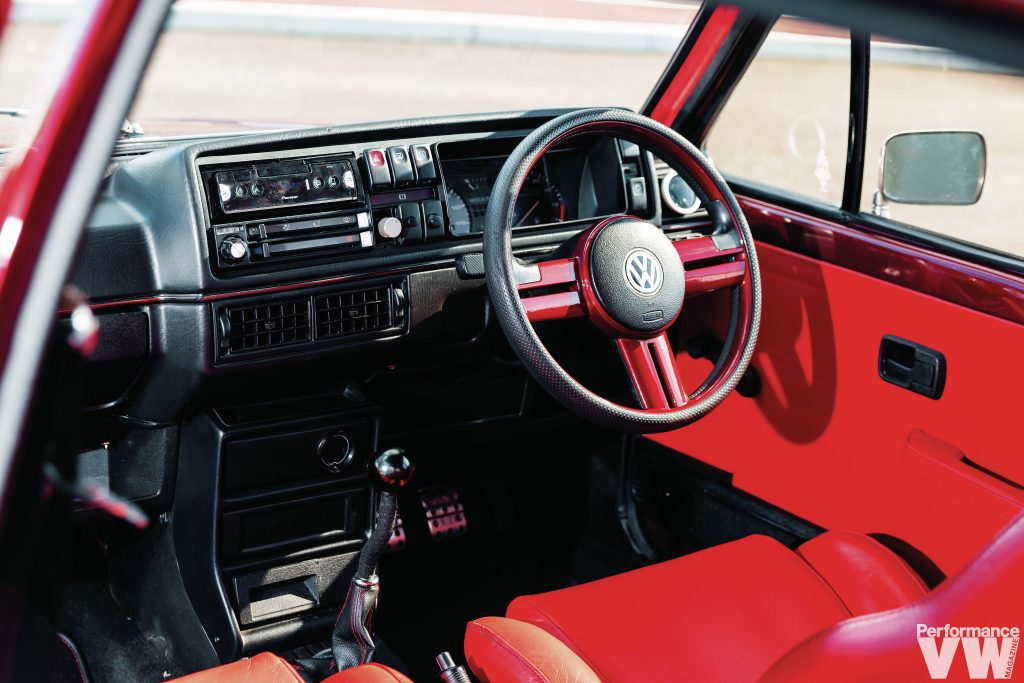
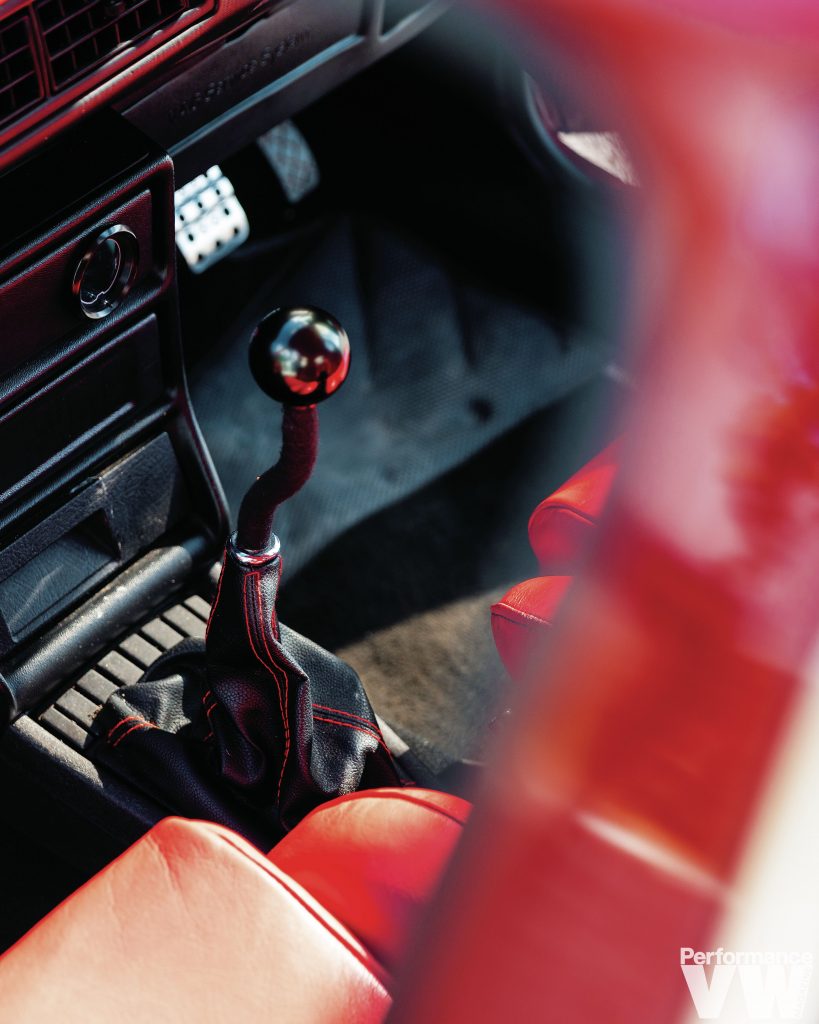
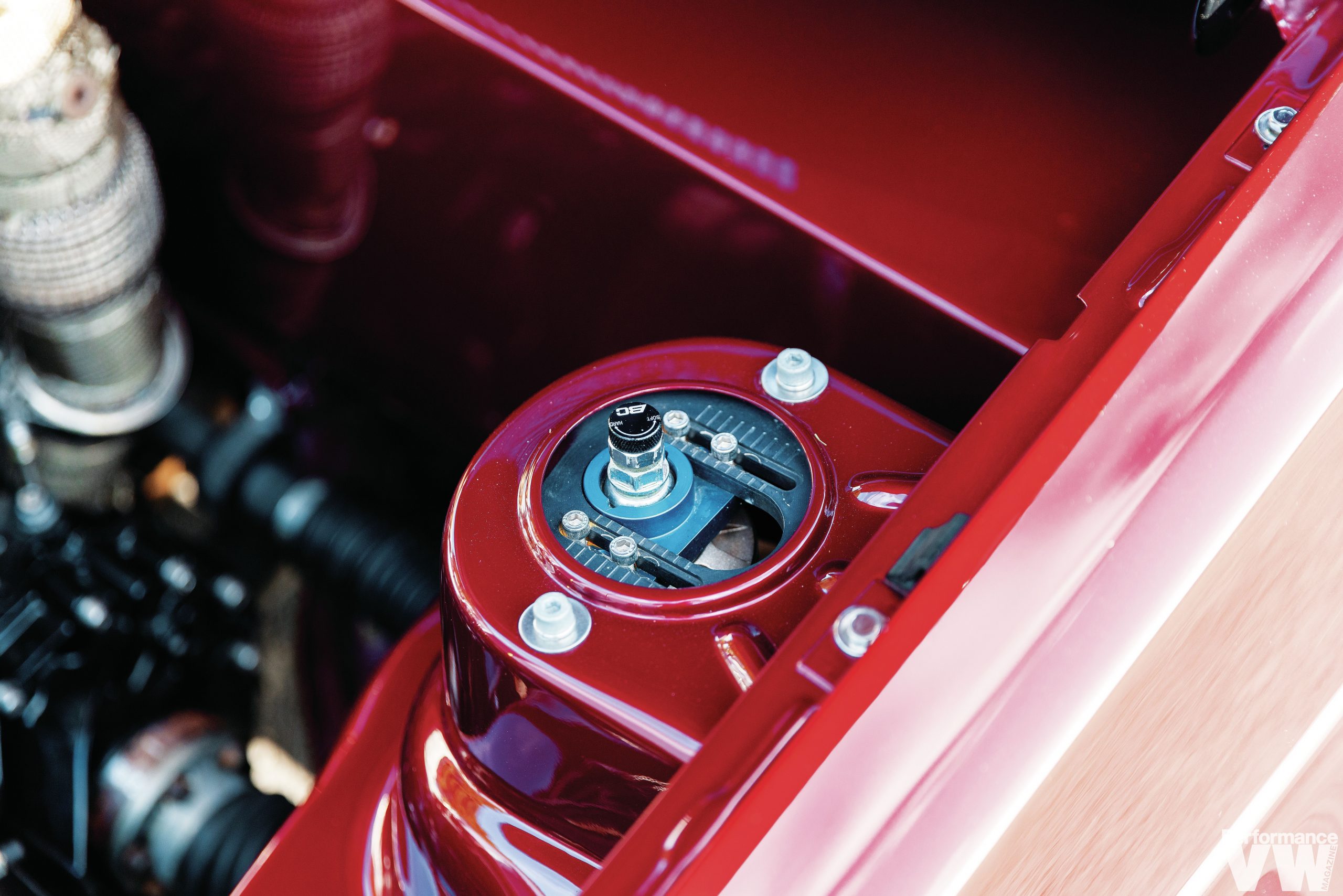
Naturally, the transmission has had as much love as the rest of the engine bay – shipped to Gas ‘n’ Gears for a teardown, then fitted with a Quaife limited-slip diff and powder coated gloss black. A Wilwood big brake conversion, thicker Eibach anti-roll bars and BC Racing coilovers with adjustable top mounts all help make use of a power figure that seems almost out of place in something so visually subtle.
“I wanted a 16v turbo over a 1.8T because I know them really well, and they make good power,” says Gary. “This one was mapped by Dave at ATP Performance, and it made 305bhp. It’s got plenty more to give, but the old-style turbo and restrictive cast manifold are at their limits. I don’t think the car needs any more power, though.”
What it did need was a bit more patience from its owner. The Mk1 was put back into service in late 2022, having missed most of the show season, so it took until the following summer to get its long-deserved exposure. And it says a lot for the quality of the work that the only teething problem stemmed from a faulty fan belt, though that common fault had some expensive knock-on effects.
Having limped to and from an event where the car won best engine bay, the belt let go a mile from home throwing debris into the cam belt and bending several valves. The resulting downtime was unplanned, but it’s been another opportunity for fine-tuning. These days, it’s customer projects, not mechanical drama, holding the Golf back from more events – but that’s all part of living the dream, right?
“This isn’t what we normally do at GDF Autofab, as it started such a long time ago,” he says. “Years of development with our four-wheel drive conversions, engine swaps, modifications and repairs, and our range of products, mean I’ve developed an itch for a track-based project instead of a show car – and it can only be a Mk1. I’ve found a suitable shell and my head is full of ideas, but I haven’t started the build. Watch this space…”
It’s a desirable upshot of the lengthy delays with this car. The years of being kept busy by customer projects have fine-tuned some of the most in-depth Mk1 knowledge in the business, and plenty of inspiration for what comes next. But, with no signs of the workshop throughput slowing down, we’ll cross fingers that those deadlines are a little easier to manage as his ideas start coming to life
DUB DETAILS
|
ENGINE |
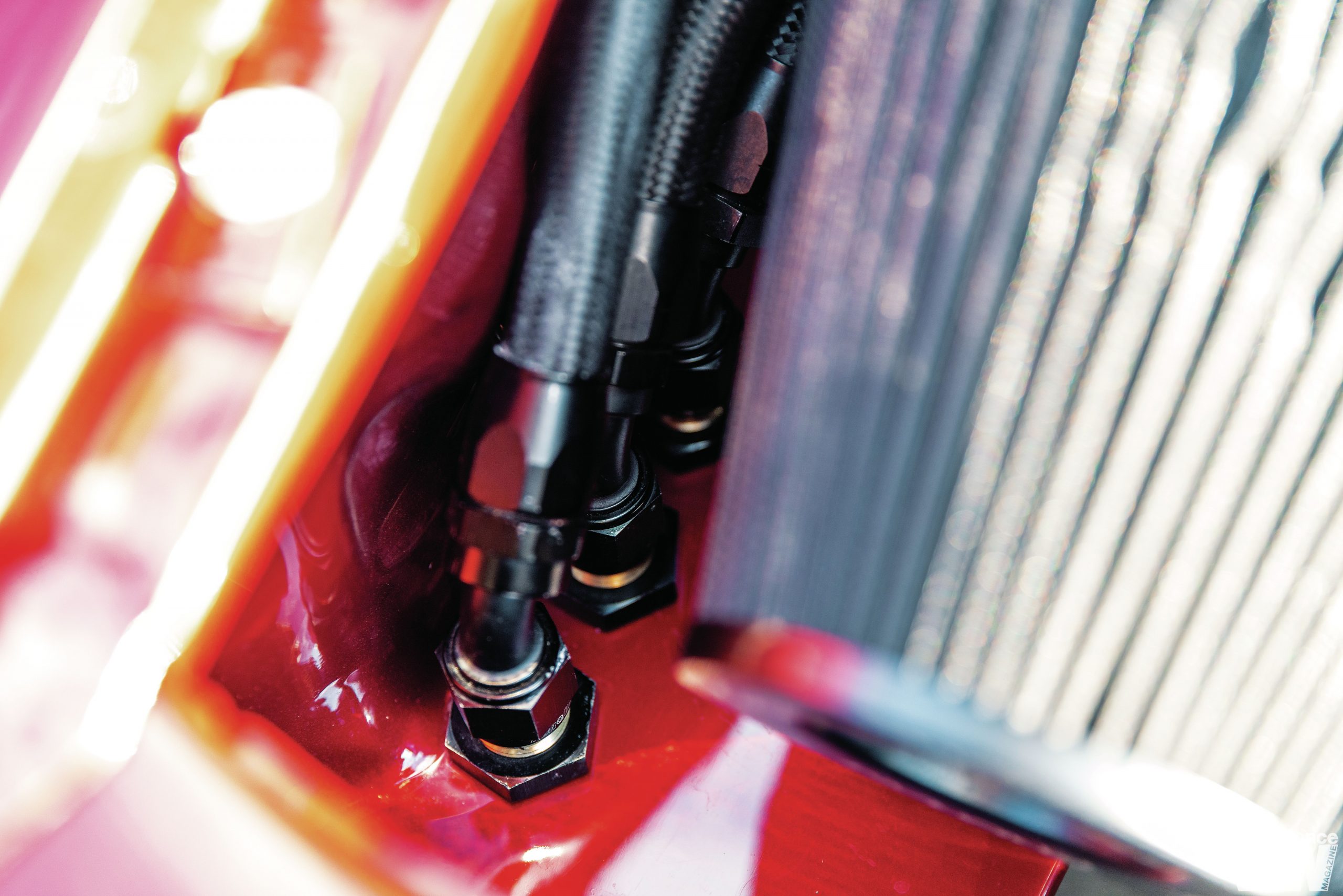
1984cc, four-cylinder, 16-valve (ABF) from Mk3 Golf, 1.8T crank, Pauter rods, forged pistons, ported head, Garrett T28 Turbo converted to GTX spec, GDF Autofab custom boost pipes, Tial wastegate, 1.8T throttle body, Audi RS2 inlet manifold modified to suit four-cylinder engine, cast exhaust manifold, custom 3in into 2.5in stainless exhaust system, Emerald K6+ ECU, custom wiring loom by VW Enterprise, large aluminium radiator, large aluminium intercooler, Mocal oil cooler with adapter plate, GDF Autofab cam cover converted for direct ignition, Audi R8 coil packs, AN10 breather bung, breather system hidden beneath driver’s chassis leg, Funk Motorsport turbo blanket and downpipe wrap, O2S six-speed gearbox rebuilt and uprated by Gas ‘n’ Gears then powder coated gloss black, uprated engine mounts |
|---|---|
|
CHASSIS |
7.5×16 (front) and 8×16 (rear) genuine Porsche 911 Fuchs wheels converted to three-piece splits using BBS Motorsport barrels and lips, 195/45 (front) and 205/40 (rear) Nankang AS-2 tyres. BC Racing Mk1 Scirocco coilovers, adjustable top mounts, Powerflex bushes throughout, Eibach 22mm anti-roll bars, Wilwood four-pot brakes with 280mm discs (front), Scirocco 16v discs (rear), HEL braided brake lines, Wilwood underslung bias pedal box with hydraulic clutch, remote mounted dual servo-assisted slave cylinders |
|
EXTERIOR |
Full respray in Porsche Arena Red (including stripped and re-painted underside) by Willoughby’s Bespoke Paint, Mk1 Jetta front end conversion, wheel arches cut and widened 13mm, de-locked and de-badged tailgate, clear tail lights tinted red, Scirocco single wiper shortened with Mk4 motor |
|
INTERIOR |
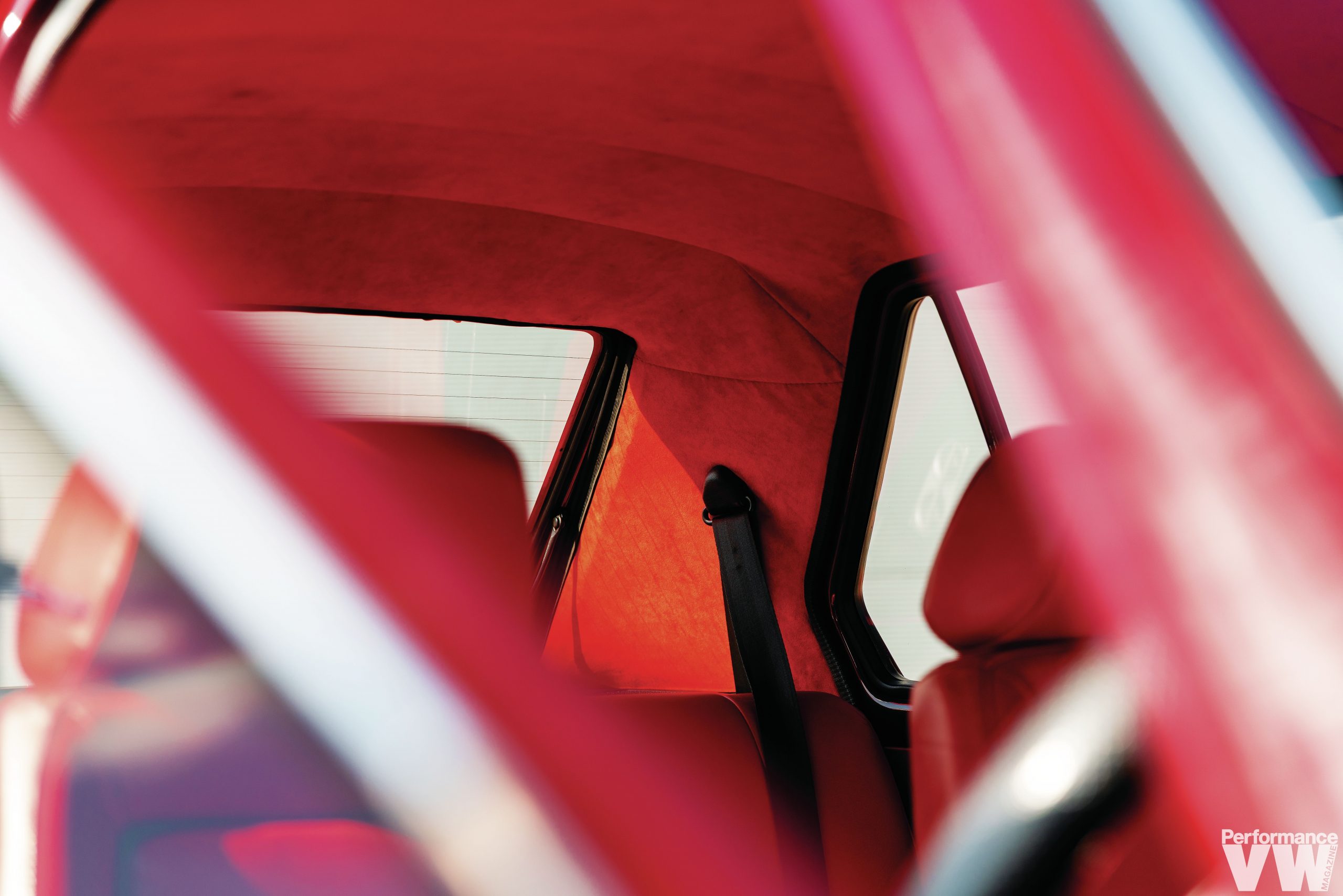
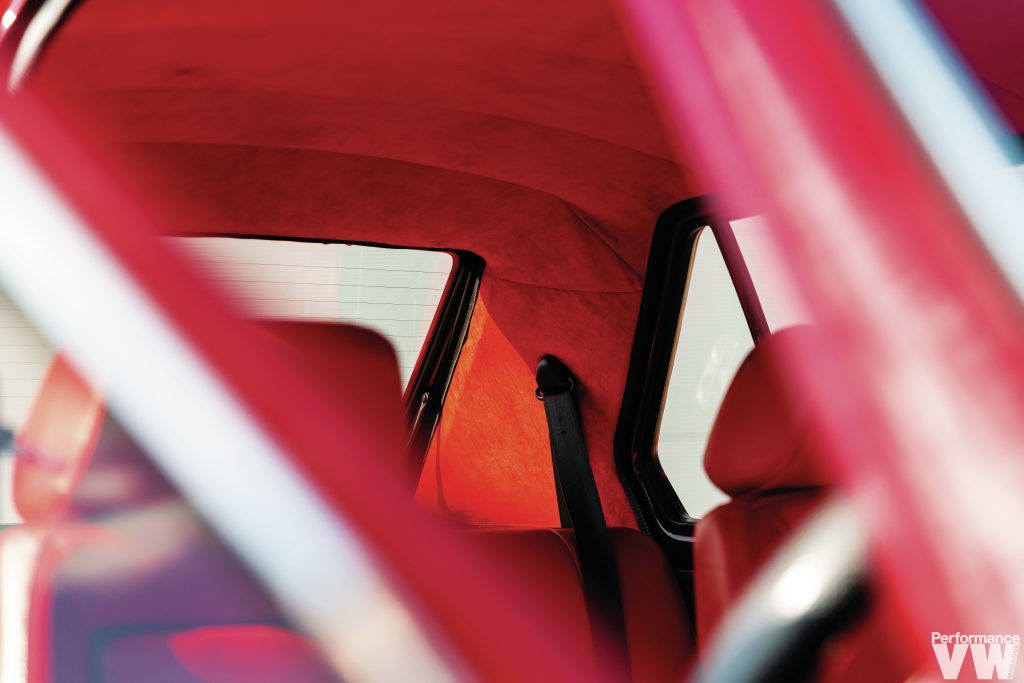
Mk2 Golf Recaro electric front seats, full poppy red leather retrim, red alcantara roof lining and pillar trims, Newton Commercial carpets, VW Enterprise Mk2 Golf dash conversion including centre console, dials and stalks, speedometer and tachometer converted to BMW E30 3 Series electronic pulse, Mk4 Golf shifter with custom cranked tube extension, body-coloured Lupo 3L magnesium steering wheel, Mk4 Golf throttle pedal, aluminium pedal covers, aluminium gear knob, black gear gaiter with red stitching |
|
ICE |
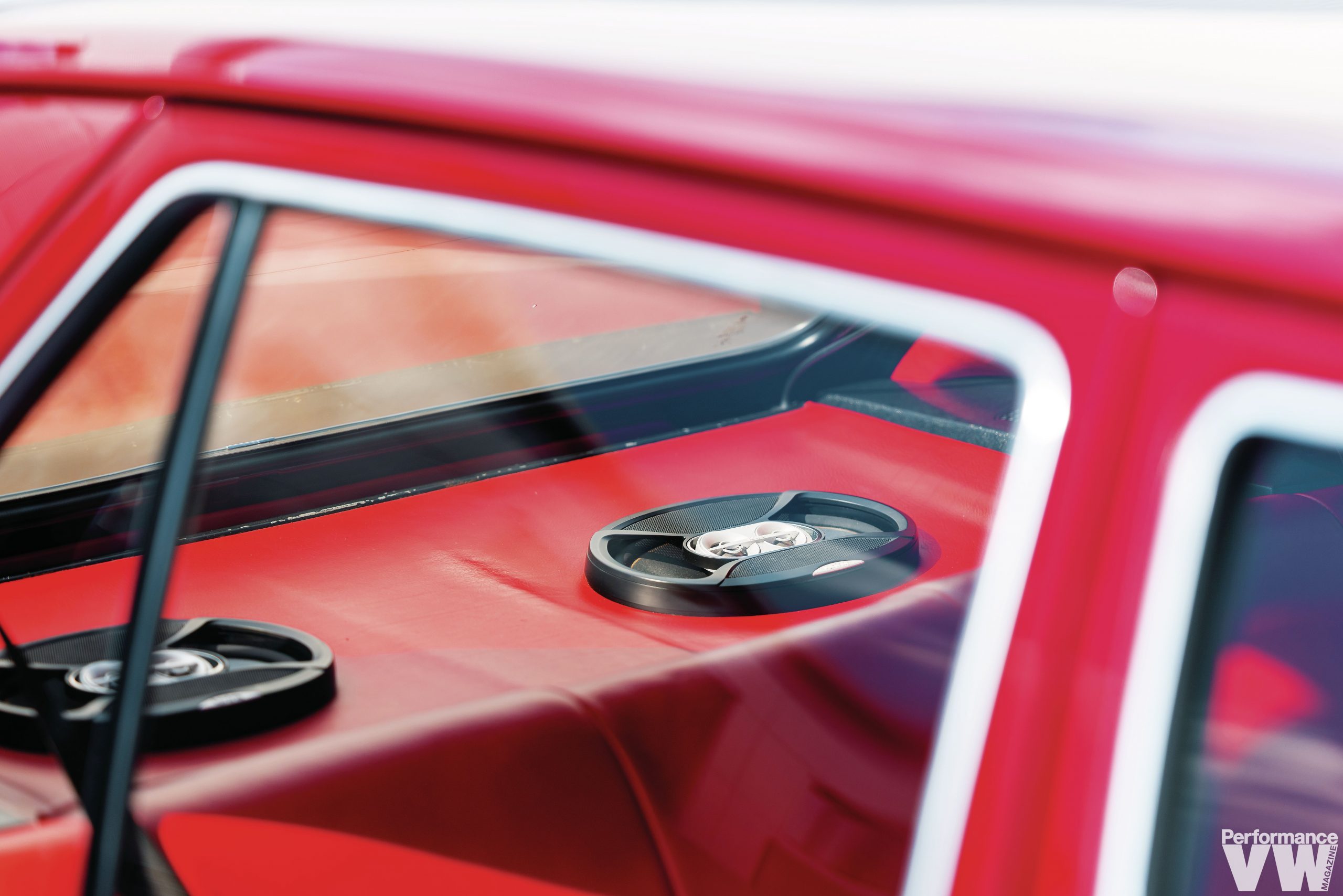
Pioneer SPH-10BT head unit with Bluetooth, 6×4 door speakers, Infinity 6x9s |